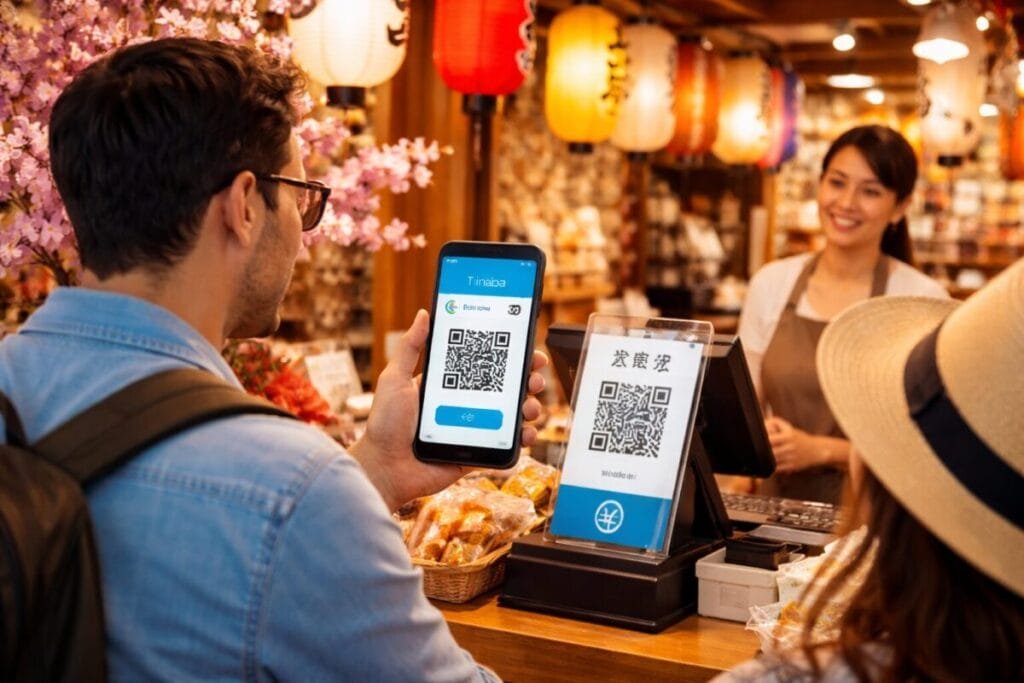
India’s Unified Payments Interface prepares for entry into Japan. This expansion marks a major milestone in global digital payments. Indian tourists soon gain the ability to pay with familiar mobile apps during their trips. Merchants in Japan gain new customers without handling cash or foreign cards.
UPI launched in 2016 and transformed payments across India. Users scan a QR code and pay directly from their bank accounts within seconds. The model relies on instant transfers and interoperability. A single QR code works across many different banks and apps. This feature eliminates friction and encourages mass participation.
India’s digital payment ecosystem grew at record speed over the past decade. Consumers use UPI for groceries, transport, dining, and utilities. Travelers use it at airports, hotels, and retail stores. The platform also supports bill payments and e-commerce. UPI now processes billions of transactions each month and reaches every region of the country.
UPI Expansion Aligns With Growth in Indian Tourism to Japan
Japan attracts rising numbers of Indian travelers each year. Over 315,000 Indian visitors arrived in 2025 according to government tourism data. Travel demand continues to rise due to better connectivity, rising incomes, and cultural interest. Tokyo, Kyoto, Osaka, Sapporo, and Hiroshima attract leisure travelers, students, and business groups.
Indian tourists often face challenges with payment abroad. Currency exchange involves fees and waits. Credit cards do not work everywhere. Cash dominates small transactions. UPI provides a simple alternative. Tourists scan a QR code, pay in Indian rupees, and move on. Payments settle automatically through backend currency conversion.
UPI adoption also benefits Japanese merchants. They gain access to a customer base that spends heavily during overseas travel. Indian tourists shop for electronics, cosmetics, fashion, and souvenirs. They dine at restaurants and book tours and experiences. Accepting UPI increases convenience and boosts conversion rates at the point of sale.
UPI Trials Begin in Japan With Local Collaboration
Japan will conduct trial deployments during the 2026 financial year. Technology providers in Japan cooperate with Indian financial authorities to build secure integration layers. These layers connect UPI with existing merchant networks. Payment settlement and currency conversion occur seamlessly in the background.
Indian travelers open their preferred UPI-enabled banking or fintech app and scan a merchant QR code. Funds move directly from Indian bank accounts to settlement partners. Japanese businesses receive payout in local currency. The user avoids complex payment setups or card registration.
The trial phase focuses on restaurants, hotels, retail chains, convenience stores, and travel services. Transport networks may follow later as technical standards mature. The end goal includes nationwide availability at both urban and regional merchants.
Mobile QR Payments Rise Worldwide
UPI’s expansion to Japan reflects a wider shift in consumer payment behavior. QR codes dominate everyday transactions in several Asian markets. China, India, Singapore, Thailand, and Indonesia rely heavily on QR standards for consumer spending. QR payments reduce hardware needs and support rapid adoption across small businesses.
Japan also modernizes its payment environment at a steady pace. Traditional preference for cash now gives way to mobile wallets and contactless cards. Tourism growth accelerates this shift. Merchants adopt flexible payment tools to serve international visitors. UPI aligns well with these demands and fits within broader digital reform strategies.
Card networks, banks, and fintech firms also promote QR-based standards for interoperability. Consumers want payments that work across borders without complexity. Platforms like UPI demonstrate how shared QR frameworks solve that problem.
UPI Serves as a Model for Real-Time Payment Systems
UPI stands out for its architecture. It allows multiple banks and fintech apps to operate on a shared framework. Consumers choose any app to access their bank accounts. Merchants display a single QR code. This eliminates duplication of infrastructure and reduces cost for all parties.
UPI’s domestic growth shows remarkable scale. It supports urban and rural markets. It serves small vendors and large supermarkets. It works for transport, retail, utilities, and online shopping. India’s government reports sharp declines in cash usage as digital payments expand.
Other nations study UPI as a blueprint for real-time financial systems. Regulators and banks from multiple regions seek guidance on scalability, security, and settlement. Several countries have already adopted UPI for cross-border transactions or tourism. Bhutan, Singapore, France, Sri Lanka, and the UAE have operational UPI deployments. India also assists nations that plan to build local platforms with similar design principles.
Impact on Tourism and International Commerce
UPI’s introduction in Japan strengthens tourism links between India and Japan. Travelers gain convenience. Merchants gain revenue. Financial systems gain efficiency. The ability to spend directly from a home-country bank account eliminates entry barriers for tourists.
UPI also influences travel planning. Tourists feel confident when they do not handle cash or rely solely on cards. Travel becomes more spontaneous and fluid. The travel industry benefits from higher visitor spending and improved customer satisfaction.
Japan gains access to a growing outbound tourism market. India now ranks among the fastest-growing travel segments in Asia. Rising incomes and widespread passport issuance fuel the trend. The ability to pay with familiar tools encourages repeat visits and richer tourism itineraries.
Future Outlook for Digital Travel Payments
UPI’s expansion into Japan signals a new direction for global payments. Cross-border mobile payments replace cash, cards, and exchange bureaus. Digital wallets and QR codes unify global commerce and tourism. Regulatory cooperation and technical standards enable these changes.
UPI stands at the center of this transition. It provides speed, security, and interoperability at scale. Its expansion abroad highlights India’s leadership in payment innovation. For travelers, UPI represents convenience and control. For merchants, it represents opportunity. For the travel industry, it represents the next chapter of digital transformation.
For more travel news like this, keep reading Global Travel Wire