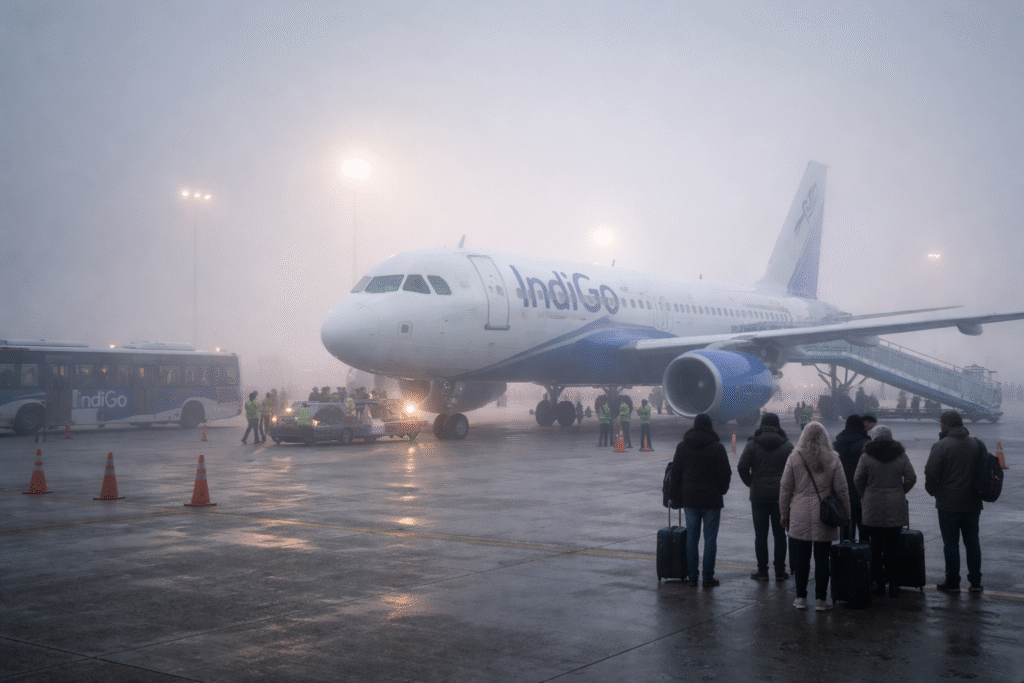
Dense winter fog disrupted air travel across India on December 26, forcing IndiGo to cancel multiple domestic flights. Poor visibility affected both northern and southern airports, creating major challenges for flight operations during early morning hours.
The airline suspended services on several routes to ensure passenger and crew safety. Fog reduced runway visibility to unsafe levels, making take-offs and landings risky at many airports.
Cities Most Affected by the Disruptions
Several major cities faced operational delays and cancellations due to fog-related visibility issues. Airports in Varanasi, Chandigarh, Guwahati, Bengaluru, Chennai, Kolkata, Mumbai, Hyderabad, Pune, Patna, and Lucknow reported disruptions.
Northern India remained the worst affected region. Fog conditions intensified overnight and lingered through the morning. Southern hubs like Bengaluru and Chennai also experienced spillover delays due to aircraft rotation issues.
Key IndiGo Routes Cancelled on December 26
IndiGo cancelled flights on several high-demand domestic routes. These included connections between religious, business, and metro cities. The affected routes included:
- Varanasi to Kolkata and return
- Patna to Kolkata and return
- Bengaluru to Varanasi
- Varanasi to Chennai
- Varanasi to Bengaluru
- Chennai to Varanasi
- Chandigarh to Lucknow
- Chandigarh to Mumbai
- Chandigarh to Hyderabad
- Pune to Chandigarh
- Chandigarh to Kolkata
Most cancellations occurred during early morning schedules, when fog density was highest.
Why Winter Fog Disrupts Indian Aviation Every Year
Winter fog is a seasonal challenge for Indian aviation. From late December to early February, cold air traps moisture close to the ground. This reduces visibility, especially in the Indo-Gangetic plains.
Even airports equipped with advanced landing systems face limits. When visibility drops below prescribed safety thresholds, flights cannot operate. Safety protocols require airlines to delay or cancel services rather than risk unsafe operations.
Impact on Passengers and Travel Plans
Thousands of passengers faced sudden changes to their travel plans. Many encountered delays, missed connections, and long waiting times at airports.
Airlines activated contingency plans to manage crowds and rebook passengers. However, fog-related disruptions often cascade across the network, affecting aircraft availability and crew schedules throughout the day.
Advisory Issued for Air Travelers
Airlines advised passengers to remain alert and flexible. Travelers were asked to check flight status before leaving for the airport. Real-time updates became critical as conditions changed quickly.
Passengers with early morning departures faced the highest risk of disruption. Afternoon and evening flights saw gradual improvement as visibility levels increased.
What Travelers Should Do During Fog Season
Check flight status frequently
Confirm departure details on the day of travel. Fog conditions can change within hours.
Arrive prepared for delays
Carry essentials, food, and charging devices in case of extended waits.
Choose flexible tickets when possible
Rescheduling options help reduce stress during weather disruptions.
Avoid tight connections
Leave sufficient buffer time between connecting flights.
Monitor local weather updates
Fog forecasts help travelers plan smarter departure times.
Airports Strengthen Winter Operations
Indian airports prepare annually for fog season. Authorities deploy low-visibility procedures, improve runway lighting, and train staff for winter operations. Airlines also adjust schedules and crew planning to reduce disruption risks.
Despite these efforts, weather remains unpredictable. Safety remains the top priority across the aviation sector.
Outlook for the Coming Days
Weather patterns suggest continued fog in parts of North India during late December. Travelers should expect intermittent delays, especially during early hours.
Airlines will continue to adjust operations based on visibility levels. Passengers are advised to stay informed and plan travel with flexibility during this peak winter period.
Dense fog may inconvenience travelers, but safety-driven decisions remain essential. With careful planning and timely updates, passengers can navigate winter travel disruptions more smoothly.
For more travel news like this, keep reading Global Travel Wire