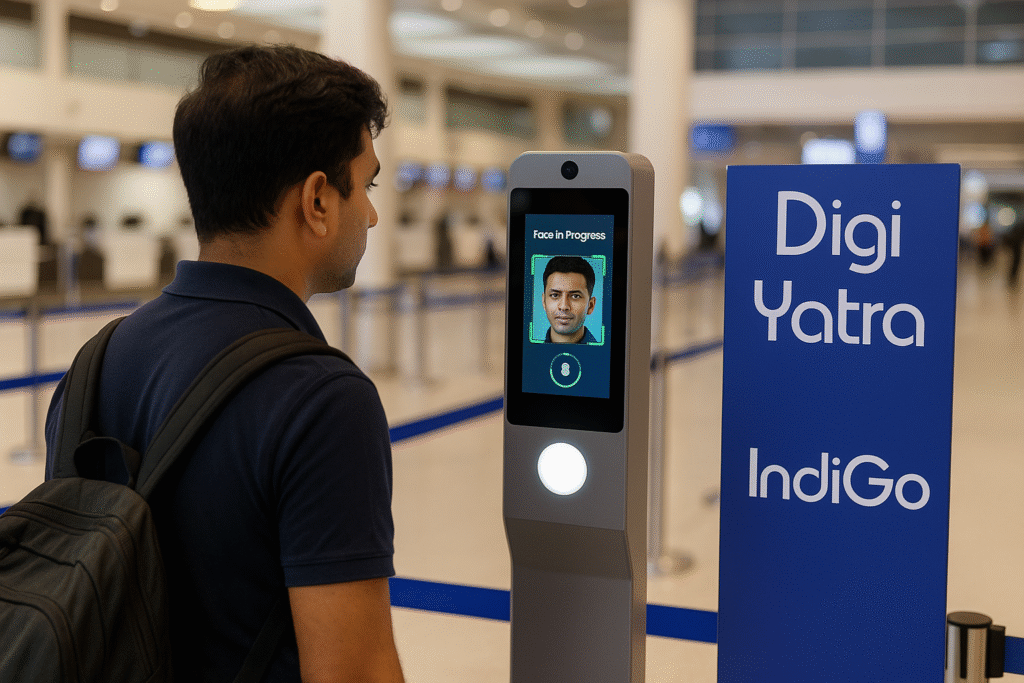
Indian airline IndiGo, in partnership with Digi Yatra, has unveiled a new biometric boarding system aimed at streamlining the airport experience across India. By integrating their apps, the two entities are enabling travelers to complete check-in and boarding using facial recognition. This move promises a faster, more seamless journey for flyers.
Biometric Tech Meets Paperless Travel
With the new integration, users who complete web check-in on IndiGo’s app can simply click “Share with Digi Yatra.” Their boarding pass transfers directly into the Digi Yatra app for use throughout airport checkpoints. This removes the need to scan QR codes or manually upload documents during boarding or security checks.
The facial recognition system matches a passenger’s face with their validated identity at key touchpoints inside the airport. At check-in, security screening, and boarding gates, passengers move through dedicated lanes using just their face — no paper or physical ID needed.
To safeguard privacy, the entire transfer occurs offline through secure deep linking between the two apps. No cloud or server interaction is involved, and only essential data is shared with verified airport systems. User consent is mandatory at every step.
What This Means for Travelers
Faster Transits, Reduced Queues
The most immediate benefit lies in time savings. Since the process no longer depends on document checks or QR scans, passengers can skip long lines at counters. Travel through security and boarding becomes frictionless and swift.
Simplicity and Convenience
Families and solo travelers alike will find navigating airports less stressful. There’s no fumbling for printed passes or ID cards. From entry to exit, the journey becomes smoother.
Better Use of Staff Resources
Airport staff can redirect focus from manual document handling to better service and oversight. The system handles identity verification autonomously, reducing human error and bottlenecks.
Driving a Broader Digital Shift in Aviation
The IndiGo–Digi Yatra collaboration signals a turning point in India’s aviation sector. As one of the first major carriers to adopt biometric boarding in sync with a national program, IndiGo is setting a potential blueprint for others.
Several airports already offer Digi Yatra-enabled touchpoints. As the biometric infrastructure expands, more airlines are expected to integrate similar capabilities. The goal is to reach widespread adoption in the near future.
Addressing Security and Privacy Concerns
While biometric systems deliver convenience, they also raise questions about data protection. Because this initiative operates offline, it mitigates many risks tied to remote data storage. Only minimal, necessary information flows between apps and airport systems.
Still, maintaining transparency, clear consent protocols, and data deletion policies will be key to sustaining trust. As more travelers enroll, Digi Yatra and IndiGo will need to ensure strong privacy safeguards remain intact.
What Lies Ahead
Today, the biometric boarding feature is available only at select airports. But both partners plan national rollout in phases. Eventually, flyers may enjoy contactless boarding at nearly every airport in India.
This initiative is not just a technical upgrade — it signals a larger push toward smart, sustainable airports. By cutting paper use, optimizing passenger flow, and deploying digital identities, the aviation ecosystem moves one step closer to a modern, efficient future.
The Bottom Line
For travelers keen on speed and ease, the IndiGo–Digi Yatra biometric boarding initiative offers a compelling promise: fewer lines, less hassle, and a more human airport experience. As the system rolls out to more locations, India’s air travel scene may enter a new era — one where technology helps passengers focus less on logistics and more on their journey.
For more travel news like this, keep reading Global Travel Wire