Southern Mexico woke to tragedy after a devastating derailment of the Interoceanic Train in Oaxaca. The early morning accident killed at least thirteen people and injured nearly a hundred others. The incident has sent shockwaves through the country’s transport sector and raised fresh concerns for tourism safety in the region.
The Interoceanic Train forms a core part of Mexico’s flagship infrastructure plans. It also plays a growing role in regional travel and cultural tourism. This disaster now places that vision under intense public and international scrutiny.
Where the Derailment Occurred
The crash happened early Sunday morning, December 28, 2025. The train derailed between the towns of Chivela and Nizanda in eastern Oaxaca. The site lies near Asunción Ixtaltepec, a remote area with limited road access.
The train was operating on Line Z. It was traveling from Salina Cruz on the Pacific coast toward Coatzacoalcos on the Gulf of Mexico. This route is critical for both freight movement and passenger travel across southern Mexico.
Passenger Details and Immediate Impact
Around 250 people were onboard at the time of the accident. This number included 241 passengers and nine crew members. Many travelers were local residents, while others were domestic tourists exploring Oaxaca and the Isthmus region.
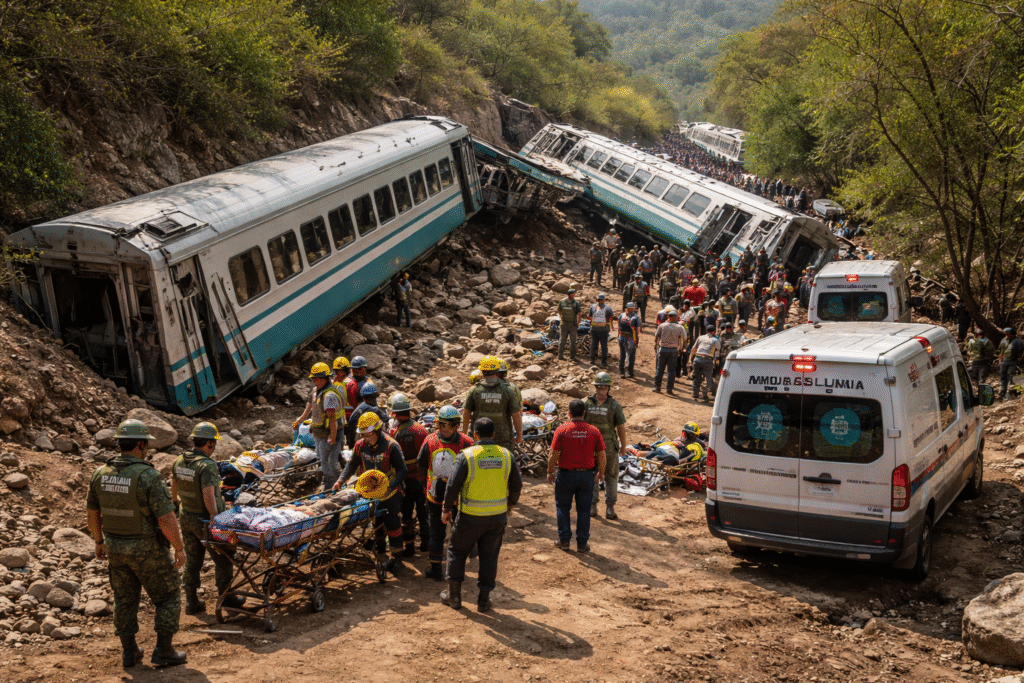
The derailment caused several carriages to overturn. Emergency crews described scenes of severe damage and panic. Rescue efforts began within minutes, despite difficult terrain and low visibility.
Casualties and Medical Response
Authorities confirmed thirteen fatalities. Ninety-eight passengers suffered injuries of varying severity. Thirty-six people required hospitalization across regional medical centers in Matías Romero, Salina Cruz, Juchitán, and Ixtepec.
Five injured passengers remain in critical condition. Medical teams continue to provide round-the-clock care. Another 139 passengers escaped without injuries and later received assistance to continue their journeys.
The scale of casualties has made this the deadliest accident involving the Interoceanic Train since services began in 2023.
Government Emergency Operations
Federal and state authorities launched a large-scale emergency response. Naval units led rescue and evacuation efforts due to the project’s federal oversight. Hundreds of personnel were deployed to the crash site.
Ambulances, air support, and drones helped locate victims and transport the injured. Senior officials arrived in Oaxaca to supervise operations and meet with affected families.
The Oaxaca state government also mobilized civil protection teams. Local authorities helped clear access routes and support nearby communities impacted by the disaster.
Investigation Into the Cause
Mexico’s federal investigators have opened a formal inquiry into the derailment. Early witness accounts suggest the train may have entered a sharp curve at excessive speed. Others reported possible braking issues moments before the crash.
Investigators are now examining track conditions, train systems, and operational protocols. Maintenance records and safety audits for Line Z are also under review.
Officials have promised transparency and accountability. Final conclusions will likely shape future rail operations across the country.
What the Interoceanic Corridor Means for Tourism
The Interoceanic Corridor connects the Pacific and Gulf coasts through southern Mexico. Beyond trade, it aims to unlock tourism growth in Oaxaca, Veracruz, and neighboring states.
The rail line offers travelers access to historic towns, beaches, indigenous cultures, and emerging eco-tourism routes. Many tourism operators had begun promoting rail-based travel packages tied to the corridor.
This derailment now threatens traveler confidence. Industry stakeholders are urging swift safety reforms to protect the region’s tourism momentum.
Support for Families and Travelers
Authorities have pledged financial, medical, and psychological support for victims and their families. Special assistance centers are coordinating compensation claims and counseling services.
Tourism agencies are also working to reassure travelers. Rail services on Line Z remain suspended pending safety checks. Alternative transport options have been arranged for affected routes.
A Wake-Up Call for Rail Safety
The Oaxaca derailment stands as a sobering moment for Mexico’s transport ambitions. It highlights the risks tied to rapid infrastructure expansion without uncompromising safety standards.
As investigations continue, pressure is mounting on operators to rebuild trust. For Mexico’s tourism and transport sectors, the priority is clear. Safety must come before speed and scale.
The nation now waits for answers. The hope is that lessons learned will prevent future tragedies and restore confidence in one of Mexico’s most ambitious travel corridors.
For more travel news like this, keep reading Global Travel Wire