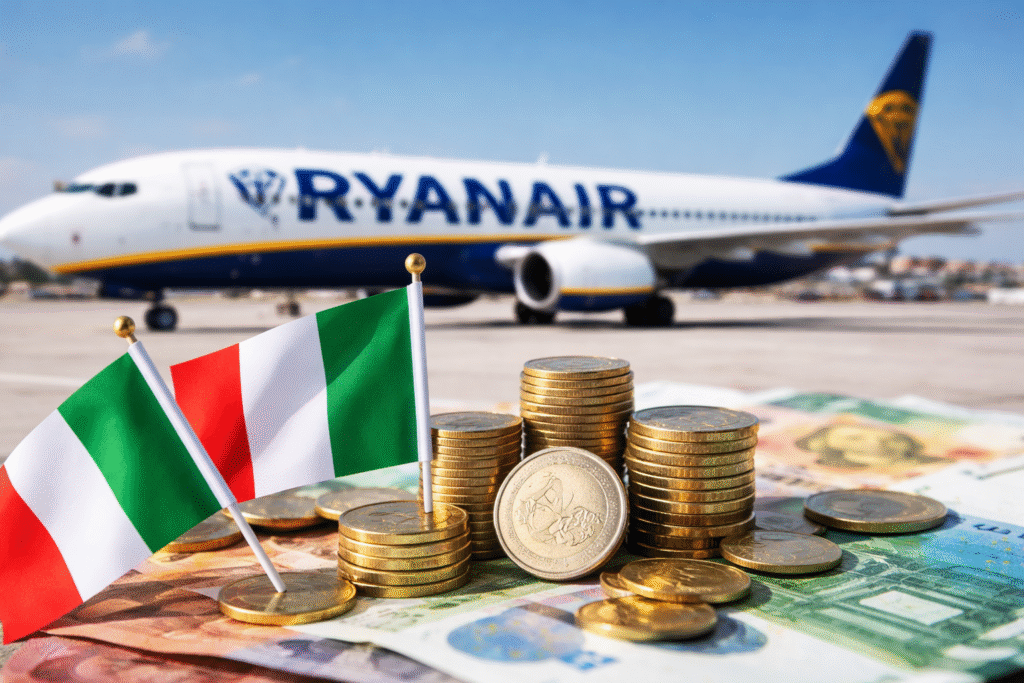
Italy has issued one of the largest penalties in its aviation history. Ryanair must pay more than €255 million after authorities ruled that the airline abused its dominant market position and blocked fair competition across the travel industry. The decision follows a long investigation that examined Ryanair’s treatment of both online and traditional travel agencies from 2023 to 2025.
A Market Giant Under Scrutiny
Ryanair controls nearly 40% of Italy’s passenger air travel. Its huge share gives the airline unmatched influence over fares, distribution channels, and customer access. This power also gives Ryanair a special responsibility to maintain fair competition. Authorities found that the airline instead used this position to restrict how agencies sold its flights and limit their presence in the market.
Italy’s Competition Authority stated that Ryanair’s conduct effectively weakened travel agencies’ ability to serve consumers. The airline’s strategy reshaped how flights were distributed and forced agencies to operate under conditions that limited choice and raised barriers for customers.
How the Restrictions Began
The investigation revealed that Ryanair started planning tighter control over travel agency sales in late 2022. By April 2023, the airline had rolled out measures that created strong obstacles for agencies.
One of the most controversial steps was the introduction of facial recognition checks for customers booking through agency platforms. Many agencies reported that these requirements blocked or slowed ticket purchases. Some agency accounts were also deleted or disabled without warning, making it difficult for them to offer Ryanair flights at all.
These moves reduced agencies’ ability to combine Ryanair flights with other airlines, travel packages, or tourism services like hotel stays and car rentals. This limited competition in the package travel sector, a key market for both domestic and international travelers.
Pressure on Travel Agencies
Alongside technical blocks, Ryanair pushed strict partnership terms on agencies. The proposed agreements forced them to avoid mixing Ryanair flights with those of other carriers. This is a common practice in the travel industry and helps customers compare prices and create flexible itineraries.
Agencies that refused these new terms were targeted in a negative publicity campaign. Ryanair publicly accused them of being “pirate” operators, which harmed their reputation and reduced customer trust. According to the authority, this strategy unfairly influenced public opinion and pressured agencies into accepting unfavorable conditions.
Impact on Tourism and Consumers
The restrictions had a widespread effect on Italy’s tourism ecosystem. Travel agencies serve as vital distribution partners, especially for travelers seeking bundled services or expert guidance. With Ryanair blocking their ability to sell its flights, agencies struggled to offer competitive travel packages.
For consumers, this meant:
- Fewer flight options
- Reduced availability of package deals
- Higher prices due to limited competition
- More time needed to compare services
Many travelers rely on OTAs for transparency and convenience. When agencies cannot access key flight options, the market becomes less competitive. Italy’s authority concluded that Ryanair’s actions directly harmed consumer choice and disrupted normal market dynamics.
Ryanair’s Attempt to Restore Access
In April 2025, Ryanair introduced a white-label iFrame tool. This allowed agencies to integrate Ryanair flight data back into their booking systems. While the tool improved access, the authority noted that the damage had already occurred. The restrictions had shaped at least two years of travel agency operations and caused long-term market distortions.
The fine reflects the severity of this impact. It also sends a message to dominant airlines that their market power must be used responsibly.
A Wider European Concern
The Ryanair case fits into a broader trend across Europe. Regulators are watching large digital and transport companies more closely. As online travel sales grow, the balance of power between airlines and agencies becomes more important. Authorities aim to prevent dominant brands from blocking competition or restricting customer access to information.
The ruling also highlights how the airline industry affects the wider tourism economy. When one carrier holds major influence, its policies can impact hotels, car rentals, tour operators, and regional tourism boards.
What This Means for Ryanair and the Industry
Ryanair will likely need to adjust its commercial policies, rebuild agency relationships, and ensure future compliance with competition rules. Italy’s decision may encourage other European regulators to assess similar practices within their own markets.
For travel agencies, the ruling offers relief. It confirms their role as essential partners in the tourism chain and protects their ability to compete fairly.
Consumers may also benefit from restored access to transparent pricing, package deals, and wider flight choices.
A Strong Signal for Fair Competition
The €255 million penalty marks a major moment for European tourism regulation. It reinforces the principle that dominant companies cannot restrict competition or limit consumer choice. Italy’s stance aims to protect both the travel industry and millions of travelers who rely on open, competitive markets.
The case serves as a reminder that fair access benefits everyone—from airlines and agencies to destinations and travelers worldwide.
For more travel news like this, keep reading Global Travel Wire