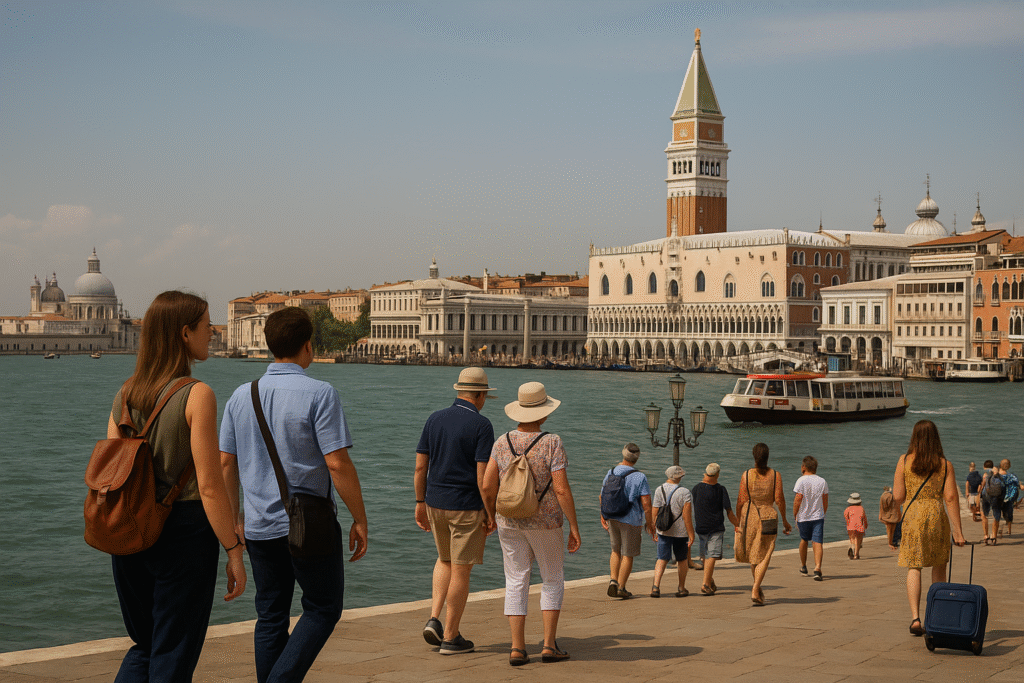
Italy’s tourism sector, one of the strongest in Europe, has slowed in 2025. The decline is linked to two key factors. First, a steep drop in visitors from the United States. Second, Venice’s new entry fee for day-trippers.
This combination has reshaped the tourism season. Cities like Venice, Florence, and the Amalfi Coast are struggling with reduced visitor numbers. Meanwhile, secondary destinations such as Puglia are emerging as winners.
The shift has sparked new debates in Italy. Officials, businesses, and locals are now asking how to balance tourism growth with sustainability.
Early Optimism Fades by Mid-Year
Italy began 2025 with great optimism. Bookings surged by nearly 50% in the early months compared to 2024. Hotels, tour operators, and restaurants expected record-breaking numbers.
But by March, momentum stalled. By the summer season, the slowdown became clear. Visitor arrivals in June, July, and August dropped below 2024 levels.
For destinations that rely heavily on international markets, the downturn was significant. The decline was most visible in Florence, Venice, and along the Amalfi Coast.
Key Destinations Hit by Decline
- Florence: Visitor numbers fell by around 20%.
- Venice: A sharper drop of nearly 30% was recorded.
- Amalfi Coast: Tourist arrivals decreased by 25%.
- Rome: Unlike others, Rome saw a rise in visitors, thanks to pilgrims arriving for Jubilee celebrations at the Vatican.
These statistics highlight how uneven the tourism season was across Italy.
US Tourist Decline: A Major Blow
American visitors have long been a cornerstone of Italy’s tourism economy. They spend more per trip compared to many other markets. They also travel year-round, helping extend the season.
In 2025, the US market weakened. Fewer Americans traveled to Italy, and those who came spent less. Hotels and luxury operators, particularly in Venice and Florence, felt the loss most.
Venice, a top destination for Americans, was hit hardest. The decline coincided with the launch of its controversial new tax.
Venice’s Day-Tripper Tax
In 2025, Venice introduced a new entry fee for day-trippers. The aim was to reduce overtourism and protect the fragile city.
The fee, ranging between €5 and €10, applied on 54 peak days from April to July. On some days, over 25,000 tourists paid the charge. While the policy raised more than €5 million, its impact on visitor numbers was mixed.
For some travelers, the fee was a deterrent. Budget-conscious visitors avoided Venice or chose other cities. For businesses, the lower visitor numbers meant reduced income.
Plans for 2026
The Venice entry fee will expand in 2026. Officials plan to apply it on 60 days, including more weekends and holidays. The extension is expected to further influence travel patterns.
Supporters say the policy protects Venice’s heritage and quality of life. Critics argue it risks discouraging international tourism.
Rise of Secondary Destinations
While iconic cities struggled, lesser-known destinations thrived. Puglia, in southern Italy, emerged as a rising star.
- Authenticity: Visitors flocked to whitewashed towns, pristine beaches, and trulli houses.
- Relaxed pace: Many travelers sought quiet escapes after years of crowded travel.
- Booming numbers: Puglia’s arrivals soared, showing strong interest in secondary destinations.
This trend is part of a wider global movement toward authentic and sustainable travel. For Italy, it signals an opportunity to promote new regions and spread the benefits of tourism.
Overtourism Relief: A Silver Lining
For years, cities like Venice and Florence have suffered from overtourism. Crowded streets, long queues, and pressure on infrastructure frustrated both locals and visitors.
The 2025 slowdown offered relief.
- Attractions had shorter lines.
- Streets were calmer.
- Locals enjoyed a break from congestion.
For some travelers, the experience improved. Visiting Florence’s Uffizi Gallery or Venice’s canals felt more peaceful and authentic.
This unplanned slowdown highlights the value of balanced tourism. It also provides a chance for Italy to rethink its approach.
Looking Toward 2026
Italy’s focus for 2026 will be sustainability. Officials are discussing strategies to distribute visitors more evenly. This includes promoting off-season travel and highlighting lesser-known regions.
Key Priorities
- Diversification: Reduce reliance on a few iconic cities.
- Local benefits: Ensure income supports communities, not just large operators.
- Infrastructure investment: Support secondary destinations with better transport and services.
Tourists, too, are seeking authenticity. They want quieter, less commercialized experiences. Italy can meet this demand by showcasing its hidden gems.
A New Era for Italy’s Tourism
The slowdown of 2025 was difficult for many businesses. Hotels, restaurants, and tour guides in major cities faced reduced income. Yet the situation also opened doors for change.
By focusing on sustainability, Italy can protect its heritage while securing long-term growth. Venice’s day-tripper fee, though controversial, reflects a new era of visitor management. Puglia’s rise shows the potential of secondary destinations.
For 2026, Italy has the chance to redefine its tourism model. The balance between preserving culture, supporting locals, and welcoming visitors will be key.
If achieved, Italy can remain one of the world’s top destinations while offering richer, more meaningful travel experiences.
For more travel news like this, keep reading Global Travel Wire