Japan is preparing for a major shift in tourism policy as it moves to triple its departure tax and introduce new inspection fees for incoming travelers. The changes will take effect in stages from July 2026 and place Japan alongside Asian destinations such as Thailand, Singapore, South Korea, Bhutan, and Hong Kong. Together, these countries are using pricing tools to control visitor pressure, protect infrastructure, and support long-term tourism sustainability.
Japan’s move reflects growing concern over crowding at major cities, cultural sites, and transport hubs. Record-breaking visitor arrivals have boosted the economy but also strained public services, local communities, and the environment.
Departure Tax to Triple From 2026
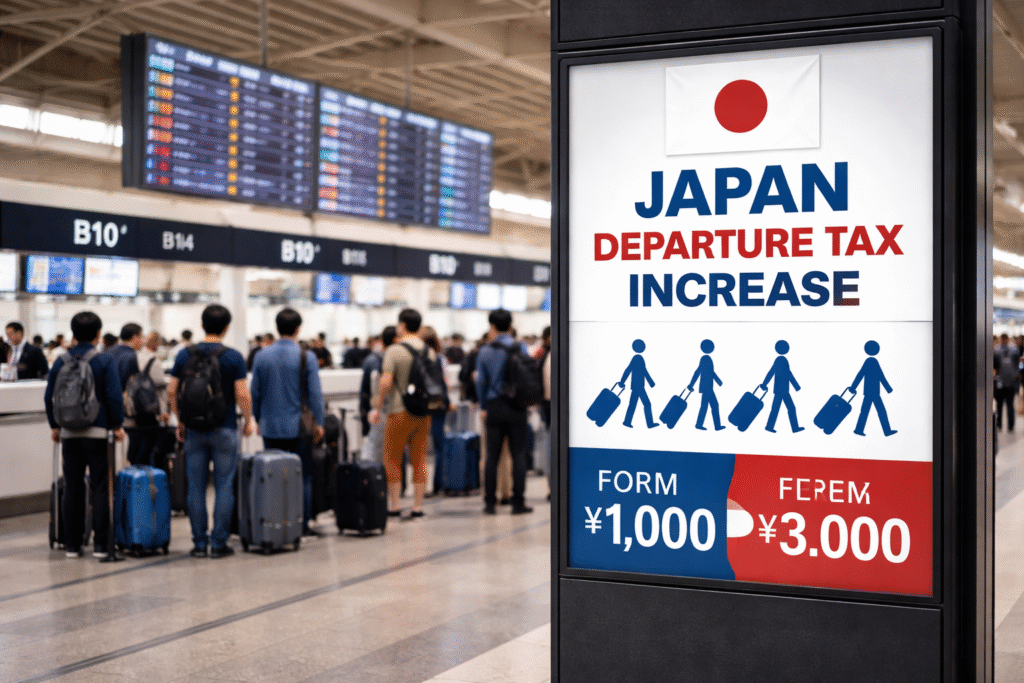
Japan will raise its International Tourist Tax from JPY 1,000 to JPY 3,000 per person starting July 2026. The tax applies to all travelers aged two and above leaving the country by air or sea, regardless of nationality. Airlines and ferry operators will include the fee directly in ticket prices.
The government introduced this tax in 2019 to fund tourism infrastructure and regional development. With visitor numbers continuing to rise, officials now see a higher levy as necessary to manage demand and fund maintenance at airports, railways, and popular attractions.
Transit passengers departing within 24 hours and flight crew members will remain exempt. Japanese citizens will also pay the higher tax, making this a shared responsibility rather than a visitor-only charge.
New Pre-Entry Screening Fee Planned for 2028
Japan also plans to roll out a new electronic travel authorization system by 2028. The system will apply to travelers from visa-free countries and require advance approval before arrival. Fees are expected to range between JPY 2,000 and JPY 3,000 per traveler.
Once implemented, many visitors will face combined travel-related charges of up to JPY 6,000 when entering and leaving Japan. Authorities believe the system will improve border security, streamline arrivals, and reduce overstays while generating revenue for tourism management.
This approach mirrors similar systems already used in other major travel regions and marks a shift toward stricter oversight of short-term travel flows.
Why Japan Is Acting Now
Japan’s most visited cities and landmarks have faced intense crowding in recent years. Public transport congestion, waste management issues, and rising accommodation pressure have affected both residents and travelers. Seasonal overcrowding has also threatened the preservation of historic districts and natural sites.
By raising travel-related fees, policymakers aim to encourage more responsible travel behavior, spread visitors beyond peak seasons, and fund sustainable tourism projects in lesser-known regions.
Asia’s Growing Use of Tourism Fees
Japan’s strategy aligns with a wider regional trend. Across Asia, governments are adjusting departure taxes, airport charges, and visitor fees to balance economic benefits with environmental and social costs.
Thailand Focuses on Infrastructure Relief
Thailand has increased passenger service charges at major airports to fund upgrades and ease pressure on overcrowded destinations. The policy supports airport expansion, environmental protection, and improved visitor services at popular resort areas.
Singapore Prioritizes Managed Growth
Singapore includes departure-related charges within its airport fees. Revenue supports world-class airport facilities, green initiatives, and efficient crowd management. The city-state focuses on quality tourism rather than sheer volume.
South Korea Weighs Similar Measures
South Korea relies on airport service fees rather than a national departure tax. However, ongoing discussions reflect growing awareness of visitor pressure, particularly at major urban and cultural sites.
Bhutan Sets the Global Benchmark
Bhutan remains a standout example with its high daily sustainability fee for tourists. The policy limits visitor numbers while funding conservation, healthcare, and education. The country’s model emphasizes high-value, low-impact tourism.
Hong Kong Maintains Airport Service Charges
Hong Kong includes a departure tax within its passenger service charges. The funds support airport operations and infrastructure while managing its role as a major regional hub.
Impact on Travelers and Airlines
Japan’s higher charges will increase the overall cost of travel, especially for short trips and budget travelers. Airlines are expected to adjust ticket pricing structures to absorb or pass on the added fees.
For outbound Japanese travelers, the tax hike raises travel costs, though the government has signaled possible reductions in passport issuance fees to offset the impact.
The new pre-entry authorization will also add an extra step to trip planning. While the process aims to remain simple, it introduces new costs and administrative requirements for visa-free visitors.
A Shift Toward Sustainable Tourism
Japan’s decision signals a clear policy shift. The focus is no longer on unlimited growth but on controlled, high-quality tourism that benefits communities and preserves heritage. Revenue from higher taxes will support infrastructure upgrades, environmental protection, and regional tourism dispersal.
As Asia continues to welcome global travelers, Japan’s approach highlights how pricing tools can shape tourism behavior. The success of this strategy may influence other destinations facing similar challenges.
The Road Ahead for Asian Tourism
With overtourism now a shared concern across the region, Japan’s move strengthens a collective Asian response. Departure taxes and entry fees are becoming standard tools to protect destinations without closing doors to visitors.
As these policies take effect, travelers can expect a more managed, sustainable, and balanced tourism experience across Asia—one designed to protect iconic destinations for future generations while still supporting vibrant travel economies.
For more travel news like this, keep reading Global Travel Wire