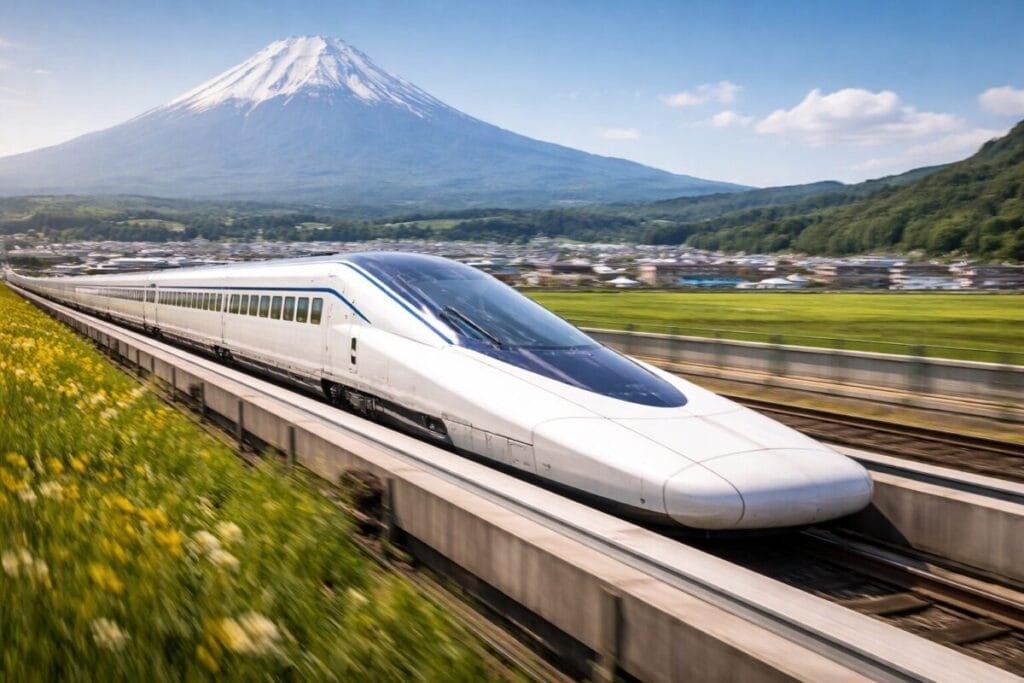
Japan continues to lead global transportation innovation with its ambitious superconducting maglev train project. The Central Japan Railway Company develops this futuristic system to connect Tokyo, Nagoya, and eventually Osaka at unprecedented speeds. The train aims to reach speeds of around 311 miles per hour, transforming long-distance travel into a rapid and efficient experience.
Tourism experts believe the project could reshape travel patterns within Japan. Faster connections will allow visitors to explore multiple regions in less time while supporting economic growth. The maglev project also demonstrates Japan’s commitment to innovation and infrastructure development.
The Science Behind Magnetic Levitation
Unlike traditional trains, the maglev system uses superconducting magnets that allow the train to float above the guideway. Engineers cool these magnets to extremely low temperatures, enabling powerful magnetic forces. The train lifts slightly above the track, which removes friction between wheels and rails.
This technology allows higher speeds while reducing mechanical wear. During testing on the Yamanashi Maglev Line, engineers recorded speeds exceeding 600 kilometers per hour. These results highlight the potential of maglev systems to redefine ground transportation.
The L0 Series maglev represents a major leap beyond existing Shinkansen bullet trains. Engineers designed the new system specifically for long-distance high-speed travel. Its advanced technology positions Japan at the forefront of modern rail engineering.
Transforming Travel Times Across Japan
The Chuo Shinkansen project promises dramatic reductions in travel time. Current bullet train journeys between Tokyo and Osaka take around two and a half hours. The maglev could reduce this journey to roughly one hour and seven minutes.
Such speed creates new possibilities for both residents and tourists. Travelers could plan day trips between major cities without extended travel time. Business commuters may benefit from faster connections that support economic activity across regions.
Government planners view the project as a strategy to balance population growth between urban centers. By linking Tokyo, Nagoya, and Osaka more closely, authorities aim to create a unified economic corridor that encourages regional development.
Building Underground for Speed and Safety
Engineers design the maglev route primarily underground to maintain straight paths required for extreme speeds. Approximately 90 percent of the line will run through tunnels. This approach reduces noise impact and minimizes interference with existing infrastructure.
Japan’s geography and seismic activity also influence route planning. Inland tunnels offer greater stability compared to coastal routes that face environmental risks. Advanced safety systems will monitor conditions continuously to ensure secure operations.
Construction of extensive tunnels demonstrates the scale and complexity of the project. Engineers use advanced drilling methods and precision technology to meet strict safety standards.
Europe Faces Challenges Adopting Maglev Technology
While Europe maintains one of the world’s largest rail networks, maglev adoption presents several challenges. European rail systems include multiple standards, signaling methods, and infrastructure designs. Maglev trains require dedicated tracks that cannot integrate with traditional rail networks.
Cost remains another major factor. The Chuo Shinkansen project carries an enormous investment value, reflecting the complexity of building entirely new infrastructure. European governments often face lengthy approval processes and budget negotiations for large cross-border projects.
Existing high-speed rail systems across Europe already provide efficient connectivity. Networks such as TGV, ICE, and AVE prioritize interoperability, allowing trains to travel across multiple countries using shared infrastructure. Maglev systems operate as closed networks, which reduces flexibility compared to conventional trains.
Energy Efficiency and Environmental Considerations
Maglev technology offers environmental advantages compared to short-haul flights. Electric operation produces fewer emissions, especially when powered by renewable energy sources. However, energy consumption remains higher than traditional high-speed rail due to the power required for levitation and extreme speeds.
European policymakers often focus on energy efficiency when evaluating transportation projects. The balance between speed, sustainability, and operational costs influences future rail investments. Japan continues refining maglev technology to improve efficiency and long-term performance.
Tourism Impact and Future Travel Possibilities
For international travelers, the maglev system promises a unique and futuristic experience. Tourists visiting Japan may soon travel between major cities in record time while enjoying advanced onboard technology. Faster rail connections encourage visitors to explore more destinations during one trip.
Cities like Tokyo, Nagoya, and Osaka could experience increased tourism flows due to improved accessibility. Shorter travel times make multi-city itineraries more appealing. Tourism authorities expect the maglev to strengthen Japan’s reputation as a leader in transportation innovation.
The Global Future of High-Speed Rail Innovation
Japan’s maglev project represents a bold vision for the future of mobility. Its success may influence transportation planning worldwide. Countries observing the project may consider similar investments if operational costs and safety performance meet expectations.
Although Europe currently focuses on traditional high-speed rail, advancements in magnetic levitation may spark renewed debate about next-generation travel solutions. The outcome of Japan’s maglev experiment will likely shape discussions about the future of rail transportation for decades.
Japan’s pursuit of ultra-fast rail demonstrates how innovation continues to redefine travel possibilities. The maglev train signals a shift toward faster, more efficient journeys that challenge existing ideas about distance and mobility.
For more travel news like this, keep reading Global Travel Wire