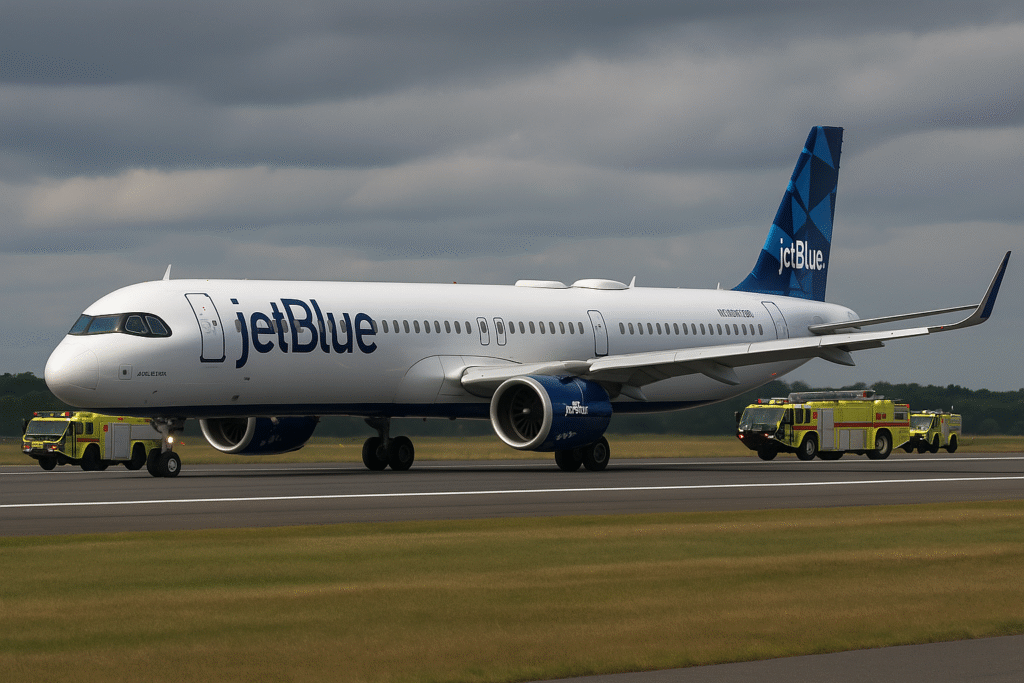
A flight operated by JetBlue Airways — designated flight B631 — issued an emergency alert shortly after taking off from Boston Logan International Airport on its way to Amsterdam. The crew reported a fire indication in the right engine. The aircraft was an Airbus A321neo.
With 132 souls on board including passengers and crew, the pilots halted climb and declared an emergency to air traffic control. They received immediate vectors back to Boston and coordinated with airport emergency services to stand by.
Expert Crew Response and Coordination
Upon noticing the fire alert, the flight crew leveled off at about 5,000 feet, stopped climbing, and declared the emergency while running the engine-fire checklist. Air traffic control provided headings for an ILS approach to runway 33L. Emergency vehicles lined the runway as the jet approached.
Despite the fire indication disappearing, the emergency status remained active until the aircraft safely touched down. The decision reflected high standards of precaution and professionalism.
Safe Overweight Landing and Inspection
The A321neo completed an overweight landing at Boston, stopped briefly on the runway for inspection by fire crews, then taxied to the gate under its own power. Ground inspection found no visible fire or damage.
The airline confirmed that the aircraft will be grounded for a full maintenance check, and the Federal Aviation Administration will review the event as per standard post-incident procedures. No injuries were reported among passengers or crew.
Communication & Protocols Underlined
The clarity of communication between the pilots and ATC played a key role. The crew quickly reported passenger count, fuel load (around 42,000 lb) and status of the fire indication. ATC responded with support, maintaining separation, readying ground services, and guiding the emergency return.
The fact that the fire indication ended but the crew kept the emergency in place shows strict adherence to safety protocols that prioritise passenger welfare above all.
Technology & Teamwork in Action
The incident reinforces the importance of modern engine-fire detection systems and the training of crew to act decisively when alarms appear. Real-time coordination between the cockpit, ATC and airport emergency teams ensures that such threats are managed without escalation.
It also shows that even rare mechanical alerts are mitigated through procedure-driven responses, reducing risk and restoring confidence.
Airline’s Safety Culture Highlighted
JetBlue’s response reflects its operational readiness and strong safety culture. The crews followed the emergency checklist, paused climb, engaged ATC, and returned the aircraft promptly. Fire services and ground inspection teams had been pre-notified and ready.
Such timely action prevents incidents from turning into crises and demonstrates aviation systems functioning as designed — to protect everyone onboard.
Aftermath and Next Steps
Following the landing, the aircraft was held out of service for detailed inspection. The airline will work with the FAA to determine what triggered the fire indication in the engine. Meanwhile, passengers have been cleared without harm.
Though unsettling for those onboard, the safe outcome serves as a reminder that emergency procedures in commercial aviation are robust, well-rehearsed and effective.
What Travellers Should Know
For travellers, this event is a lesson in how hidden behind-the-scenes systems operate: from engine-fire sensors and pilot checklists to ATC guidance and airport emergency readiness. Despite the alarm, the incident ended safely.
Passengers can take comfort in the rigorous safety standards of modern air travel: reacting quickly to alerts, returning promptly, coordinating with all ground teams, and inspecting thoroughly before the aircraft flies again.
In summary, JetBlue’s Flight B631 managed a serious engine-fire alert and returned to Boston Logan Airport without incident. The crew’s quick decision-making, clear communication, and adherence to safety protocol ensured the wellbeing of all on board. The airline’s and airport’s coordinated response reflects the aviation industry’s strong safety systems that underpin every flight.
For more travel news like this, keep reading Global Travel Wire