
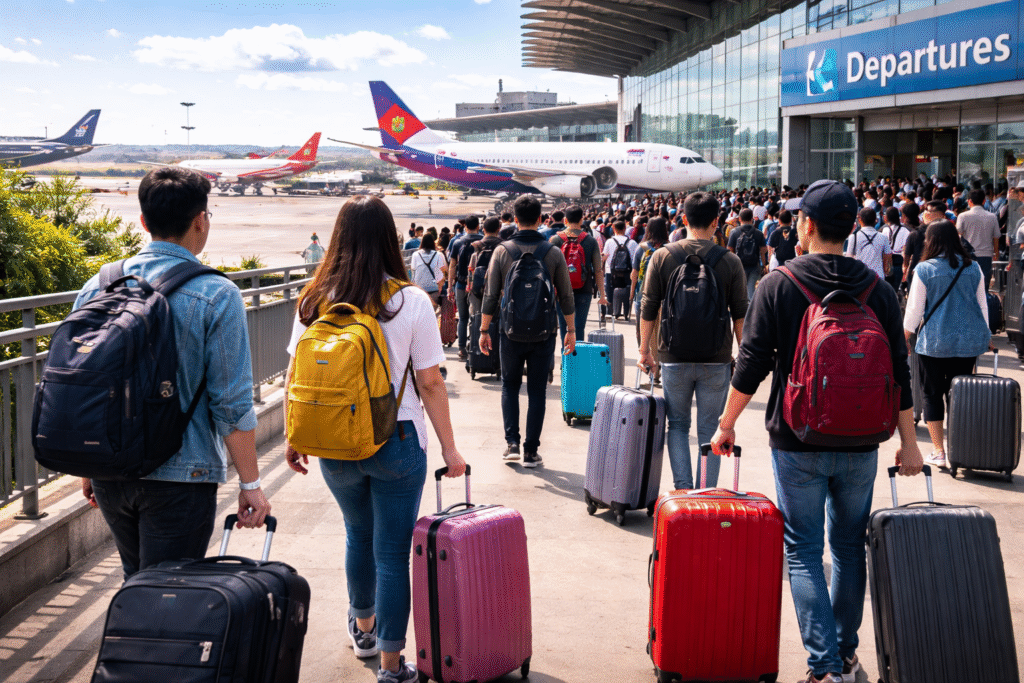
Kathmandu has released important financial data that signals a major shift in Nepal’s travel and tourism economy. The latest figures cover the first four months of fiscal year 2082/83 BS, ending mid-November. The data shows a sharp rise in outbound travel spending. This change reflects evolving consumer behavior and rising global mobility among Nepali citizens.
Outbound travel payments rose by 11.8 percent during the review period. Total spending reached Rs 75.74 billion. This growth marks a significant jump compared to the same period last year. Nepal spent Rs 67.75 billion on foreign travel during that earlier timeframe. The increase highlights stronger purchasing power and rising international aspirations.
This trend now influences airlines, education providers, and global tourism operators. Higher outbound spending also increases demand for foreign currency. This pressure requires careful financial management at the national level.
Outbound Travel Spending Records Strong Growth
The latest figures confirm that Nepalis are traveling abroad more frequently and spending more per trip. The steady rise in outbound travel payments suggests growing confidence in household income. Remittance inflows play a major role in this shift.
International airlines benefit directly from this trend. Routes connecting Kathmandu with global hubs now see stable demand. Travel agencies and visa service providers also experience higher activity. This pattern signals a long-term structural change rather than a temporary surge.
Outbound travel now represents one of the fastest-growing service expenditures in the economy. Financial planners continue to monitor this expansion closely.
Foreign Education Emerges as the Primary Driver
Foreign education accounts for the largest share of outbound travel spending. Education-related payments reached Rs 48.26 billion within four months. This figure represents a sharp increase from Rs 37.77 billion during the same period last year.
Students and families now prioritize overseas education more than ever. Popular destinations include North America, Europe, Australia, and parts of Asia. Universities in these regions continue to attract Nepali students due to academic reputation and work opportunities.
This spending trend creates predictable travel patterns. Student travel peaks align with academic calendars. Airlines can plan capacity around these dates. Unlike leisure tourism, education travel delivers steady and reliable demand.
Education consultants, accommodation providers, and insurance companies also benefit from this expansion. The education travel segment now plays a central role in outbound tourism.
Inbound Tourism Income Shows Limited Growth
While outbound spending surged, inbound tourism income showed minimal improvement. Travel earnings grew by only 0.9 percent during the same period. Total inbound travel income reached Rs 27.15 billion.
This imbalance highlights a key challenge for Nepal’s tourism sector. Nepalis now spend far more abroad than international visitors spend inside the country. The gap weakens the services trade balance.
Tourism stakeholders now face pressure to rethink destination marketing strategies. Nepal must attract higher-spending visitors and extend average stay durations. Without stronger inbound growth, the imbalance will persist.
Services Trade Deficit Continues to Widen
The difference between outbound payments and inbound earnings has widened the services trade deficit. Net services income recorded a deficit of Rs 32.91 billion during the review period. Last year, the deficit stood at Rs 22.37 billion.
Education-related travel remains the biggest contributor to this gap. High overseas tuition and living costs accelerate foreign currency outflows. Policymakers now view this deficit as a structural issue rather than a short-term concern.
Addressing this challenge requires long-term planning. Improved inbound tourism performance could help narrow the gap.
Remittances Provide Critical Financial Support
Remittance inflows continue to stabilize the economy. Funds sent by Nepalis working abroad rose by 31.4 percent. Total remittances reached Rs 687.13 billion in four months.
This growth far exceeds last year’s increase of 9.4 percent. During mid-October to mid-November alone, remittances totaled Rs 133.82 billion. This figure surpassed the previous year’s monthly record.
Remittances fund education, travel, and household consumption. They also support foreign currency reserves. Without this inflow, outbound travel spending would strain the economy.
Airlines and Financial Services Gain Momentum
Airlines now enjoy predictable demand on education-focused routes. Flights connecting Kathmandu with education hubs operate with higher load factors. Seasonal pricing strategies help maximize revenue.
Financial transfer services also benefit from rising remittances. Currency exchange providers handle larger transaction volumes. These systems support education payments and travel expenses efficiently.
This cycle highlights Nepal’s growing integration with the global economy.
Changing Traveler Profiles Influence Destination Strategy
Outbound travelers now differ from traditional leisure tourists. Education and family-related travel dominates demand. These travelers stay longer and spend differently.
Destination planners in host countries must adapt. Services such as student housing, employment guidance, and long-term health coverage matter more than tour packages. Marketing strategies must reflect these preferences.
Nepal’s Tourism Economy Enters a New Phase
The latest financial data confirms a clear transformation. Nepal has emerged as a strong outbound travel market. Remittances fuel this shift, especially in foreign education.
The key challenge ahead involves balancing outbound spending with inbound tourism growth. Fiscal year 2082/83 BS will stand as a defining period in Nepal’s evolving tourism economy.
For more travel news like this, keep reading Global Travel Wire