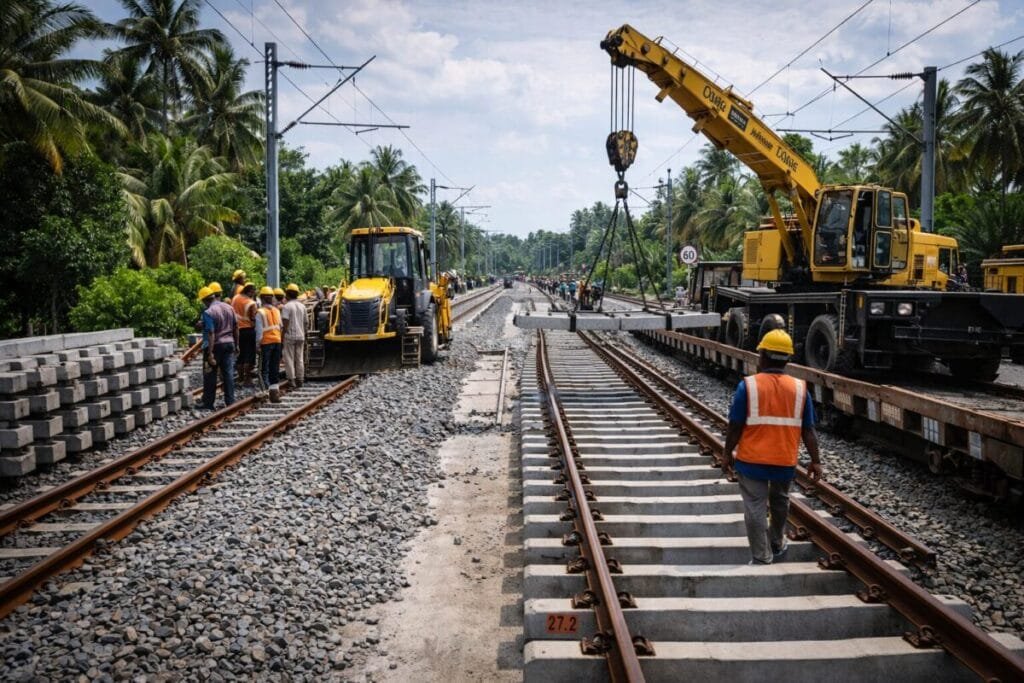
Kerala’s railway network prepares for a significant transformation after the Union Ministry of Railways approved major infrastructure projects valued at nearly ₹487.73 crore. The investment focuses on improving operational efficiency, increasing passenger capacity, and strengthening freight movement across key routes in the state.
These projects aim to eliminate long-standing bottlenecks, improve train punctuality, and enhance travel experiences for both residents and tourists. As rail travel remains a crucial transportation option in Kerala, the upgrades support broader national goals to modernize railway infrastructure and boost regional connectivity.
Rail Doubling Project to Strengthen Key Coastal Corridor
One of the main projects includes the doubling of the rail line between Alappuzha and Ambalapuzha. This 12.66-kilometer expansion targets a critical single-line section along the Ernakulam-Turavur-Kayankulam corridor.
Single-line tracks often create delays because trains must wait for opposing traffic to pass. Doubling the track allows simultaneous train movement in both directions, reducing congestion and improving schedule reliability.
Authorities expect the project to introduce additional passenger train services once completed. Improved frequency helps commuters and tourists travel more easily between major destinations along Kerala’s scenic coastal belt.
Improved Connectivity Supports Tourism Growth
Kerala’s tourism industry relies heavily on efficient transport networks. Popular destinations such as Alappuzha, known for its backwaters and houseboat tourism, attract large numbers of domestic and international visitors.
Enhanced rail connectivity allows travelers to reach these destinations quickly and comfortably. Reliable train services encourage tourists to explore multiple locations within the state without relying on road transport.
Rail upgrades also support sustainable tourism by promoting public transportation over private vehicles. Many travelers now prefer eco-friendly travel options, and modern rail infrastructure aligns with this growing trend.
Freight Capacity Expansion Boosts Economic Activity
The rail doubling project also increases freight capacity significantly. Improved infrastructure allows smoother cargo movement, reducing transit delays and operational inefficiencies.
Enhanced freight handling supports local industries such as agriculture, manufacturing, and port logistics. Efficient goods transport strengthens supply chains and contributes to regional economic development.
Authorities estimate that increased freight efficiency will generate additional revenue for the railway network while improving overall operational performance.
Palakkad Town Parli Bypass Line Addresses Key Bottleneck
The second major initiative involves constructing a bypass line near Palakkad Junction. This short but strategically important project eliminates the need for engine reversal, which currently causes significant delays for multiple train services.
Engine reversal procedures require additional time and operational coordination. Removing this requirement reduces detention time for passenger trains and improves punctuality across connected routes.
Travelers heading toward Shoranur, Thiruvananthapuram, and neighboring regions will benefit from faster and smoother journeys. Freight trains will also move more efficiently, reducing delays that affect logistics operations.
Passenger Experience Expected to Improve
Passengers across Kerala can expect several improvements once the projects reach completion. Increased train frequency, shorter waiting times, and reduced delays will enhance travel comfort.
Reliable schedules encourage more people to choose rail travel for daily commuting and long-distance journeys. Tourists will also gain confidence when planning itineraries around dependable train services.
Improved infrastructure supports modern amenities and operational upgrades, which contribute to a better onboard experience for travelers.
Aligning With National Railway Modernization Goals
The projects reflect broader efforts by Indian Railways to modernize infrastructure nationwide. Government initiatives focus on expanding track capacity, improving safety systems, and enhancing passenger facilities.
Investments in railway development play a vital role in reducing traffic congestion on highways while promoting energy-efficient transport solutions. Rail modernization also supports India’s commitment to sustainable mobility and economic growth.
Kerala’s upgrades form part of this larger vision to create a faster, safer, and more connected rail network.
Economic Benefits for Local Communities
Infrastructure development generates employment opportunities during construction and long-term operations. Local businesses near railway corridors often experience increased activity due to improved accessibility.
Better rail connectivity attracts investment in tourism, hospitality, and commerce. Regions previously affected by limited train capacity may see higher visitor numbers and economic growth.
Railway modernization also supports regional integration by connecting smaller towns with major economic centers.
Future Outlook for Kerala’s Rail Network
As these projects move forward, Kerala’s rail system enters a new phase of development. Expanded track capacity and streamlined operations will allow the network to handle growing passenger demand and increased freight movement.
Authorities plan to continue investing in infrastructure upgrades that improve safety, sustainability, and efficiency. These efforts aim to create a railway system capable of supporting both economic expansion and tourism growth.
Travelers can look forward to faster connections, reduced travel times, and improved reliability across Kerala’s railway network.
A New Chapter for Rail Travel in Kerala
The approved infrastructure projects mark a significant milestone for Kerala’s transportation landscape. By addressing critical bottlenecks and increasing capacity, the state strengthens its position as a well-connected destination.
Modern railways support seamless travel across Kerala’s diverse regions, from coastal backwaters to historic towns and cultural hubs. As upgrades progress, passengers and tourists alike will benefit from a more efficient and dependable travel experience.
Kerala’s rail transformation demonstrates how strategic infrastructure investment can enhance mobility, support tourism, and drive long-term economic development while promoting sustainable transportation solutions.
For more travel news like this, keep reading Global Travel Wire