
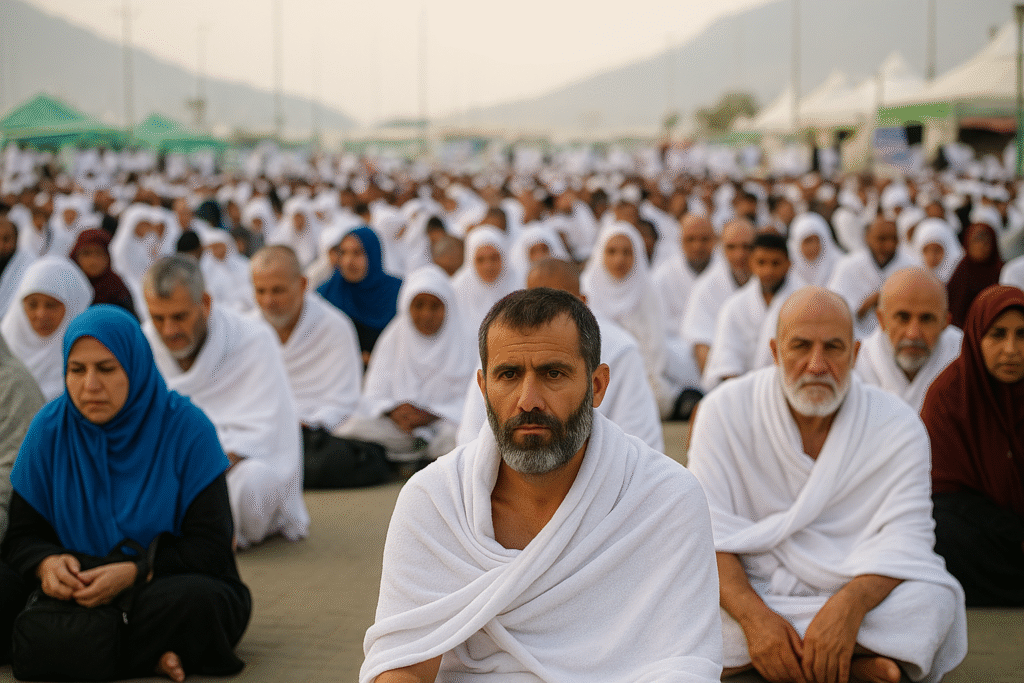
Kyrgyzstan is stepping up its oversight of Umrah pilgrimages in a significant move to guard its citizens against fraudulent travel operators and ensure that journeys to the holy sites are safe, well-organised and fully compliant with national law. The country’s National Agency for Religious Affairs, in partnership with leading religious institutions, has rolled out enhanced accreditation mechanisms, robust monitoring protocols and public-awareness initiatives – all designed to safeguard pilgrims and lift standards across the pilgrimage travel sector.
Strengthening Legal and Institutional Foundations
Under the country’s Law on Freedom of Religion and Religious Organisations, pilgrimage tours such as Umrah are subject to official regulation. Recognising the need for greater safeguards as demand for Umrah travel rises, the National Agency for Religious Affairs along with the nation’s muftiyat and qaziyat have reinforced supervision of travel agencies offering Umrah services. They’ve mandated formal licence-accreditation for agencies, requiring rigorous documentation, operational experience, contractual ties to credible carriers and hotels, and demonstrable insurance coverage for pilgrims. All of this underpins a transition from loosely regulated travel offerings toward a more professional, transparent sector.
Accredited Agencies and the Fight Against Illegal Operators
As part of the reforms, 37 travel agencies have to date been formally accredited and authorised to organise Umrah trips for Kyrgyz citizens. These firms were vetted for their service capability, legal standing and alignment with religious-and-travel protocols. By publishing the list of accredited agencies and making their status public, authorities aim to deter unlicensed operators who advertise on social media or informal channels and promise discounted pilgrimages without guarantees of service or safety. The regulatory crackdown includes targeted inspections at departure points – such as airports – to verify that pilgrims are booked via approved agencies and to intercept any unauthorised travel groups that could expose participants to exploitation.
Monitoring Digital Platforms and Preventing Fraud
Given how many travellers now plan their trips online, the oversight efforts also extend into the digital sphere. The agency works with internet platforms and social-media networks to detect and remove illicit advertisements for pilgrimage tours that operate outside the accreditation system. These illegal offers frequently lack adequate logistical support, valid contracts or protective arrangements for travellers, putting pilgrims at risk of poor accommodations, inadequate transportation and worse. By monitoring online bookings and tracking suspect agencies, the reform strengthens protection for citizens undertaking this spiritually significant journey.
Safeguarding the Pilgrim Experience
The stakes are high. Umrah is an important religious duty and emotional undertaking for many Kyrgyz Muslims. Ensuring the journey is carried out with dignity, safety and clarity has broader implications for trust in both religious and travel-service systems. The reforms aim to guarantee that pilgrims arrive via legitimate agencies, stay in safe lodgings, have access to appropriate transportation and health support, and receive full information about their rights and responsibilities. Events of past years have highlighted that unregulated agency services can leave travellers vulnerable to substandard or deceptive arrangements, stretching the spiritual experience rather than supporting it.
Supporting National Tourism Integrity and Traveller Confidence
From a national tourism perspective, these reforms strengthen Kyrgyzstan’s credibility as a source-market for religious travel. When pilgrims return with positive experiences, it bolsters confidence in the travel-ecosystem and increases the likelihood of repeat journeys and positive word-of-mouth. For families organising travel, accreditation marks a clear signal of safety and legitimacy. For the broader travel-industry in Kyrgyzstan, higher standards help professionalise operations, raise service levels and build stronger links with international carriers and hosts in Saudi Arabia. The ripple effects extend to inbound and outbound pilgrimage markets, elevating Kyrgyzstan’s role in the religious-tourism value chain.
Public Awareness and Pilgrim Education
An essential component of the initiative is education. The National Agency and its religious-affairs partners are engaged in campaigns to inform prospective pilgrims about what to look for in an accredited operator, how to verify agency credentials and what warning signs to avoid. The awareness-drive stresses that only agencies accredited under the updated regulations should organise Umrah, and it provides checklists for travellers about documentation, lodging contracts, travel insurance and safe transport. By empowering pilgrims with information, the initiative reduces the vulnerability of citizens to misleading offers and fraud.
Enforcement and Penalties for Non-compliance
The reforms are backed by legal enforcement. Travel companies that fail to secure accreditation face administrative penalties, cancellation of licence permissions and potential bans on their operations. Officials at airport departure points have been instructed to verify pilgrim bookings and deny boarding to groups arranged by unauthorised agencies. Such enforcement underscores the government’s intention to shift the sector from informal to regulated, and to signal that safety, legality and service quality are priorities.
A Sustainable Future for Pilgrimage Travel
The initiative positions Kyrgyzstan to offer a robust pilgrimage-service framework for the future. As global travel resumes full force post-pandemic, demand for religious journeys is expected to increase. By building regulatory resilience now, Kyrgyzstan not only protects its citizens but also ensures that the pilgrimage-industry evolves in line with international expectations of traveller rights, service standards and safety. Strong supervision, transparent accreditation and attentive monitoring will help the country meet both domestic religious-travel requirements and evolving practitioner expectations.
Conclusion
By intensifying regulation of Umrah-travel arrangements, the National Agency for Religious Affairs in Kyrgyzstan has signalled a clear commitment to protecting its citizens, uplifting service standards and establishing a reliable pilgrimage-travel sector. With accredited agencies, online monitoring, departure-point inspections and public-awareness campaigns, Kyrgyzstan is creating the conditions for safer, smoother and more trustworthy pilgrimages. For pilgrims from Kyrgyzstan, the reform means greater confidence. For the travel-industry, it means professionalisation and elevated reputation. And for the nation, it means being better positioned in the religious-tourism landscape.
For more travel news like this, keep reading Global Travel Wire