
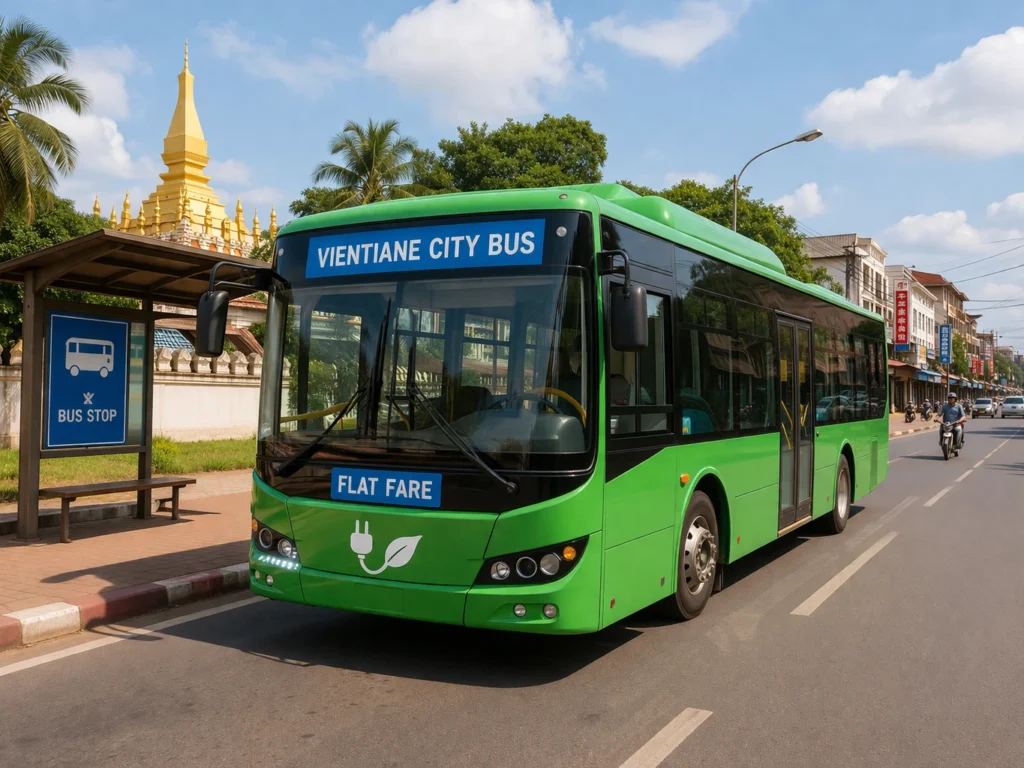
Laos has introduced flat-fare bus services across Vientiane to address a growing fuel shortage. Authorities aim to provide affordable and reliable transport for daily commuters. This move supports residents who struggle with rising fuel costs and limited supply. It also encourages a shift toward public transport alternatives in the capital.
Government Responds to Fuel Shortage Crisis
The fuel shortage has created serious challenges for commuters in Vientiane. Many residents rely on private vehicles for daily travel. However, rising fuel prices and supply issues have made this option less practical.
The government has stepped in with a clear solution. It has expanded public transport services to reduce dependence on private cars. This approach helps conserve fuel while ensuring mobility across the city.
Officials have designed the program to provide immediate relief. At the same time, they aim to promote long-term changes in travel habits.
Flat-Fare System Simplifies Daily Travel
The new flat-fare system makes commuting easier and more predictable. Passengers pay a single fixed price regardless of distance. This removes uncertainty and helps residents manage daily expenses.
The Vientiane City Bus Service launched this system from 23 March to 30 May. During this period, commuters can rely on consistent pricing and regular schedules.
This simple pricing model encourages more people to use public transport. It also reduces the financial burden on households affected by rising costs.
Expanded Routes Improve City Connectivity
Authorities have expanded bus routes to cover key areas across Vientiane. These routes connect residential neighborhoods with commercial and educational hubs.
New routes include connections from the Lao Brewery Company area through major landmarks like That Luang and Patuxay. Another route links the Laos-China Railway Station to the Saphangmeuk BRT Station.
Existing routes also continue to operate with improved frequency. Buses now run every 30 minutes on several lines. Some routes offer hourly services to ensure wider coverage.
This network ensures that commuters can travel efficiently without relying on private vehicles.
Free BRT Trial Encourages Public Adoption
The government has also introduced a free Bus Rapid Transit trial. The Talat Sao to Dongdok line remains free for two months. This trial began earlier in March and continues to attract new users.
This initiative allows residents to experience public transport without cost. It also builds confidence in the system’s reliability and convenience.
By removing financial barriers, authorities aim to increase long-term adoption of public transport.
Electric Buses Lead Sustainable Transition
A key feature of the program is the use of electric buses. These vehicles provide a cleaner and more efficient transport option.
Electric buses reduce emissions and support environmental goals. They also offer a quieter and more comfortable travel experience. Air-conditioned interiors improve comfort in the tropical climate.
The government has scheduled these buses regularly across routes. This ensures reliability and reduces waiting times.
This investment shows a clear commitment to sustainable urban mobility. It also prepares the city for future transport needs.
Supporting Measures Strengthen the Strategy
The bus expansion forms part of a broader government response. Authorities have introduced additional measures to reduce fuel demand.
Educational institutions now operate on reduced schedules. Universities and colleges follow three-day weeks to limit commuting. Students are encouraged to cycle or use public transport.
The government has also secured international support. Vietnam has agreed to supply 50 million litres of fuel to Laos. This provides short-term relief during the crisis.
These combined efforts aim to stabilize the situation while promoting efficient resource use.
Benefits for Daily Commuters
The flat-fare bus system offers several advantages for residents. It provides affordable travel during a period of economic pressure.
Frequent bus services reduce waiting times and improve convenience. Expanded routes connect key areas, making travel easier across the city.
Public transport also reduces traffic congestion. Fewer private vehicles on the road improve overall mobility.
These benefits make buses a practical choice for daily commuting. Many residents now see public transport as a reliable alternative.
Reducing Pressure on Fuel Supply
The initiative directly addresses the fuel shortage by reducing demand. Public transport uses fuel more efficiently than private vehicles.
By encouraging shared travel, the government can conserve limited fuel resources. This approach helps maintain essential services during the crisis.
It also reduces dependence on imported fuel. This strengthens energy security in the long term.
Changing Travel Habits in Vientiane
The program aims to shift how residents think about transport. Many people have relied on private vehicles for years.
However, the current situation has created an opportunity for change. Affordable and reliable buses can reshape daily routines.
If commuters continue using public transport, these habits may persist beyond the crisis. This could lead to lasting improvements in urban mobility.
A Step Toward Sustainable Urban Transport
The expansion of bus services reflects a broader vision for the future. Laos aims to build a more sustainable and efficient transport system.
Electric buses and improved infrastructure support this goal. Authorities are focusing on long-term solutions rather than temporary fixes.
This approach aligns with global efforts to reduce emissions and promote clean energy. It also enhances the quality of life in urban areas.
Looking Ahead
Although the flat-fare program will run until 30 May, its impact may extend further. Authorities will likely evaluate its success and consider future expansion.
If demand remains strong, the government may continue or expand these services. This could transform public transport in Vientiane.
Residents have already started adapting to the new system. Continued support and improvements can strengthen its effectiveness.
Final Takeaway
Laos has taken a decisive step to address its fuel shortage through public transport expansion. The flat-fare bus system provides affordable and reliable travel for Vientiane residents.
This initiative reduces fuel consumption, eases commuting challenges, and promotes sustainability. It also encourages a shift away from private vehicle use.
By investing in electric buses and expanding routes, Vientiane is building a modern transport system. The city now moves toward a cleaner, more efficient, and resilient future.
For more travel news like this, keep reading Global Travel Wire