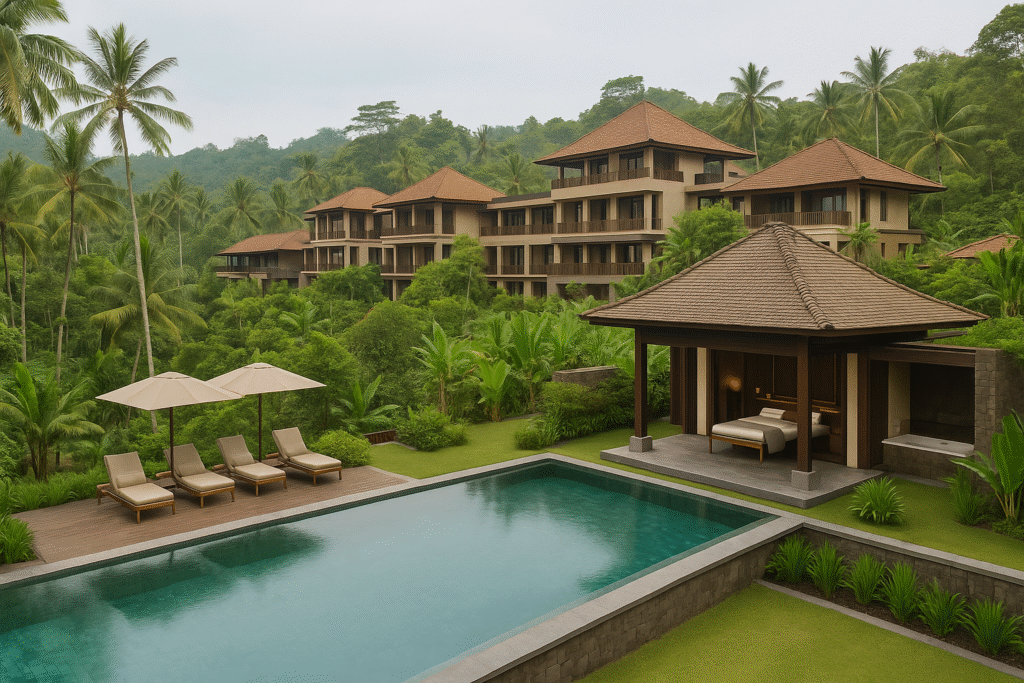
Bali’s enchanting heartland of Ubud is primed for a leap into next-level luxury hospitality, as Radisson Collection prepares to launch its debut Indonesian property by 2027. This exciting development promises to elevate Ubud’s status as a global destination for upscale travellers, blending lavish comfort with Balinese culture, wellness and sustainable design.
A Landmark Entry into Indonesia
The soon-to-be-named resort in Ubud marks Radisson Collection’s first appearance in the Indonesian market. With the signing of the property in late 2025, the international chain officially selected Ubud’s lush jungle-fringed setting for its inaugural venture in the country. Positioned by the mountains and rice-terraced landscapes, the resort development is scheduled for opening in 2027 and will feature around 52 rooms—including exclusive wellness suites equipped with outdoor terraces, private yoga decks and Jacuzzis—and a sprawling 530 sqm Presidential Suite with its own private pool.
Ubud’s Rising Appeal and Luxury Demand
Ubud has long been celebrated for its artistic heritage, spiritual ambience and verdant scenery. With yoga retreats, traditional craft markets, temple visits and tranquil rice-field walks, the region attracts a growing number of visitors seeking more than just a beach holiday. In recent years, investment in high-end resorts and boutique stays has surged, reflecting demand from discerning travellers who want both authenticity and comfort.
The arrival of a major luxury brand in Ubud signals a new chapter: high-end accommodation that meets global expectations while remaining deeply rooted in place. The Radisson project taps into Ubud’s appeal as a wellness and culture hub—an area increasingly sought after by affluent travellers.
A Blend of Local Culture and Modern Luxury
This new resort aims to showcase Balinese architectural elements, serene natural surroundings and modern amenities. Every room and communal space is designed to face forest or garden views, inviting guests into an immersive natural experience. Wellness-focused features are central: from private yoga decks and spa therapies to outdoor terraces that connect indoor luxury with fresh jungle air.
Beyond the physical comforts, the resort envisions cultural integration: curated workshops with local artisans, guided visits to traditional temples, hands-on craft or dance lessons, and experiences rooted in the community. By offering both indulgence and meaningful interaction, the property seeks to appeal to luxury travellers who value authenticity as much as elegance.
Sustainability and Responsible Tourism
Sustainability is also a key dimension of the project. In keeping with Bali’s growing emphasis on responsible tourism, the resort will include eco-friendly design strategies, waste-management systems, and transport options with minimal environmental impact. Ubud’s reputation as an eco-conscious zone—thanks to its jungle setting, rice-paddy views and spiritual atmosphere—makes it a fitting location for a luxury resort that operates with ecological awareness. For travellers consciously looking to reduce their footprint, the resort’s commitment to green hospitality adds an extra appeal.
Economic and Community Impact
The development is expected to bring meaningful economic benefits to the Ubud area. Hospitality jobs, service-industry roles, local-supply contracts and cultural-partner opportunities will all contribute to the local economy. The influx of high-spending visitors will ripple through restaurants, tour operators and nearby villages. In addition, the emphasis on local craft and culture means that the resort is poised to actively engage with Ubud’s artisans and communities—enabling a more inclusive tourism model.
Strategic Timing and Growth Vision
The timing of this project is significant. As the global travel sector rebounds and destinations vie for premium market share, Bali remains a standout draw thanks to its natural beauty and cultural richness. By entering the luxury tier now, Radisson Collection positions itself ahead of many competitors. The brand’s broader strategy in Indonesia is ambitious—leveraging both domestic demand and international appeal—and choosing Bali, and specifically Ubud, aligns with that push. For Bali, the addition of a globally recognised luxury brand reinforces its credentials as more than just a sun-and-sand destination.
What It Means for Travellers
For visitors planning their Bali trips in the coming years, this resort will offer an elevated stay option in Ubud—a base for exploring temples, rice terraces, yoga studios and jungle walks while staying in top-tier accommodation. Expect seamless wellness amenities, culturally-infused hospitality, and access to the tranquillity of Ubud with the luxury standards of an international brand.
Travel planners who focus on luxury, sustainability and cultural engagement now have a major new property to consider. The resort’s integration of nature, local heritage and high-end service sets it apart from the typical luxury beach resort model.
Looking Ahead
As Ubud continues to grow in recognition among global travellers, this upcoming Radisson Collection resort stands as a milestone for the region’s tourism evolution. It simultaneously reinforces Bali’s standing in the luxury segment and signals to global travellers that Ubud offers more than villa-style stays—it offers a refined, all-round experience.
With its opening slated for 2027, the resort adds momentum to Bali’s tourism upgrade: where culture, wellness and eco-luxury converge. For guests seeking something beyond the ordinary, Ubud’s next-generation resort may just define the future of premium travel on the island.
In summary, the arrival of Radisson Collection in Ubud isn’t just another hotel opening—it’s a strategic infusion of luxury, community-centric culture and sustainability into one of Bali’s most beloved travel regions. With its blend of modern comfort and local relevance, the resort is poised to strengthen Bali’s appeal for high-end travellers and mark a new era in the island’s hospitality landscape.
For more travel news like this, keep reading Global Travel Wire