
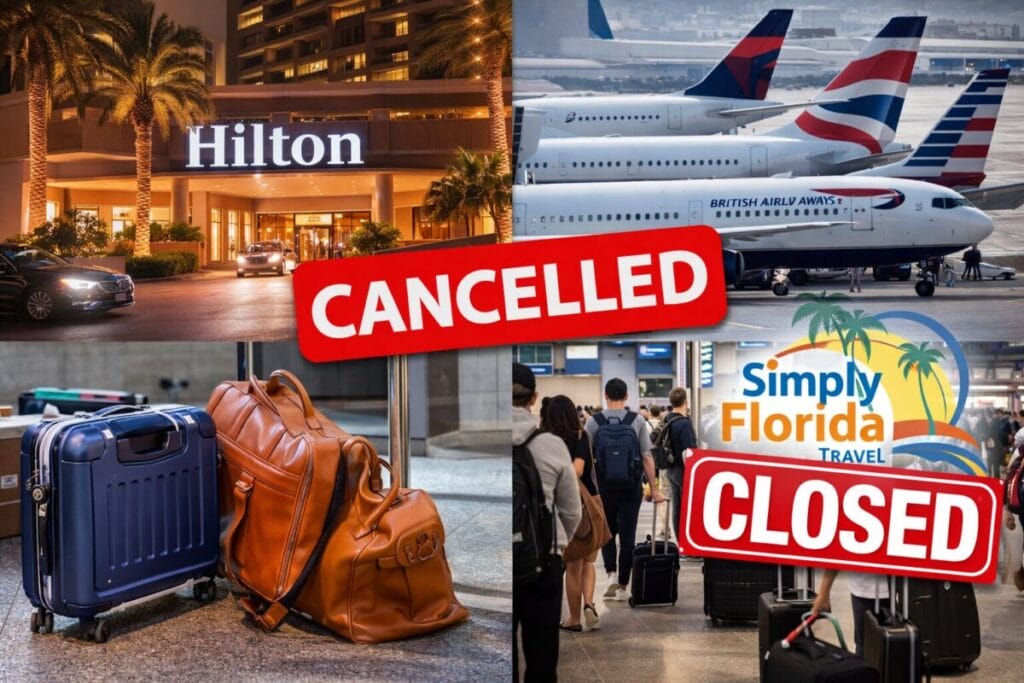
The unexpected closure of Simply Florida Travel has triggered widespread disruption across the global tourism industry. The UK-based agency specialized in premium holiday packages, and its collapse has left thousands of travelers facing canceled bookings and uncertain travel plans.
Luxury hotels, airlines, and tour operators now manage sudden gaps in reservations. Many travelers who relied on curated packages must reorganize trips independently. The event highlights vulnerabilities within the luxury travel ecosystem, where agencies often coordinate complex itineraries.
Industry analysts believe the ripple effects could reshape how high-end travelers plan vacations in the future.
Hotels experience surge of cancellations and booking uncertainty
Luxury hotel brands have felt immediate consequences following the agency shutdown. High-end properties in popular destinations report increased cancellations linked to package bookings managed by the agency.
Hotels known for premium services depend heavily on advance reservations from trusted travel intermediaries. When a major agency collapses, booking pipelines change overnight. Properties must quickly adjust pricing strategies and marketing campaigns to fill vacant rooms.
Destinations such as Miami, New York, and Orlando experience strong impacts because many premium holiday packages included these locations. Hotel teams now reach out directly to affected travelers to encourage rebooking through direct channels.
Airlines confront shifting demand and operational challenges
Major airlines face uncertainty due to canceled flight reservations tied to package deals. Carriers that relied on agency partnerships must adapt to fluctuating passenger numbers and altered demand patterns.
When a travel agency fails, seats previously reserved through group or packaged bookings often become available at short notice. Airlines must adjust capacity planning and pricing to manage these changes effectively.
Airlines also provide customer support to travelers attempting to rebook independently. This increased workload places pressure on customer service teams during peak travel periods.
Luxury travelers scramble to rebuild complex itineraries
High-end travelers often expect seamless experiences designed by specialized travel agents. Many itineraries include private transfers, exclusive tours, and carefully coordinated schedules. Without agency support, travelers must coordinate these elements themselves.
Some travelers turn to concierge services or direct bookings with hotels and airlines. Others seek new advisors to rebuild personalized itineraries quickly. This shift highlights the importance of flexibility in modern travel planning.
Travelers now consider diversifying booking methods rather than relying solely on one intermediary. Industry experts recommend maintaining direct contact with airlines and accommodation providers.
Impact on tourism markets tied to premium holiday packages
Destinations that relied on organized luxury packages may see short-term fluctuations in visitor numbers. Travel agencies play a key role in promoting high-value tourism through curated experiences and group bookings.
When a major agency disappears, tourism boards often step in to maintain confidence among travelers. Marketing campaigns emphasize direct booking options and reassure visitors that destinations remain accessible.
Local businesses such as tour guides, luxury transportation providers, and fine dining establishments may experience temporary declines in demand until new booking channels replace lost agency traffic.
Changing consumer behavior reshapes luxury travel trends
The incident encourages travelers to rethink how they plan premium vacations. Many now prioritize flexibility and direct communication with service providers. Digital booking platforms also gain importance as travelers compare options independently.
Luxury travelers increasingly value transparency regarding cancellation policies and financial protection. Travel insurance and secure payment methods have become essential considerations.
Industry observers note that this shift could strengthen direct relationships between hotels, airlines, and customers. Brands that provide personalized service may attract travelers seeking reassurance after recent disruptions.
Strategies for travelers navigating unexpected travel disruptions
Travel experts encourage travelers to review bookings regularly and maintain copies of confirmations. Direct booking with airlines and hotels can provide greater control during uncertain situations. Flexible fares and refundable reservations also offer additional security.
Travel insurance helps protect against unexpected cancellations caused by supplier failures. Travelers should also monitor official travel updates and communicate quickly with service providers when disruptions occur.
Maintaining flexibility with travel dates and destinations allows travelers to adjust plans more easily. Proactive communication often leads to better solutions during complex travel challenges.
Industry response signals evolving future for luxury tourism
Hospitality companies and airlines continue adapting to changing travel patterns following agency closures. Many brands invest in improved digital platforms that allow direct interaction with customers. Loyalty programs and exclusive packages may help rebuild confidence among premium travelers.
The luxury travel market remains resilient despite short-term disruption. High-end travelers continue seeking unique experiences, personalized service, and memorable journeys. Companies that adapt quickly to evolving expectations may benefit from stronger customer relationships.
The collapse of Simply Florida Travel serves as a reminder that the tourism industry constantly evolves. While challenges create uncertainty, they also encourage innovation and stronger connections between travelers and service providers.
For more travel news like this, keep reading Global Travel Wire