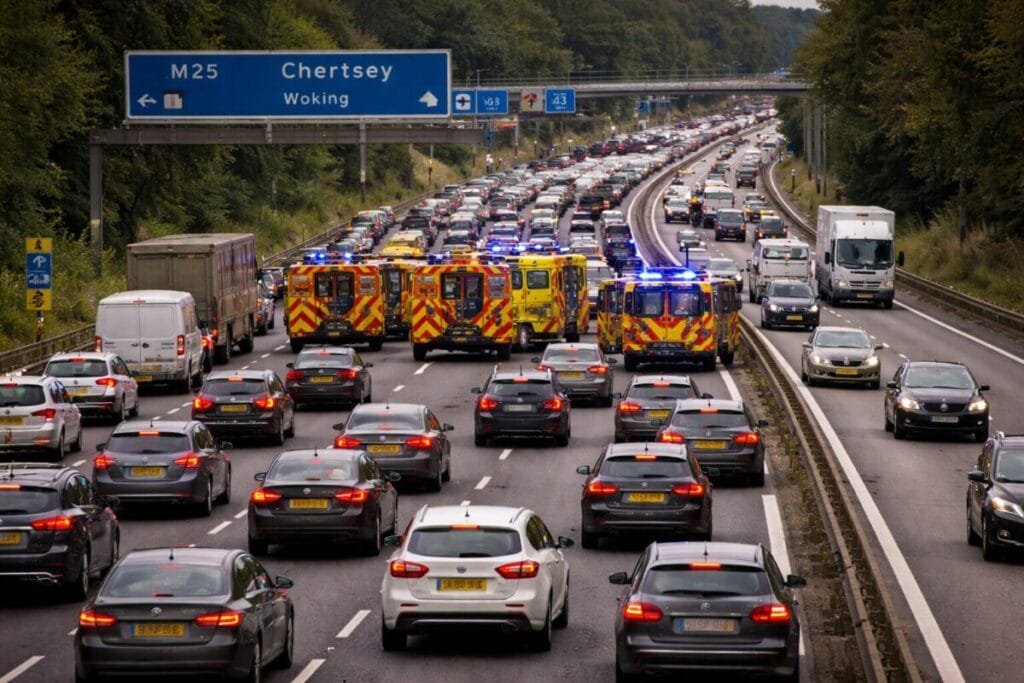
Drivers on the M25 faced major delays after a collision between Junction 10 at the A3 Wisley Interchange and Junction 11 at Chertsey disrupted traffic during the early morning rush. The crash triggered heavy congestion across one of the UK’s busiest motorway corridors. Long queues stretched for several miles as drivers struggled through restricted traffic flow.
The incident caused one lane to close, and vehicles moved slowly through reduced capacity. Motorists reported standstill sections and significant delay times. Many commuters adjusted travel plans on short notice, while others braced for lengthy journeys as the disruption continued throughout the morning.
Emergency Services Respond Quickly to the Scene
Emergency teams arrived swiftly to support the situation. Police, ambulance crews, and fire units worked together to secure the area and assist those involved. Their presence required further lane space, which tightened traffic flow even more. Safety took full priority as responders managed the damaged vehicles and evaluated the scene.
Drivers passing the crash site slowed down due to caution and curiosity. Officials urged motorists to stay focused and avoid distractions. Onlooking drivers often worsen motorway delays and raise the risk of secondary incidents. Emergency services stressed the need for awareness and patience during major road events.
Lane Closure Causes Widespread Congestion
The closure of one lane on the clockwise M25 created heavy bottlenecks. The M25 already handles intense daily traffic as a major orbital route around London. Any obstruction on the motorway can cause severe delays within minutes. This stretch between the A3 and Chertsey carries commuters, freight traffic, and long-distance travelers throughout the day.
Queues grew rapidly after the collision, with some extending for up to three miles in both directions. Slow-moving vehicles crawled through restricted space as drivers attempted to merge. The delays affected both local and long-haul journeys, pushing travel times far beyond normal expectations.
National Highways Confirms Continued Disruption
National Highways provided updates as the incident developed. Traffic management teams directed drivers through open lanes while emergency workers cleared the scene. Initial estimates suggested delays of 50 minutes, but these times fluctuated as traffic volumes increased during peak travel hours.
Officials estimated that normal traffic flow would not resume until late morning. The timeline depended on cleanup progress, vehicle recovery, and traffic management coordination. Road users monitored live updates closely as they adjusted departure times to avoid peak congestion.
Ripple Effects Across Surrounding Routes
Delays on the M25 often spill into surrounding corridors. Nearby local roads experienced heavier traffic as drivers diverted to avoid queues. Junctions feeding into the motorway also slowed due to increased vehicle demand. Delivery companies, bus services, and logistics operators faced challenges due to prolonged travel times across the region.
Commuters traveling toward Heathrow, Surrey, and southwest London reported disrupted schedules. The M25 serves as a critical artery for cross-regional movement, linking major towns, airports, ports, and business districts. Any significant blockage affects multiple sectors beyond passenger travel.
Safety Advice and Driving Recommendations
Transport authorities shared guidance to help drivers manage their journeys during the disruption. Motorists were encouraged to maintain safe following distances, avoid sudden lane changes, and remain patient near the crash site. Authorities also discouraged unnecessary stopping, as such behavior increases risk and slows recovery efforts.
Drivers planning trips across the motorway corridor were encouraged to check traffic updates before departure. Travel apps and traffic feeds helped users identify bottlenecks and evaluate potential detours. Officials highlighted that advanced planning can reduce stress during heavy congestion events.
Travel Tips for Affected Drivers
Travel experts recommended several strategies for motorists navigating the disruption:
- Plan Alternative Routes: Roads such as the A3 and local parallel routes offered relief for certain journeys.
- Allow Extra Travel Time: Drivers were urged to expand travel windows to avoid missing appointments or connections.
- Use Real-Time Updates: Traffic platforms provided dynamic information regarding lane openings and recovery progress.
- Stay Calm During Delays: Slow movement creates frustration, but aggressive driving increases crash risk.
Employers and commuters also considered remote or flexible work options to avoid prolonged time on the motorway.
Looking Ahead as Traffic Recovers
While the lane closure remained active during the morning peak, recovery teams worked to remove damaged vehicles and restore normal flow. Officials warned that residual delays may continue even after lanes fully reopen. Major motorway incidents often leave congestion behind long after clearance, as traffic must reorganize and rebuild speed across extended distances.
The collision on the M25 highlighted the vulnerability of major transport corridors to sudden events. With heavy volumes and limited alternative motorway links, disruptions can escalate rapidly. For drivers across southeast England, the incident served as a reminder of the importance of awareness, preparation, and patience during high-pressure road scenarios.
For more travel news like this, keep reading Global Travel Wire