A powerful winter storm is sweeping across the United States, triggering widespread travel disruptions during one of the busiest periods for domestic air travel. Major airlines are rolling out flexible rebooking options and waiving change fees to shield travelers from delays, cancellations, and hazardous weather conditions.
The fast-moving system brings freezing rain, sleet, and heavy ice accumulation. Weather alerts stretch from Texas through the Midwest and into major Northeastern hubs. With road and runway conditions expected to deteriorate rapidly, travelers are urged to act early to avoid significant itinerary changes and lengthy airport delays.
Airlines Respond With Proactive Flexibility
American Airlines, Delta Air Lines, Southwest Airlines, and United Airlines announced expanded flexibility programs that allow affected customers to change travel dates without incurring penalties. These temporary measures apply to flights booked within the storm-affected period and cover dozens of impacted airports.
Each airline has tailored its flexibility window based on regional forecasts and operational needs. Most policies grant passengers multiple days to make new bookings and maintain their original fare class when possible.
This coordinated response aims to reduce airport congestion, prevent missed connections, and limit customer frustration as the storm evolves.
Delta Air Lines Offers Automatic Rebooking Support
Delta provided one of the earliest winter storm alerts for travelers passing through key hubs in the Plains, Southeast, and Northeast. Passengers scheduled to fly during several peak storm days may change flights without a fee.
Delta also introduced automatic rebooking for passengers who miss connections due to delays or flight cancellations. Customers will receive new itineraries for the next available flight, reducing the need for phone calls or customer service lines already strained during severe weather events.
The airline emphasized the importance of verifying flight status and suggested that travelers arrive earlier than usual, as airport security lines often lengthen during weather events.
American Airlines Expands Change Waivers for Dozens of Airports
American Airlines implemented fee waivers for travelers flying in and out of nearly forty airports across multiple regions. Its flexibility program applies to flights scheduled over several days of the storm period. Tickets purchased before the advisory remain eligible, and customers are encouraged to finalize new travel dates promptly to avoid fare differences.
American noted that shifting weather patterns may force additional schedule changes as the storm moves east. To reduce passenger inconvenience, the airline increased staffing at key customer support centers and ramp operations.
United Airlines Adjusts Travel Windows to Improve Passenger Options
United Airlines adopted a broader timeline that allows customers to rebook flights into and out of affected southern airports. Passengers have several days to complete their rebooked travel while keeping original pricing intact.
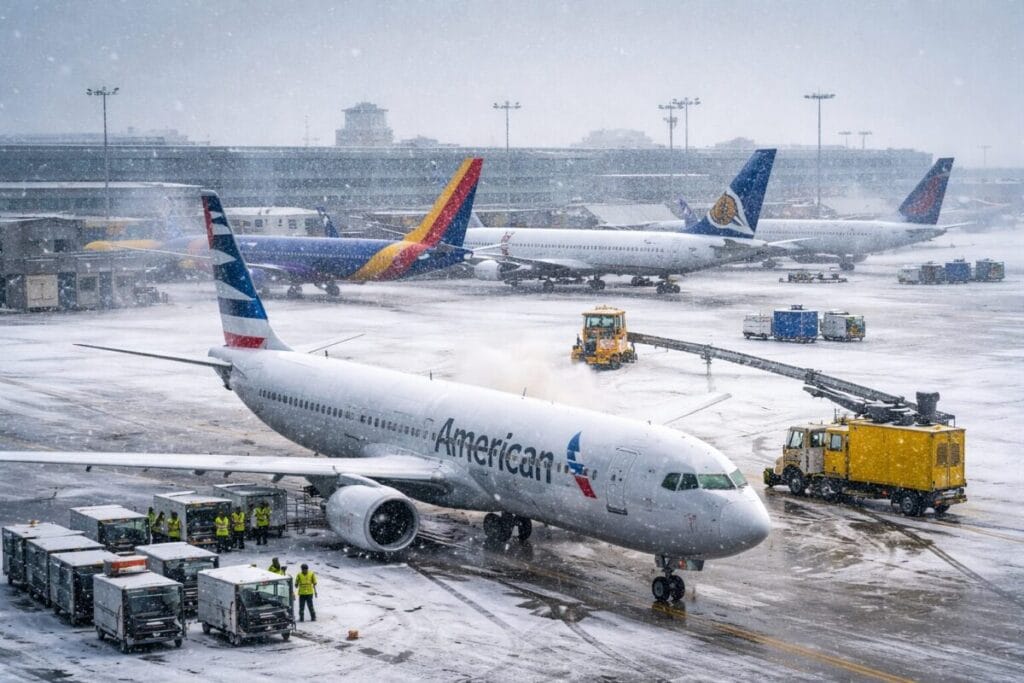
United is monitoring storm impacts across Texas, the Midwest, and the Northeast. Operational adjustments include additional crew scheduling support, expanded de-icing operations, and contingency routing to protect time-sensitive connecting flights.
Southwest Airlines Issues Travel Advisory Across U.S. Network
Southwest Airlines released a comprehensive travel advisory covering multiple major airports from the Southeast to the Northeast. Its program enables passengers to adjust travel without penalties when rerouting through designated airports.
Southwest encouraged passengers to consider alternative travel days, noting that ground access to some airports may become limited due to icy road conditions. Major cities in the storm’s path include Dallas, Houston, Atlanta, Nashville, and several Mid-Atlantic metropolitan areas.
Winter Storm’s Wider Impact on U.S. Travel
Meteorologists warn that icy conditions can remain long after snowfall ends. Ice accumulation on power lines and roads may cause temporary outages and slow airport ground operations. For airports, even a thin layer of ice can halt runway activity, as de-icing aircraft requires extended time and specialized equipment.
Travelers heading to tourism hotspots, ski resorts, theme parks, and major urban destinations may experience ripple effects from broader network delays. Popular winter travel periods can strain airline capacity, leaving fewer open seats for last-minute rebooking.
Transportation officials recommend building extra time into itineraries, especially for connecting flights.
Travelers Encouraged to Stay Alert and Act Early
Airlines strongly recommend that travelers monitor weather developments and flight notifications throughout the storm. Early rebooking offers the highest chance of securing preferred travel times and avoiding lengthy airport wait periods.
Travel and tourism experts advise keeping backup plans ready for hotel stays, rental car shortages, and potential road closures in affected regions.
Conclusion
With a major winter storm disrupting travel nationwide, airlines are taking proactive steps to reduce customer stress and operational chaos. Flexible rebooking policies, rapid weather monitoring, and expanded passenger support aim to ensure safer winter travel and smoother operations across the U.S. aviation network.
For more travel news like this, keep reading Global Travel Wire