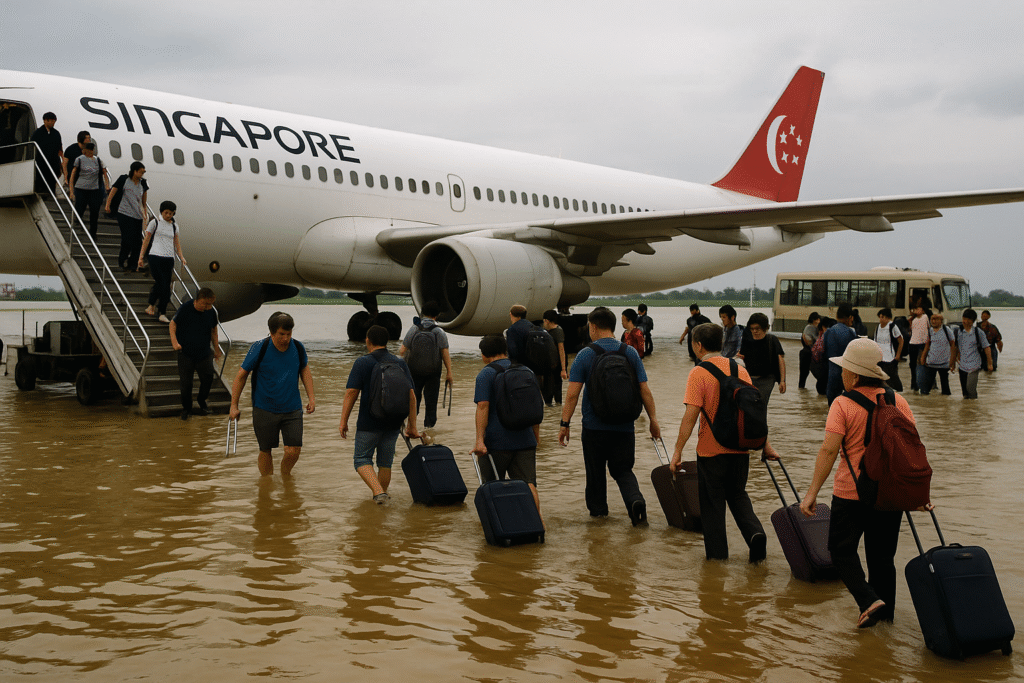
More than 800 Singaporean tourists are safely back home after intense floods swept through Hat Yai and other parts of southern Thailand. The large-scale evacuation marked one of the biggest coordinated rescue efforts involving foreign visitors in the region this year. Heavy rains triggered sudden floods that submerged roads, markets, and popular tourist areas, leaving thousands stranded. Swift action by the Thai government and military ensured foreign travellers, including Singaporeans, could be moved to safer locations before being flown home.
Hat Yai, known for its bustling shopping districts and vibrant street food culture, was hit harder than many surrounding areas. As water levels rose, tourists and locals sought refuge in higher zones while emergency crews worked around the clock to reach isolated neighbourhoods.
Floods Disrupt Southern Thailand’s Travel Corridor
The floods impacted more than 2.7 million people across southern Thailand. Over 980,000 homes experienced damage, and the tragedy claimed lives in several districts. Hat Yai, one of the top tourism hubs near the Malaysian border, saw its transport routes crippled by rising water. Key highways and rail services were suspended as emergency alerts went out to travellers.
Drone footage from the region revealed submerged streets, resorts, and shopping complexes. Hotels sheltered stranded tourists as response teams moved in. Thailand’s Department of Disaster Prevention and Mitigation deployed military trucks, boats, and rescue teams to evacuate residents and visitors. The disaster highlighted how vulnerable southern provinces are to extreme weather during monsoon periods.
Strong Coordination Between Thailand and Singapore
Singapore’s Ministry of Foreign Affairs coordinated with Thai authorities to ensure its citizens were safely accounted for and repatriated. Officials from both sides maintained communication as evacuation routes opened. Singapore’s Foreign Minister expressed deep appreciation for the rapid support provided by Thai agencies and volunteers.
More than 1,800 foreign tourists from various countries were rescued during the operation. The Thai Armed Forces played a major role in transporting stranded travellers from flooded hotels and villages to safe transit points. Medical teams provided health checks and essential aid for those affected.
Transport Links Restored as Waters Recede
By late November, rainfall began to ease, and water levels slowly receded. This allowed trucks, vans, and rescue boats to access areas that had been unreachable for days. Airports in the region resumed limited operations, enabling repatriation flights to depart.
Thailand’s Ministry of Tourism and Sports reported that major transport routes in Hat Yai have since been restored, bringing some relief to tour operators and local businesses. No new reports of stranded tourists have been received, signalling an improvement in mobility across affected provinces.
Local authorities have prioritized clearing debris, repairing damaged roads, and reopening travel corridors. These steps are essential for stabilizing the tourism sector, which is a lifeline for many communities in southern Thailand.
Impact on Local Communities and Tourism Economy
The floods left severe damage across several provinces, disrupting livelihoods and displacing families. Markets, hotels, farms, and small businesses faced weeks of closure. Hat Yai’s economy, heavily driven by cross-border tourism from Malaysia and Singapore, experienced significant losses.
Many locals depend on tourism for income, from taxi drivers and shop owners to tour guides and restaurateurs. Recovery efforts now focus on repairing infrastructure, restoring utilities, and supporting affected families. Authorities are also reviewing long-term flood-prevention strategies, including improved drainage systems and expanded emergency shelters.
Relief Efforts Continue as Thailand Prepares for Recovery
The Thai government is working with aid groups, volunteers, and the private sector to deliver relief supplies, medical support, and temporary housing to affected communities. Military units remain active in the region to support cleanup and reconstruction efforts.
Authorities also aim to reassure travellers that popular destinations will be ready to welcome visitors once safety is fully restored. Tourism agencies are preparing updated advisories, safety guidelines, and regional briefings to help rebuild traveller confidence.
The disaster underscored the importance of strong coordination between governments during emergencies. The quick response ensured foreign travellers received timely assistance, while ongoing recovery work seeks to stabilize local communities that face long-term challenges.
A Test of Resilience for Southern Thailand
The safe return of more than 800 Singaporeans marks a positive outcome after days of uncertainty. Thailand now turns its attention to rebuilding and implementing better preparedness measures to reduce risks in future monsoons. While recovery will take time, the spirit of cooperation shown among rescue teams, volunteers, and international partners reflects the resilience of the region.
As Hat Yai and nearby provinces rebuild, the global tourism community continues to support Thailand’s efforts to restore one of Southeast Asia’s most beloved travel regions.
For more travel news like this, keep reading Global Travel Wire