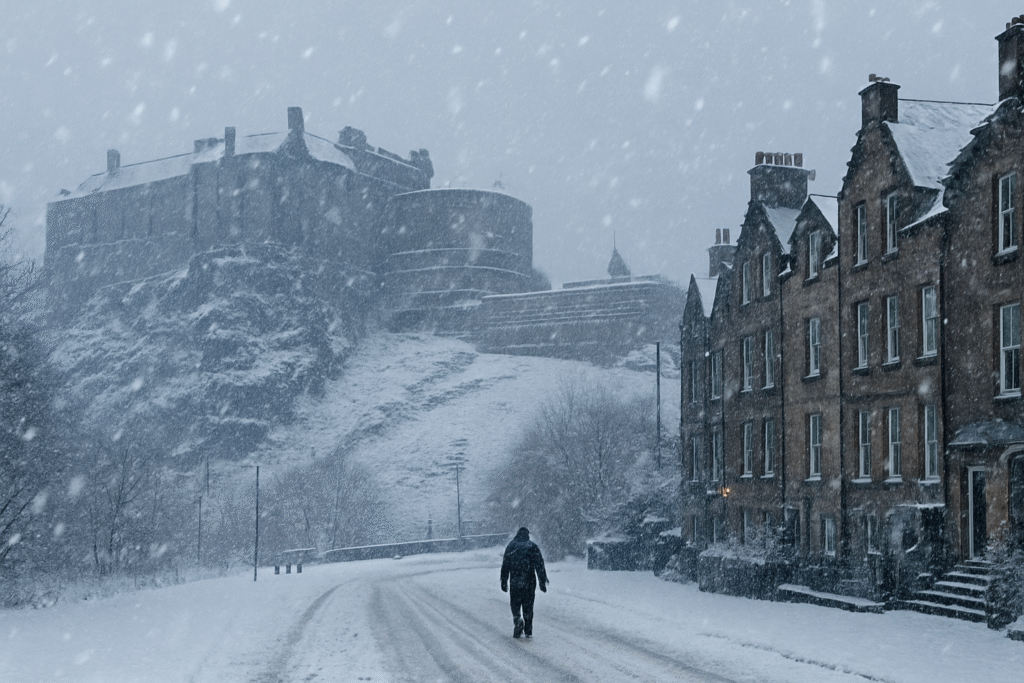
Scotland is preparing for a powerful winter storm that will stretch more than 420 miles across the UK. Edinburgh sits at the centre of this system and is expected to face temperatures dropping to around -7°C. Heavy snow, icy winds, and widespread travel disruption are all likely as the cold front moves in. Weather agencies warn that this could become one of the most intense early-winter storms in recent years, affecting communities, transport networks, and tourism across the country.
Edinburgh at the Heart of a Major Weather System
As November advances, colder air from the north is merging with moisture-rich systems from the Atlantic. This mix creates ideal conditions for heavy snowfall and freezing temperatures. Edinburgh, Glasgow, Aberdeen, and other major Scottish cities are preparing for severe impacts.
Forecasters expect widespread snow across northern England as well. Cities like Newcastle, Leeds, and Manchester may face several inches of snow. Southern regions should see lighter snowfall, though icy surfaces and freezing winds will still cause disruption.
Local councils in Scotland are already issuing warnings. Crews are preparing to grit major roads, clear walkways, and respond to weather emergencies. Visitors and residents should expect challenging conditions for several days.
Storm Scale and Expected Severity
This storm stands out because of its sheer size. The snow band stretches across the length of Scotland and deep into England. Up to eight inches of snow may fall in higher and rural areas. The cold air mass moving over the UK will push ground temperatures near or below freezing throughout the event.
Edinburgh, known for its winter markets and historic skyline, will feel the storm’s full impact. Snow could settle quickly due to the low freezing level, coating roads, rooftops, and pathways. Gusty winds will reduce visibility, especially during peak snowfall.
Meteorologists expect this storm to surpass typical early-winter events in intensity. Sharp temperature drops, rapid moisture movement, and prolonged cold spells will extend the severe conditions longer than usual. This increases risks for travel, outdoor activities, and essential services.
Travel Disruption Across the UK
Travel will likely face the most significant disruption. Heavy snowfall often leads to blocked routes, slow traffic, and delays on key road networks. Motorists are urged to carry winter kits, check tyres, and avoid long journeys unless necessary.
Rail networks may also see major delays. Snow and ice can affect overhead lines and points, slowing down services through central Scotland and northern England. Travellers should check schedules before leaving for stations.
Air travel might experience cancellations or long delays. Edinburgh Airport and Glasgow Airport have warned passengers to monitor flight updates closely and arrive early if possible.
Impact on Tourism and Outdoor Activities
Edinburgh’s tourism sector may experience short-term disruption. Popular outdoor attractions, such as Arthur’s Seat, Edinburgh Castle, and the Royal Mile, could face restricted access during heavy snow. Paths may become slippery or temporarily closed.
Indoor attractions, however, remain safe options. Museums, galleries, and historic indoor sites across the city will stay open where possible. Visitors are encouraged to use public transport when available and avoid high-risk outdoor areas.
Despite the severe weather, Edinburgh’s winter scenery will offer dramatic views. The snow-covered city often creates a picturesque atmosphere that attracts winter travellers. The storm will make movement challenging, but the beauty of the season will remain.
Safety Measures and Preparedness Tips
Authorities and travel organisations recommend several steps to stay safe during the storm:
- Check weather forecasts from official sources before travelling.
- Carry warm clothing, waterproofs, and emergency supplies.
- Keep mobile phones charged during journeys.
- Avoid remote routes and rural roads when conditions are poor.
- Choose indoor activities if conditions worsen.
- Stay informed about transport changes and delays.
Residents should check in on neighbours and ensure homes are properly heated. Rural communities in the Highlands and Aberdeenshire may experience deeper snow and potential isolation. Councils are preparing emergency response teams for these areas.
Communities Respond as Cold Spell Continues
Local authorities across Scotland are activating winter plans. Gritting fleets are out early, and emergency teams are on standby. Many areas have increased support for vulnerable residents as temperatures drop.
The Met Office suggests the cold weather may extend beyond this storm. Further snow showers and freezing nights are likely as December approaches. Communities should prepare for recurring bouts of winter weather throughout the season.
What Comes After the Storm?
Meteorologists believe this snowstorm may mark the start of a colder-than-usual early winter. More cold fronts could follow, bringing additional snow to Scotland and northern England.
Edinburgh’s resilience will be tested, but the city has experience managing winter storms. Tourism groups and local businesses remain optimistic that visitors will still enjoy the city’s seasonal festivals, food markets, and cultural events once conditions improve.
For now, preparation and caution remain essential. With the right planning, Scotland’s winter landscapes can still be enjoyed safely, even during one of the most significant storms of the season.
For more travel news like this, keep reading Global Travel Wire