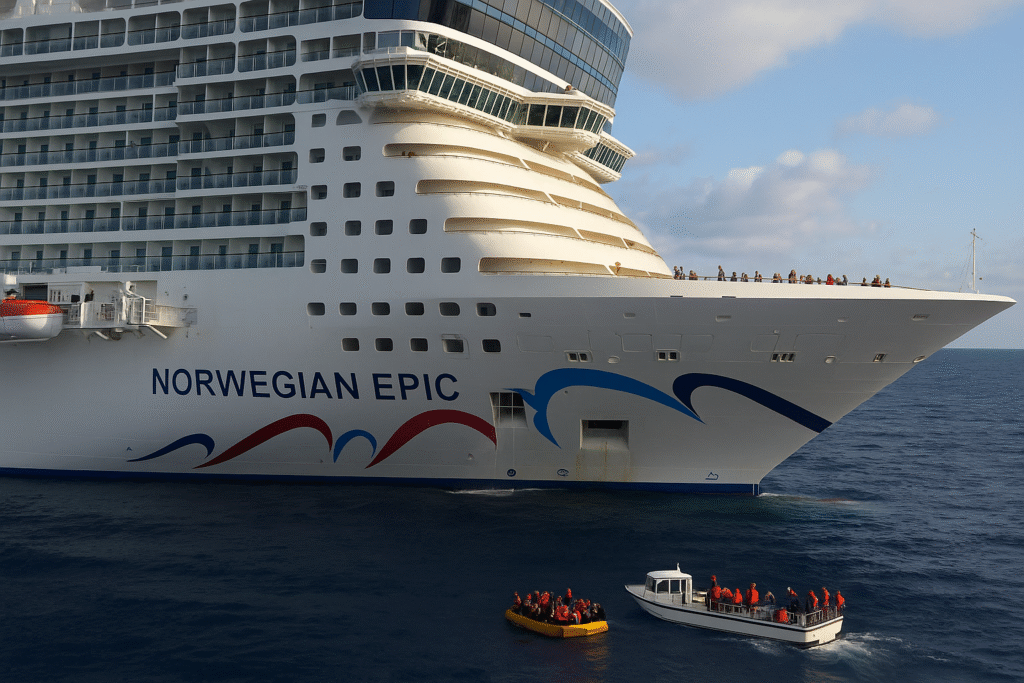
In a remarkable display of maritime readiness and international cooperation, the cruise ship Norwegian Epic intervened to save 63 people stranded in the Ionian Sea while on a Mediterranean itinerary. The incident underscores the importance of vigilant safety protocols, rapid response and coordination among cruise lines and government authorities in ensuring lives are safeguarded at sea.
Rescue Mission in the Mediterranean
The ship, operated by Norwegian Cruise Line, departed from Civitavecchia, Italy, and was en route to popular destinations including Greece, Malta, Italy and France when it received an urgent call for assistance. The vessel diverted from its planned course after the rescue coordination centre in Greece alerted them to a group of people in distress in the Ionian Sea. This unplanned detour exemplifies how cruise operators must balance guest itineraries with sudden maritime emergencies.
Coordinated Action with Greek Authorities
According to official reports, the reserve-coordination centre in Athens tasked Norwegian Epic with assisting those in peril. The individuals were located in a small craft approximately 120 km southwest of the isle of Zakynthos. On board the cruise ship, the survivors received medical evaluations, nourishment, hydration and comfort until the ship reached port. The cruise line arranged for the survivors’ transfer to Greek authorities once docked in Kalamata, and then resumed its scheduled journey. The entire operation highlights how private-sector vessels and public search-and-rescue services can swiftly align to bring vulnerable people to safety.
All-Hands Crew & Passenger Understanding
The crew of the Norwegian Epic moved into crisis-mode, putting aside the luxury cruise agenda to manage the rescue. Guests on board were informed of the diversion and thanked for their patience and understanding. The incident transformed what had been a leisure voyage into one where the safety of lives at sea took precedence. For passengers, the unexpected event became a poignant reminder that even on vacation, the ocean remains unpredictable—and the operators of luxury ships are prepared.
Implications for Tourism and Cruise Travel
This rescue operation sends a powerful message to travellers and the tourism industry alike: when you book a Mediterranean cruise or any sea-based journey, safety is not an afterthought. Cruise lines maintain rigorous safety protocols, train crews for emergencies, and remain ready to collaborate with maritime authorities. For the Mediterranean region—where seas, weather and migration flows can mean rapid change—this incident reinforces that the cruise industry takes its humanitarian and safety role seriously.
Tips for Safer Cruising in the Mediterranean
- Participate fully in safety drills: When boarding, pay attention during lifeboat and emergency briefings.
- Stay informed: Check weather updates and travel advisories for the regions you’ll visit.
- Familiarise yourself with emergency procedures: Know the muster station on the ship, how to reach it, and what the ship’s evacuation routes are.
- Stay connected: Use onboard communication options and share your travel plan with friends/family back home in case schedules shift.
- Understand the unexpected: Cruise itineraries may change due to weather, port closures or emergency operations; flexibility and patience go a long way.
A Story of Solidarity at Sea
What began as a routine Mediterranean sailing evolved into a life-saving operation. The Norwegian Epic’s deviation to save stranded individuals off Greece is not just a headline for maritime safety—it’s a story of solidarity, swift action and prioritising human lives over schedules. For holiday-makers seeking memorable journeys across Europe’s coastal gems, this event should bring confidence that even when things go off-plan, cruise operators and authorities will act decisively.
Looking Ahead for Cruise Travellers
For travellers planning Mediterranean cruises—whether coastal Europe, Greek islands, or beyond—this incident affirms that safety and humanitarian readiness are built into the voyage. The allure of azure waters, historic ports and idyllic stops remains intact, but now with renewed assurance that safety is a serious priority. The unexpected detour by the Norwegian Epic might have impacted one port call, but it demonstrated the very essence of responsible travel at sea.
With this incident now part of the wider tourism narrative, Mediterranean cruising takes on a deeper dimension: not just relaxation and scenic beauty, but also resilience and readiness. The 63 lives saved are a testament to what happens when a cruise ship and national maritime authority act in concert. For anyone booking their next Mediterranean adventure, the key takeaway is clear: you’re not just voyaging through islands and coastlines—you’re travelling aboard professionals trained for anything the sea may bring.
For more travel news like this, keep reading Global Travel Wire