A sudden escalation in security concerns has prompted the United States Embassy to issue an urgent travel alert for Mexico. The warning follows a major military operation that reportedly eliminated a high-profile cartel leader. Authorities believe the development triggered coordinated retaliation by criminal groups across several regions.
The embassy advised U.S. citizens to shelter in place and avoid non-essential travel until conditions stabilize. Officials emphasized that the security situation remains fluid. Travelers currently in affected areas should stay indoors, monitor official updates, and avoid unnecessary movement.
The alert highlights growing risks in key tourism zones. Popular destinations such as Puerto Vallarta, Cancun, Playa del Carmen, and Tulum have experienced disruptions that affect transportation and public safety.
Airports Face Chaos as Flights Get Cancelled
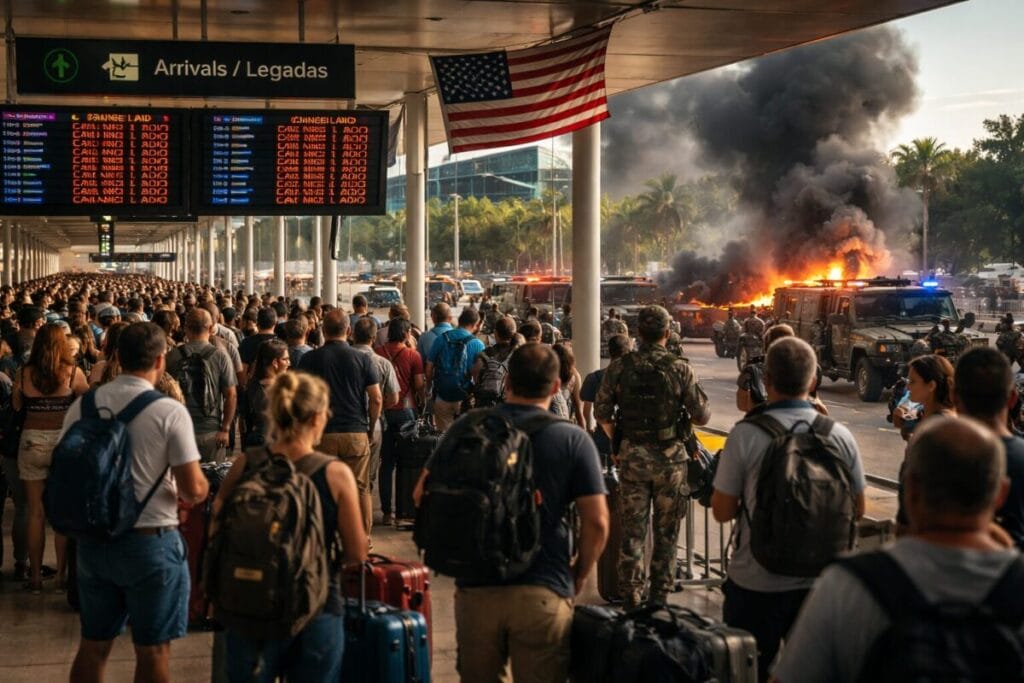
Air travel has faced major disruptions following the surge in violence. Airports in several cities reported delays, cancellations, and restricted operations. Guadalajara, a major international gateway, saw heightened security presence after reports of suspicious activity near airport facilities.
Authorities secured the airport quickly. However, airline operations slowed dramatically. Several domestic and international flights were cancelled or postponed. Travelers experienced long waiting times, uncertainty, and sudden itinerary changes.
Puerto Vallarta International Airport faced similar issues. A large percentage of scheduled flights were halted as airlines reassessed safety risks. Some carriers issued travel waivers to help passengers rebook or cancel without penalties.
Access roads to airports created additional problems. Burning vehicles and temporary barricades blocked transportation routes. Officials urged travelers not to attempt reaching airports unless authorities confirm safe access.
Roadblocks and Transport Shutdowns Impact Tourism
State authorities activated emergency measures after widespread road disruptions emerged. Reports indicated hundreds of roadblocks across multiple states. Criminal groups allegedly used hijacked vehicles and burning debris to slow security forces.
The transportation shutdown hit tourists hard. Taxi services stopped operating in several cities. Rideshare apps faced suspension due to safety risks. Public transportation networks reduced or halted services in some regions.
In Puerto Vallarta, local officials temporarily shut down public transit. The move aimed to protect residents and visitors but left many travelers unable to move between hotels, airports, and attractions.
Quintana Roo, home to some of Mexico’s most visited beach destinations, also experienced transport challenges. Travelers reported difficulty reaching excursion sites, beaches, or departure terminals.
Resorts Tighten Safety Measures for Guests
Luxury resorts and hotels across affected areas responded quickly to protect visitors. Many properties asked guests to remain on-site until conditions improve. Hotels increased security presence and limited access to public areas.
Some resorts cancelled tours, excursions, and outdoor events. Operators prioritized guest safety over normal vacation activities. Travelers encountered restricted movement but gained reassurance through organized safety protocols.
Local tourism authorities worked closely with hospitality businesses. Their goal was to maintain calm while preventing unnecessary risk. Hotels encouraged guests to follow official updates and avoid independent travel outside secured zones.
Business operations outside the tourism sector also slowed. Shops closed early in certain regions. Essential services such as grocery stores and pharmacies adjusted operating hours to ensure safety.
Economic Impact on Mexico’s Tourism Sector
Mexico remains one of the world’s most popular travel destinations. However, sudden security incidents can affect traveler confidence. Industry analysts expect short-term disruptions to bookings, especially in regions directly impacted by violence.
Airlines and tour operators continue monitoring developments. Travel insurance inquiries have increased as visitors seek flexible plans. Some travelers postponed trips, while others chose alternative destinations.
Government agencies aim to restore normalcy quickly. Increased military and police presence signals efforts to stabilize affected areas and protect tourism infrastructure.
Despite current challenges, many destinations across Mexico remain open and functioning normally. Authorities encourage travelers to check region-specific guidance rather than assume nationwide disruption.
Safety Tips for Travelers Currently in Mexico
Officials recommend several practical steps for tourists:
Stay indoors unless absolutely necessary.
Avoid areas with visible security activity or large gatherings.
Use hotel staff or official channels for safety updates.
Keep mobile phones fully charged and maintain communication with family.
Contact airlines through digital apps for flight changes.
Carry identification and emergency contact details at all times.
Travelers should rely on verified government sources and reputable local news to avoid misinformation. Situations can change quickly during security events, so timely updates remain essential.
What Happens Next for Mexico Travel?
Security analysts suggest that short-term instability may continue as authorities monitor potential power shifts within criminal organizations. Increased patrols and coordinated law enforcement actions aim to restore order.
Tourism officials expect gradual recovery once safety improves. Mexico has previously demonstrated resilience after crises by strengthening security and rebuilding traveler confidence.
For now, caution remains the priority. Travelers should remain flexible with plans and follow official advice closely. The current alert serves as a reminder that safety awareness is essential, even in established vacation destinations.
For more travel news like this, keep reading Global Travel Wire