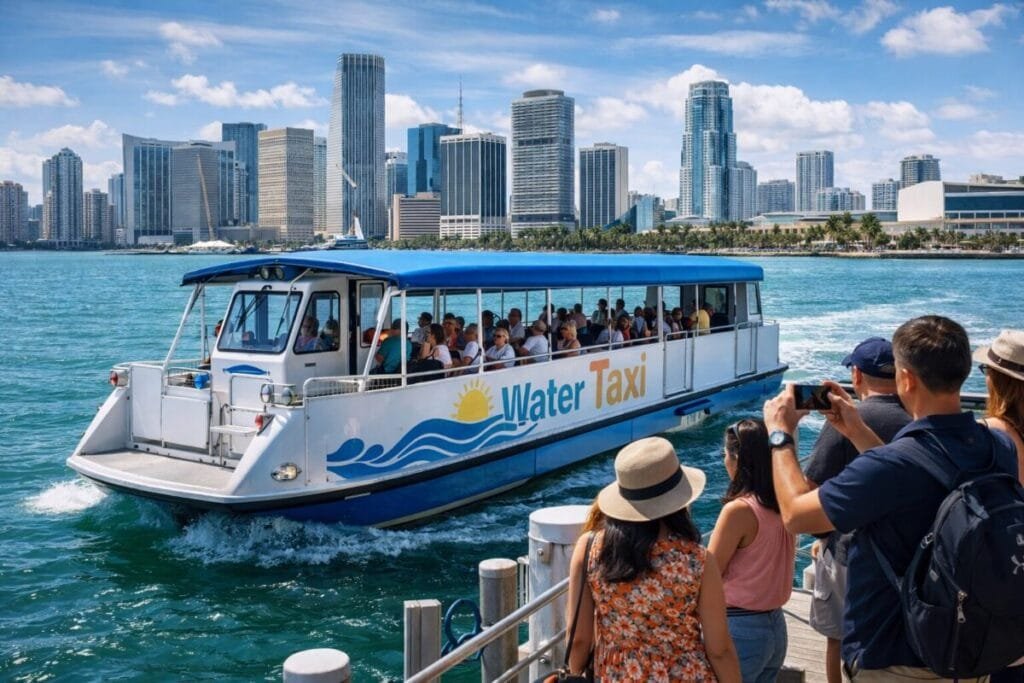
Miami Beach introduces a new water taxi service that connects the city to Miami across Biscayne Bay. The service offers a free and scenic transport option for both commuters and tourists. The launch marks a major step in rethinking mobility in South Florida. The water taxi reduces pressure on busy causeways and gives visitors a unique coastal travel experience. The new service also reflects Miami Beach’s push toward sustainable and innovative transportation solutions.
A Scenic Alternative to Congested Roads
The 20 minute journey offers a peaceful ride across the bay. Passengers watch the Miami skyline from the deck and enjoy fresh sea air. The boats each carry up to 55 passengers and stretch 40 feet in length. These vessels provide enough space for bags, strollers, and business equipment. The water taxi runs on weekdays and targets commuter peaks. Afternoons feature steady ridership from office workers and hotel staff. The goal is to shift part of the commuter load from roads to waterways, which remain underutilized in the region.
Miami Beach sits on a barrier island with only three major causeways linking it to the mainland. Road congestion remained a constant problem for years as population and tourism increased. The water taxi offers a fresh solution. It uses Biscayne Bay as a natural transit corridor and gives travelers another choice besides cars, buses, or rideshares.
How the Service Operates Across the Bay
The route operates between Maurice Gibb Memorial Park in Miami Beach and the Venetian Marina and Yacht Club in Miami. Boats depart every 60 minutes during morning and afternoon commute windows. The service increases to 30 minute headways during the evening. The current schedule focuses on weekdays, but public officials are studying weekend demand. High tourist seasons may push the service toward weekend operations in the future.
Passengers who reach Miami Beach can transfer to the city’s free trolley network. The trolleys make stops near hotels, restaurants, beaches, and cultural districts. Visitors can travel from the marina to South Beach without paying a single fare. The seamless connection between the trolley and the water taxi encourages tourists to explore more of Miami Beach on foot.
A Smarter Commute for Business Travelers
Business travelers benefit from faster travel options that avoid peak road traffic. Meetings in downtown Miami often require lengthy drive times due to congestion on the MacArthur, Julia Tuttle, and Venetian causeways. The water taxi solves that problem. Professionals can cross the bay without worrying about delays from traffic accidents or road construction. Office workers also enjoy a relaxing commute that supports better work-life balance.
Conference attendees at hotels in Miami Beach also find the water taxi useful. They can stay near the shore while attending events in downtown Miami. This flexibility enhances Miami Beach’s appeal as a hospitality destination for large industry events.
Tourists Welcome a New Way to Explore the City
Tourists gain more than transportation. They get a sightseeing experience that doubles as a commute. Biscayne Bay offers clear views of high-rise towers, marinas, waterfront parks, and grand villas. Visitors can take photographs from the deck and enjoy Miami’s coastal environment without booking a tour boat. Many tourists appreciate the cost savings and avoid the hassle of parking fees and rental car logistics.
Families find the service simple and stress-free. Children enjoy the novelty of riding a boat rather than a bus or car. Eco-minded travelers also appreciate the smaller environmental footprint of water transit compared to high-emission car travel. The service aligns with growing interest in sustainable tourism across the United States.
An Investment in Mobility and the Local Economy
Operating the water taxi costs roughly $1.2 million per year. The cost is shared between Miami Beach and a state grant. Local officials argue that reducing road traffic creates broader economic benefits. Visitors can move between cities faster and reach shops, beaches, hotels, and cultural districts without frustration. Fewer traffic bottlenecks also support delivery operations and hotel staffing during peak tourism seasons.
The water taxi strengthens the relationship between Miami and Miami Beach. The two cities attract global tourists and benefit from shared mobility solutions. Travel between them supports spending at restaurants, museums, hotels, and retail districts.
Sustainability Plays a Key Role
Water-based transit supports environmental goals by reducing congestion and emissions. Miami Beach plans to expand its portfolio of sustainable mobility solutions over the next decade. Electric buses, bike-share systems, and micro-mobility options are already part of that strategy. Using the bay as a travel corridor creates new opportunities for future transport experiments.
City officials also study the feasibility of adding electric-powered boats to the fleet in the future. Electric vessels could reduce fuel use, lower noise levels, and align with climate adaptation plans for coastal cities.
Future Routes and Expansion Plans
The initial route focuses on east-west travel between the island and the mainland. Officials plan to evaluate new north-south routes along the bay. Expanded routes could link hotels with cruise terminals, cultural landmarks, and major parks. These additions would further support tourism and reduce dependence on taxis and rental cars.
Expansion also depends on ridership trends. If user demand rises, weekend routes may launch to serve tourists. Seasonal adjustments may also be tested during Art Basel, holiday seasons, and cruise passenger peaks.
A Fresh Chapter for Miami Beach Travel
The free water taxi marks a new phase in Miami Beach’s transportation landscape. Commuters gain relief from traffic. Tourists gain a scenic and efficient link between two iconic cities. The service improves mobility and strengthens tourism appeal. As demand rises and routes expand, water transit may become a permanent part of Miami’s identity as a coastal travel destination.
For more travel news like this, keep reading Global Travel Wire