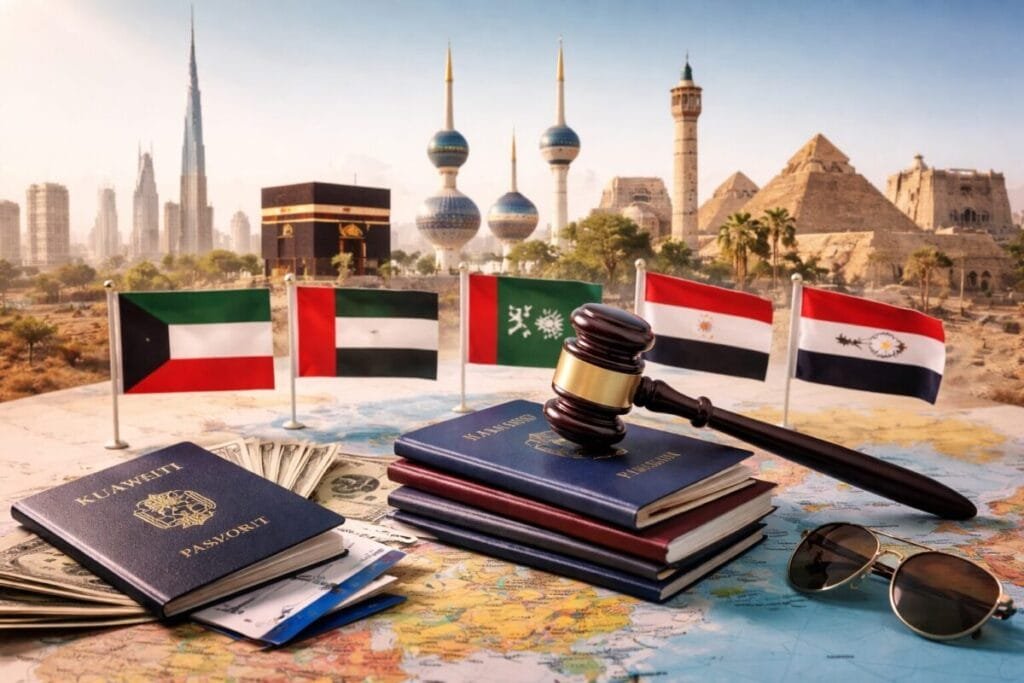
The Middle East is undergoing major immigration reforms as Kuwait joins the UAE, Saudi Arabia, Egypt, and Syria in tightening visa controls while extending residency options. These changes reflect a shared effort to create sustainable economies, attract skilled talent, and manage demographic pressures. For travelers, expats, and investors, the updated rules will shape mobility across one of the world’s most dynamic regions in 2026.
Kuwait Takes Bold Step with 15-Year Residency Permits
Kuwait is leading the latest wave of reforms with major changes to its immigration framework. The country now offers residency permits extending up to 15 years for eligible categories. These categories include investors and certain high-value residents. Other groups, such as real estate owners and the children of Kuwaiti women, can access 10-year permits.
The lengthy permit validity cuts down on frequent renewals, reduces paperwork, and gives residents more security. This is part of Kuwait’s plan to modernize its public services and strengthen its investment climate.
Kuwait has also increased its visitor stay period from one to three months. This supports both tourism and business travel during a period of growing demand for medical tourism, shopping tourism, and regional leisure travel.
Another notable update allows specific visa types to convert into residency permits, offering clearer pathways for those already contributing to the economy or local labor market. Kuwait has also relaxed passport validity rules, now requiring only six months of validity at the time of application. Immigration fees were updated to match the new structure, helping fund administrative improvements.
These reforms align with Kuwait’s longer-term development goals, including workforce stability, reduced administrative burdens, and increased investor confidence.
UAE: Balancing Talent Attraction with Stricter Compliance
The United Arab Emirates continues to refine its immigration strategy. While the country remains one of the most attractive destinations for expatriates and investors, authorities are increasing enforcement against visa violations and illegal residency. Stronger penalties and compliance checks aim to maintain labor market balance and protect employer-employee regulations.
The UAE has expanded its long-term residency programs, including permanent and multi-year permits for investors, innovators, medical specialists, scientists, and entrepreneurs. These programs support the nation’s economic diversification plans and help drive sectors such as tourism, aviation, sustainable energy, and technology.
The UAE also introduced new visa categories tailored to remote workers and freelancers. This positions the country as a competitive hub for global talent. Enhanced visa flexibility is combined with stricter verification processes, making residency options more accessible for legitimate applicants while reducing misuse.
Saudi Arabia: Immigration Reforms to Support Vision 2030
Saudi Arabia is implementing firm measures to regain control of its labor market and optimize foreign worker participation. Authorities have intensified action against illegal labor practices, resulting in widespread inspections and deportations of undocumented workers.
To balance enforcement with growth, Saudi Arabia has introduced new residency permits for investors and specialists in targeted industries. These industries include tourism, entertainment, technology, and renewable energy — all central to the nation’s Vision 2030 transformation agenda.
Saudi tourism continues to expand with the easing of tourist entry rules, the launch of electronic visas, and the promotion of heritage tourism around sites such as Al-Ula, Diriyah, and Red Sea developments. The combination of enhanced tourism access and stronger labor regulation reflects Saudi Arabia’s dual strategy to attract visitors while safeguarding its labor economy.
Egypt: Better Border Systems and Higher Residency Standards
Egypt remains a major hub for tourism and regional travel. Authorities have increased immigration fees for residence and work permits to ensure stronger screening and higher contribution from long-term foreign residents. Enhanced border procedures have also been deployed to prevent illegal entry and regulate overstays.
Egypt’s changes coincide with efforts to boost its tourism economy through infrastructure development, improved airport capacities, and promotional campaigns targeting Arab, African, and European travelers. With tourism being one of Egypt’s largest economic pillars, aligning visa controls with national security and economic priorities is seen as a long-term necessity.
Syria: Restricted Entry Amid Economic Recovery Measures
Syria is restricting entry for foreign nationals without family or commercial ties. Residency rules have become more stringent with higher evidence requirements for long-term stays. These measures aim to manage resource constraints and enhance internal security during ongoing economic recovery efforts.
A Unified Strategy for Regional Sustainability
Across the Middle East, immigration policy is no longer just a security matter. It has evolved into a tool for sustainable development, resource planning, and economic diversification.
Countries are using immigration reforms to:
• attract investments
• regulate labor markets
• support tourism growth
• secure long-term residency contributions
• promote innovation and knowledge transfer
With global competition increasing, Middle Eastern nations are positioning themselves as stable, investor-friendly, and well-regulated destinations.
For more travel news like this, keep reading Global Travel Wire