
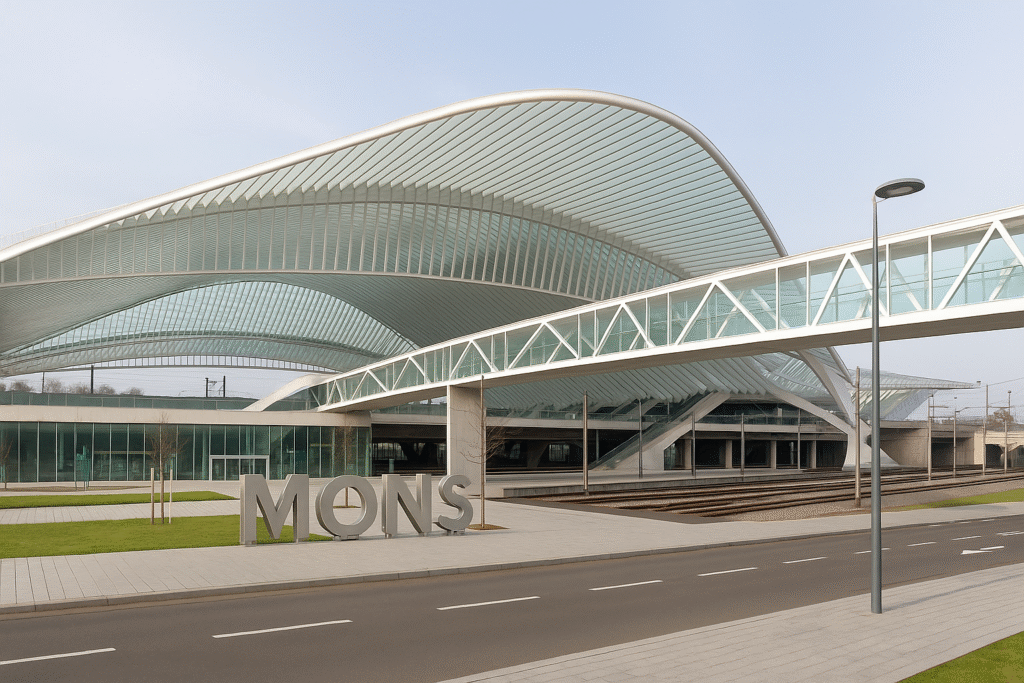
The historic city of Mons in Belgium is setting the stage for a tourism revival with the inauguration of its newly refurbished railway station — a landmark that combines cutting-edge architecture and seamless mobility to attract travellers from across Europe. Designed by renowned Spanish architect Santiago Calatrava, the station is much more than just a transit hub – it’s a bold statement of modernity and comfort, making Mons an even more compelling destination for visitors arriving by train.
The station forms a striking new entrance to the city. Featuring sweeping steel and glass canopies, a dramatic elevated footbridge and abundant natural light, the facility was conceived to link Mons’ historic centre with its developing districts in one fluid space. The footbridge, sometimes called the “Gare-Passerelle”, stretches more than 180 metres across the tracks and acts as a multi-modal gateway for pedestrians, cyclists, trains, buses and cars. By removing physical and visual barriers between the old city and its newer neighbourhoods, the station plays a key role in shaping Mons’ future as a destination of choice.
Tourists arriving in Mons will benefit from the enhanced accessibility and visitor-friendly amenities. The station is located a short walk from the city’s Grand-Place and the UNESCO recognised Belfry of Mons, allowing travellers to step off a train and into the heart of the historic town within minutes. Inside the terminal travellers find lifts, raised platforms, clearly signed pedestrian flows and support for people with reduced mobility—making the first impression of Mons inclusive and comfortable for all types of visitors.
Beyond architecture and comfort, the new railway station significantly improves the city’s connectivity. With direct services to Brussels, regional hubs and international rail links, Mons is now easier to incorporate into wider European travel itineraries. Visitors can travel by train from major cities in Belgium, France and the Netherlands and arrive at Mons in style. For tourism operators, hoteliers and restaurateurs, the station means increased visibility and improved access, translating into greater opportunity to attract guests, extend stays and craft multi-destination packages centred on Mons.
Local business owners are already anticipating the impact. The station emerges not just as infrastructure, but as a focal point for travel, commerce and urban vitality. Hotels within walking distance expect higher occupancy, cafés around the station foretell greater foot traffic and tour providers are designing new experiences that begin with arrival direct to this modern gateway. The synergy between transport and tourism infrastructure is clear: by elevating the travel experience, Mons is elevating the visitor experience.
For travellers planning a visit, Mons now offers a compelling combination: heritage streets, cultural festivals, charming cafés and modern transport flows all in one place. Arrive by train into this sleek new station and you’re minutes away from the city’s architectural gems, vibrant squares and local atmosphere. Whether you’re spending a day, a weekend or building Mons into a longer tour of Wallonia and beyond, this arrival point strengthens the appeal of including Mons in your European itinerary.
Some practical tips for visitors:
- Take advantage of the station’s improved connectivity: check train schedules to and from Brussels, France and the Netherlands to factor Mons into a rail-based route.
- Use the station as a base for local discovery—walkable distance to central Mons means you don’t waste time on transfers.
- Stay nearby: with new transport convenience, hotels near the station offer smart choices, especially for travellers arriving late or departing early.
- Consider a rail-centric trip: arrive at Mons, explore the city and region, then continue onward to other Belgian or cross-border destinations by train.
- Use local tourist offices: with the station now part of the visitor welcome experience, ask for city maps, shuttle details and special offers or walking tours starting from the terminal.
The broader impact of the new station on Mons cannot be underestimated. Beyond transporting people, it transports the city into a new era — one where historic charm and contemporary infrastructure complement each other. The station symbolises the city’s commitment to becoming more accessible, more visible and more appealing to visitors. It also reflects a growing trend across Europe: cities investing in transport hubs not just for commuters, but for tourism value. Mons has positioned itself smartly in this mix.
Looking ahead, the arrival of this station could mark a turning point for Mons’ tourism strategy. With improved access and elevated travel experience, the city may see longer stays, higher international visitor numbers, more off-peak visits and a greater diversity of tourists. Regional travel circuits that include Mons will now feel more viable, especially for travellers arriving by rail from major European cities. The station gives Mons a platform (literally and figuratively) to grow as a travel destination.
In summary, the opening of the new Mons railway station heralds a fresh chapter for the city’s tourism. More than just a functional arrival point, it is a landmark of design, connectivity and visitor experience. For anyone exploring Belgium by train or looking to visit lesser-known but richly rewarding destinations, Mons now stands out — with a station that welcomes you into the city with elegance, ease and modernity. Whether you plan a single day visit or build a multi-stop journey, Mons is ready to greet you.
For more travel news like this, keep reading Global Travel Wire