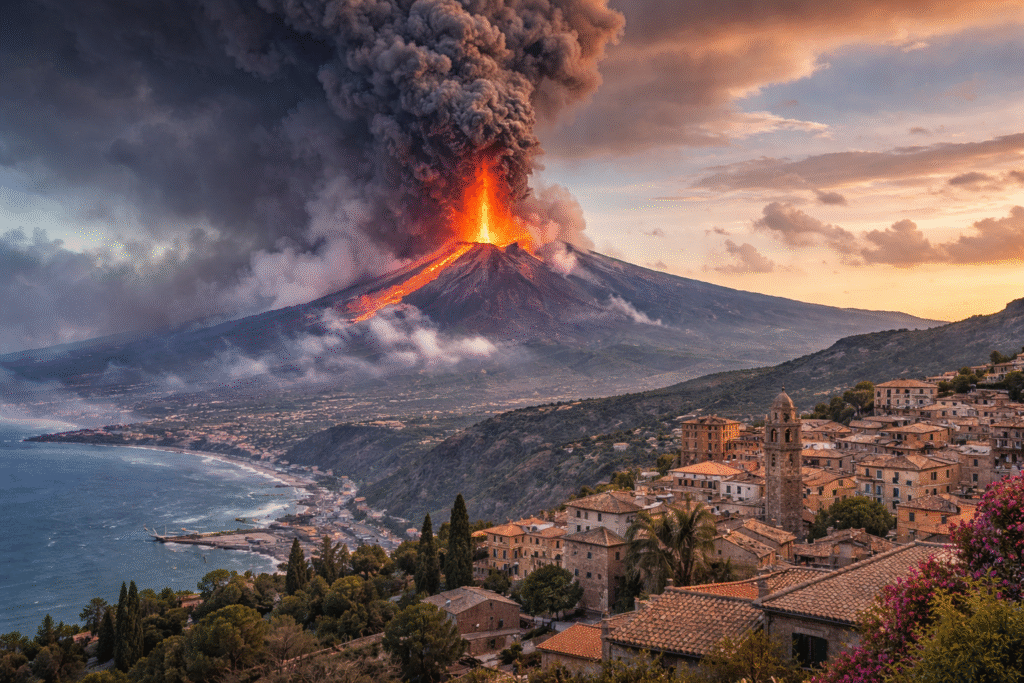
Mount Etna erupted with force on December 27, 2025, reminding the world why it is Europe’s most active volcano. The eruption sent towering lava fountains and thick ash clouds into the sky. Authorities quickly issued a yellow alert as volcanic activity intensified. While no large-scale evacuations followed, the eruption disrupted travel and tourism across eastern Sicily.
The timing added to the concern. Sicily was entering a busy festive travel period. Hotels, ski resorts, and historic towns were preparing for high visitor numbers. Instead, ash fall and travel uncertainty changed plans for many tourists.
Lava Fountains and Ash Clouds Shape the Situation
The eruption escalated rapidly. Lava jets rose hundreds of meters above the summit. Ash clouds spread widely due to strong winds at high altitude. These winds carried volcanic ash toward northeastern Sicily, affecting both mountain and coastal areas.
Volcanic ash may look harmless, but it creates serious challenges. It reduces visibility, affects breathing, and damages infrastructure. For tourism, even light ash fall can disrupt outdoor activities and sightseeing.
Ski Resort Areas See Immediate Impact
Piano Provenzana, one of Sicily’s key winter destinations, faced heavy ash fall. The contrast between snow-covered slopes and dark volcanic ash created striking visuals. Yet the conditions made skiing difficult and unsafe.
Resort operators had to pause or limit activities. Visitors experienced cancellations and reduced services. For many travelers, the eruption cut short long-planned winter holidays. Cleanup efforts began quickly, but ash removal in alpine areas takes time.
Ash Reaches Historic and Coastal Towns
Ash fall also reached Taormina, one of Sicily’s most famous tourist towns. Known for ancient theaters, coastal views, and luxury stays, Taormina relies heavily on walkable streets and outdoor experiences.
Fine ash settled on roads, rooftops, and public spaces. Authorities advised visitors to limit outdoor exposure. Some guided tours paused temporarily, while businesses adjusted operating hours. Though damage remained limited, the disruption affected visitor comfort and movement.
Airport Operations Under Pressure
Catania–Fontanarossa Airport, Sicily’s main international gateway, faced operational strain. Authorities kept the airport open but activated a yellow alert. Airlines warned passengers about possible delays and schedule changes.
Volcanic ash poses a serious risk to aircraft engines. Even small concentrations can lead to flight cancellations. As a result, airport managers monitored airspace conditions closely and adjusted flight paths when needed.
Travelers experienced delays, rescheduling, and longer wait times. Some international arrivals were diverted, while departing passengers faced uncertainty. These disruptions rippled through hotels, transport providers, and tour operators.
Tourism Businesses Feel the Strain
Tourism remains a cornerstone of Sicily’s economy. Restaurants, hotels, transport services, and guides depend on steady visitor flow. The eruption slowed this momentum, especially in eastern Sicily.
Cancellations increased as travelers reconsidered plans. Day tours near Mount Etna paused for safety reasons. Coastal businesses saw fewer visitors during peak hours. While most operations continued, revenue losses became unavoidable.
Local authorities and tourism boards worked to reassure visitors. They emphasized safety measures and ongoing monitoring. Clear communication helped prevent panic, but caution remained high.
Safety Measures and Government Response
Emergency services increased monitoring around Mount Etna. Civil protection teams cleared ash from roads, public areas, and tourist zones. Health advisories encouraged the use of masks in affected towns.
Authorities restricted access to high-risk zones near the volcano. Guided excursions resumed only in approved areas and under strict supervision. These measures aimed to balance safety with continued tourism activity.
Regular updates helped travelers make informed decisions. Hotels and airlines adjusted policies to support affected guests, including flexible bookings and rebooking options.
What Travelers Should Expect Next
Volcanic activity remains unpredictable. Further ash emissions could occur without warning. Travelers planning trips to Sicily should remain flexible and monitor official updates.
Most attractions across the island remain open. Western Sicily continues normal operations, offering alternatives for visitors seeking stability. Cultural sites, beaches, and food tourism remain strong draws.
Short-term tourism numbers may dip, but long-term impact is expected to remain limited. Sicily has faced similar events before and recovered quickly each time.
Sicily’s Tourism Resilience Stands Strong
Despite disruption, Sicily continues to show resilience. Its diverse attractions extend far beyond Mount Etna. From historic cities to coastal retreats, the island offers depth and variety.
Volcanic activity forms part of Sicily’s identity. Many travelers even view Etna as a unique natural spectacle. With careful planning and strong safety measures, tourism will continue to adapt.
As ash settles and conditions stabilize, Sicily is expected to regain its rhythm. Visitors who remain patient and informed can still enjoy meaningful and memorable experiences across the island.
For more travel news like this, keep reading Global Travel Wire