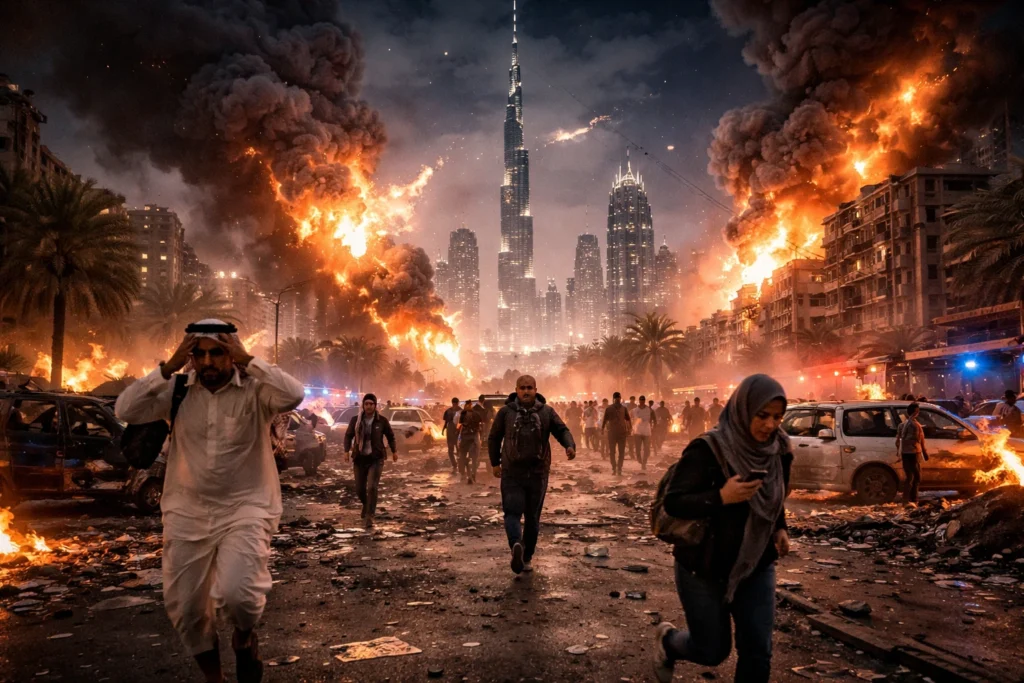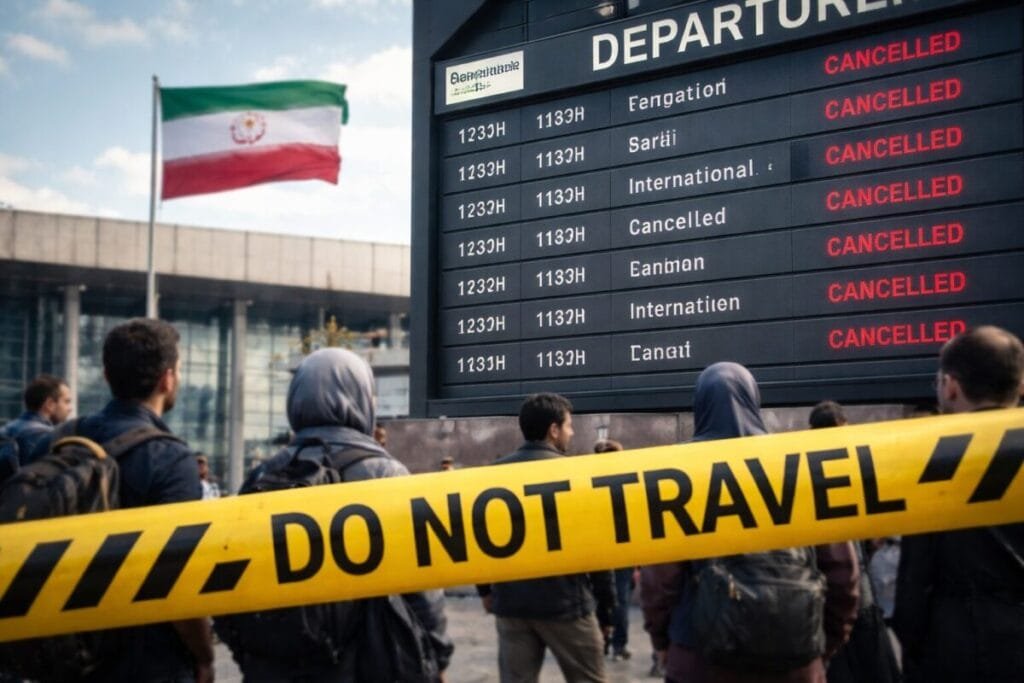
Global travel advisories for Iran have reached their highest levels as widespread protests and government crackdowns push the country into one of its most volatile periods in recent years. Germany has joined the United States, Canada, Ireland, France, Italy, the United Arab Emirates, and several other nations in issuing strict “do not travel” orders. The chorus of warnings reflects a shared assessment: travel to Iran has become dangerous for foreign nationals, and conditions are continuing to deteriorate.
Escalating Unrest Reshapes Travel Risk
The latest wave of unrest began in late 2025. Demonstrations linked to economic hardships, inflation, and political dissatisfaction spread across major population centers. Crowds formed in Tehran, Shiraz, Tabriz, Mashhad, and other cities. The Iranian government responded with a forceful security posture. Riot control units, checkpoints, and mass detentions became common. The result has been sustained instability affecting everyday life and foreign travel.
For tourists, the situation is especially risky. Transportation disruptions, internet shutdowns, and unpredictable enforcement actions have complicated movement within the country. Travelers have also struggled to access reliable information during protest peaks, raising safety concerns for both residents and visitors.
Germany Issues Firm Do Not Travel Order
Germany is the most recent nation to raise its travel warning to the highest level. Berlin urged citizens to avoid Iran entirely. Germans already in the country were told to depart using commercial flights while they are still operational. Authorities warned that consular support could become limited if airports close or communication networks fail. Germany’s shift signaled how serious the situation has become, especially for European nations with business and diplomatic ties in the region.
United States Urges Immediate Departure
The United States maintained one of the strongest positions from the outset. Washington warned citizens to leave Iran immediately due to heightened detention risks and restricted consular access. Dual nationals face unique vulnerabilities, as past incidents demonstrated. U.S. officials stressed that foreign passports do not necessarily protect travelers during periods of political tension.
Canada, Ireland, and France Toughen Their Warnings
Canada issued a top-level advisory urging citizens to avoid travel and leave while commercial routes remain open. Ottawa highlighted the risk of foreigners being detained or questioned during protests or security operations.
Ireland escalated its warnings as well. Dublin also delayed formal diplomatic engagements with Iranian officials, citing the crackdown on civilian demonstrators. France took a similar approach, urging its citizens to avoid travel and calling attention to new restrictions on movement within Iranian cities.
Italy, Spain, and Poland Advise Citizens to Exit
Italy, Spain, and Poland also urged their nationals to leave Iran without delay. European travel regulators have flagged problems such as reduced flight availability, security force checkpoints, and the risk of transport closures. Tour operators based in Italy and Spain suspended itineraries involving Iran, affecting winter tourism plans and culturally focused travel groups.
Middle Eastern Nations Adjust Guidance
Several Middle Eastern nations updated travel advice as demonstrations intensified. The United Arab Emirates urged its citizens to reconsider non-essential travel and to monitor reports of flight cancellations and communication outages. Kuwait issued alerts asking citizens in Iran to remain cautious. Pakistan and India warned nationals about border disruption risks and encouraged those already in Iran to arrange travel home.
Australia and New Zealand Add Strong Warnings
Australia and New Zealand also raised their alert levels. Both governments cited safety concerns linked to protests, arbitrary detentions, and reduced communication capabilities. Travelers have been reminded that emergency assistance may be slow during periods of unrest or internet shutdown.
Impact on International Tourism and Transport
The travel warnings have had immediate effects on the tourism sector. International airlines reduced services, while some carriers suspended flights entirely. Travel insurance companies withdrew coverage for Iran in recent months, a move that makes booking trips nearly impossible for foreign tourists. Tour operators specializing in cultural heritage routes and Silk Road journeys have paused itineraries until stability returns.
Communication Blackouts Increase Concerns
Internet blackouts have become more frequent during major demonstrations. These disruptions limit access to embassy information, flight changes, emergency messages, and navigation tools. For foreign travelers, blackouts increase the risk of being isolated or unable to coordinate evacuation plans. Governments have warned that even short shutdowns can leave travelers without essential support during emergencies.
Iran Remains on Global Do Not Travel Lists
The accumulation of alerts from governments across Europe, North America, the Middle East, and Asia sends a clear message: Iran is currently considered unsafe for tourism. Until stability improves, travel remains limited to essential diplomatic or humanitarian missions. More countries are expected to elevate their advisories if protests continue into 2026.
For now, Iran remains firmly placed on the global “do not travel” map, reshaping traveler decisions and underscoring the seriousness of the ongoing crisis.
For more travel news like this, keep reading Global Travel Wire