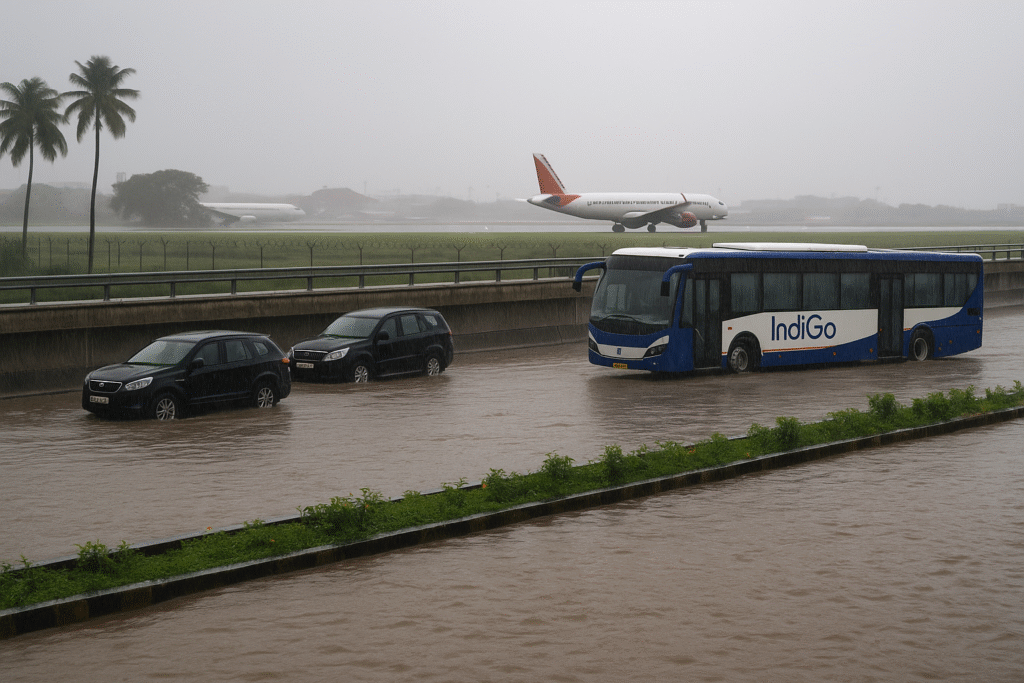
Travel across Maharashtra has come under severe strain as heavy rains continue to batter Mumbai and Pune, throwing air, road, and rail networks into chaos. Thousands of travelers have faced delays as IndiGo and Air India flights were disrupted, while passengers on trains and buses struggled against waterlogged streets and stalled transport services. The India Meteorological Department (IMD) has issued multiple alerts, warning residents and tourists that the rains will continue for at least two more days.
Mumbai: City on Edge Amid Relentless Rains
Mumbai, India’s financial and tourism hub, has been hit by relentless overnight downpours that left many areas under knee-deep water. Between midnight and early morning, South-Central Mumbai saw particularly intense showers accompanied by thunderstorms and strong winds. The city’s streets, already burdened with peak-hour congestion, quickly flooded, bringing traffic to a standstill.
Popular tourist neighborhoods such as Dadar, Sion, and Andheri East were badly affected, with images emerging of commuters wading through ankle-to-waist-deep water. Suburban train services, the lifeline of Mumbai, faced long delays on both the Western and Central lines, while bus operators diverted routes away from severely waterlogged zones.
The IMD placed Mumbai under a yellow alert, signaling ongoing heavy showers with thunderstorms. For travelers heading to or from Mumbai, the next 48 hours remain uncertain as both air and ground transport face bottlenecks.
Pune: Red Alert Heightens Worries
While Mumbai reeled under its own set of challenges, Pune was placed under a red alert by the IMD. The city experienced extremely heavy rainfall overnight, with waterlogging in multiple neighborhoods including Sinhagad Road and Nagar Road. Traffic slowed to a crawl on major arterial routes, while smaller lanes were completely submerged.
Educational institutions in several wards delayed opening hours, and many offices reported lower attendance as employees struggled to reach workplaces. The forecast indicates the rainfall will persist, with isolated very heavy spells predicted in the next two days. Local authorities have set up relief shelters in flood-prone areas and urged citizens to avoid unnecessary travel.
Ripple Effects Across Maharashtra
The weather crisis is not limited to Mumbai and Pune. Neighboring districts such as Raigad, Satara, and Aurangabad were placed under orange alerts, signaling heavy to very heavy rainfall. Emergency teams have been put on standby in vulnerable villages, while district administrations have warned residents near rivers and streams to be vigilant about rising water levels.
Waterlogging has been reported widely across Maharashtra, and social media has been filled with visuals of clogged drains, stranded buses, and abandoned vehicles. The situation has raised concerns for both domestic tourists and international visitors who rely on Maharashtra’s extensive transport network.
Air Travel in Turmoil
At Chhatrapati Shivaji Maharaj International Airport in Mumbai, several flights faced delays due to reduced visibility and slippery runways. IndiGo and Air India, among the country’s busiest carriers, reported multiple rescheduled flights. Airport officials advised passengers to check flight statuses before leaving for the airport. Pune Airport also witnessed disruptions, with morning departures slowed by waterlogging in ground areas.
For international tourists arriving in India through Mumbai, one of the busiest gateways in the country, the delays have caused missed connections and rescheduled itineraries. Travel operators have urged passengers to maintain flexible schedules until weather conditions stabilize.
IMD Forecast and Monsoon Dynamics
Meteorologists attribute the heavy rains to strong monsoon systems developing over the Arabian Sea, combined with a low-pressure trough over Maharashtra. This pattern is expected to persist for the next 48 hours, ensuring continued heavy rainfall across the Konkan region and central Maharashtra.
The IMD has warned of thunderstorms, gusty winds, and further downpours, with the possibility of localized flooding in both Mumbai and Pune. Residents and travelers have been advised to avoid venturing into waterlogged areas, stay indoors, and postpone non-essential travel.
Government Response and Safety Measures
Authorities in both Mumbai and Pune have intensified disaster preparedness. The Brihanmumbai Municipal Corporation (BMC) has deployed extra teams to unclog drains and pump out water from flooded roads. Temporary relief shelters have been set up in low-lying areas, and emergency helplines remain active for those stranded.
Health departments are warning of a spike in waterborne diseases such as cholera, gastroenteritis, and leptospirosis. Citizens have been urged to consume boiled or filtered water, avoid wading through floodwaters when possible, and seek prompt medical care for fever or stomach-related symptoms.
Tourism and Local Sentiment
The monsoon disruption has once again highlighted the vulnerability of Maharashtra’s infrastructure during heavy rains. Despite ongoing investments in flood management and urban drainage, the same challenges resurface every year—overflowing drains, submerged roads, and paralyzed transport.
For the tourism industry, the impact is significant. Mumbai, with its heritage landmarks and cosmopolitan appeal, and Pune, known for its cultural charm and proximity to hill stations, are major stops on domestic and international itineraries. With flights delayed, roads blocked, and trains slowed, both cities are struggling to keep up with tourism demand.
Still, the silver lining lies in the potential relief the rains bring to reservoirs and dams that supply water to the region. Maharashtra has been battling lower water levels this season, and the ongoing showers could replenish essential reserves.
Conclusion
For now, travelers in Mumbai, Pune, and neighboring districts face a challenging 48 hours. With heavy rainfall continuing, authorities are focused on minimizing disruptions and ensuring safety. Tourists and residents alike are advised to monitor official weather updates, plan journeys with flexibility, and prioritize safety over schedules.
India’s tourism and travel sector is once again reminded of the unpredictability of the monsoon season—an annual test that continues to shape life and movement across Maharashtra.
For more travel news like this, keep reading Global Travel Wire