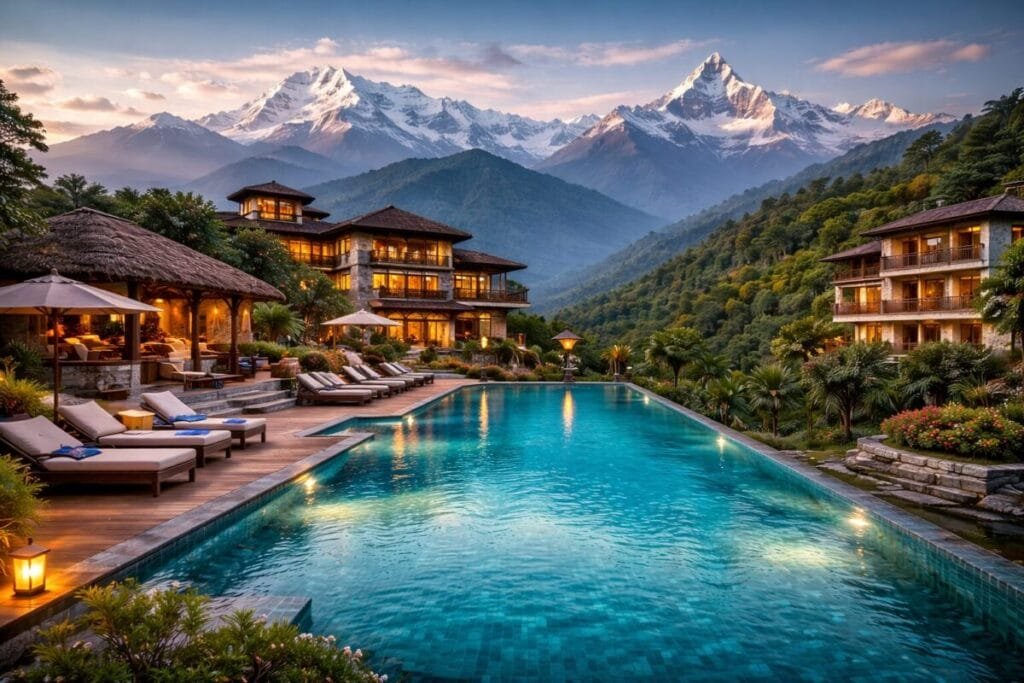
Nepal’s tourism industry entered a new phase with the opening of the Himalayan Hideaway Resort in Pokhara. The property launched on February 6, 2026, and immediately drew attention from travel professionals and tourism officials. Located in the hills of Kaskikot, the resort sits about 35 minutes from Pokhara’s popular Lakeside area.
This new development combines Thai-inspired hospitality with traditional Nepali culture. As a result, it offers a unique experience for travelers seeking comfort alongside authentic local charm. Tourism experts expect the resort to attract international visitors who want immersive Himalayan experiences without sacrificing luxury.
Government tourism strategies highlight diversification and sustainable development. The launch of this resort aligns with those goals by introducing high-end infrastructure while supporting local communities.
Elevated Location Offers Panoramic Himalayan Views
The resort stands high above Pokhara Valley, providing sweeping views of the Annapurna Range and Machhapuchhre, also known as Fishtail Mountain. Travelers choose Pokhara because it offers easy access to the Himalayas without long travel times. This property enhances that advantage by placing guests directly within a scenic environment.
Designers created the resort to reflect Nepali architecture while integrating modern comforts. Each accommodation blends local design elements with contemporary amenities. Guests enjoy mountain views from rooms, suites, and private villas.
Travel trends show growing interest in nature-based destinations. Visitors increasingly prefer locations that combine adventure, wellness, and cultural experiences. Himalayan Hideaway Resort addresses all three categories in one destination.
Wellness Experiences Shape the Guest Journey
Wellness tourism continues to expand worldwide, and Nepal positions itself as a strong competitor in this sector. The resort focuses heavily on relaxation and holistic well-being. Guests can access a full-service spa offering yoga, sound healing, and therapeutic treatments.
The outdoor pool and fitness center encourage active lifestyles while maintaining a peaceful atmosphere. Many travelers now combine adventure travel with personal wellness goals. Therefore, resorts that provide both activities often attract longer stays.
The scenic tea house also serves as a quiet retreat for guests seeking calm moments surrounded by Himalayan scenery. Visitors often value slow travel experiences that allow deeper connection with nature.
Culinary Experiences Highlight Local and Global Flavors
Food plays a central role in modern tourism experiences. The Himalayan Hideaway Resort introduces several dining venues that showcase both international cuisine and Nepali specialties. Chefs incorporate regional ingredients to highlight local culinary traditions.
Guests can enjoy meals while overlooking mountain landscapes. The bar and lounge create a relaxed social setting, encouraging travelers to gather and share experiences. Culinary tourism continues to grow in popularity, and destinations now emphasize authentic local flavors alongside global dining standards.
These dining experiences strengthen Nepal’s reputation as more than an adventure destination. They help position Pokhara as a location where visitors can enjoy sophisticated hospitality while exploring cultural heritage.
Adventure Activities Expand Visitor Opportunities
Adventure remains one of Nepal’s strongest tourism attractions. The resort offers curated excursions designed to connect guests with surrounding landscapes and communities. Guided village walks introduce travelers to traditional lifestyles and local culture.
Hiking trails, including routes along the Sarangkot Loop, provide breathtaking viewpoints across the region. Visitors also have access to paragliding experiences over Phewa Lake, which remains one of Pokhara’s most iconic activities.
For serious trekkers, the resort serves as a convenient starting point for journeys toward Annapurna Base Camp. This famous trekking route attracts adventure travelers from around the world. By offering luxury accommodation near trekking gateways, the resort appeals to both experienced hikers and first-time explorers.
Sustainable Practices Support Local Communities
Sustainable tourism plays a key role in Nepal’s long-term tourism strategy. The Himalayan Hideaway Resort emphasizes responsible practices by sourcing materials and produce locally. This approach supports nearby farmers, artisans, and suppliers.
Employment opportunities for local residents also strengthen the region’s economy. Tourism leaders increasingly focus on developments that balance economic growth with environmental protection. Resorts that respect local culture and landscapes often receive stronger support from travelers and communities alike.
The owners aim to preserve heritage while introducing modern hospitality standards. This balance allows visitors to experience authentic Nepal while enjoying comfort and convenience.
Pokhara Emerges as a Global Eco-Tourism Hub
Pokhara already attracts travelers due to its lakes, mountain views, and proximity to trekking routes. However, new luxury properties continue to elevate the city’s global profile. Industry experts believe the Himalayan Hideaway Resort will help position Pokhara as a leading eco-tourism destination.
Travelers today seek meaningful experiences rather than traditional sightseeing alone. Resorts that combine sustainability, culture, and adventure often become flagship attractions. Nepal’s tourism authorities continue to encourage developments that support this evolving travel demand.
The region’s accessibility also contributes to its popularity. Visitors can enjoy Himalayan scenery without extreme altitude challenges. This factor attracts families, wellness travelers, and older visitors who want mountain experiences without difficult trekking conditions.
A New Chapter for Nepal’s Tourism Industry
The opening of Himalayan Hideaway Resort marks a significant milestone for Nepal’s hospitality sector. It represents a shift toward high-quality experiential travel that blends luxury with authenticity. Travelers gain access to wellness programs, cultural immersion, and adventure opportunities within one destination.
As global tourism evolves, Nepal continues to innovate while preserving its cultural identity. Developments like this demonstrate how the country balances tradition with modern travel expectations. With strong demand for experiential tourism, the resort stands ready to become one of Nepal’s most sought-after travel destinations.
For more travel news like this, keep reading Global Travel Wire