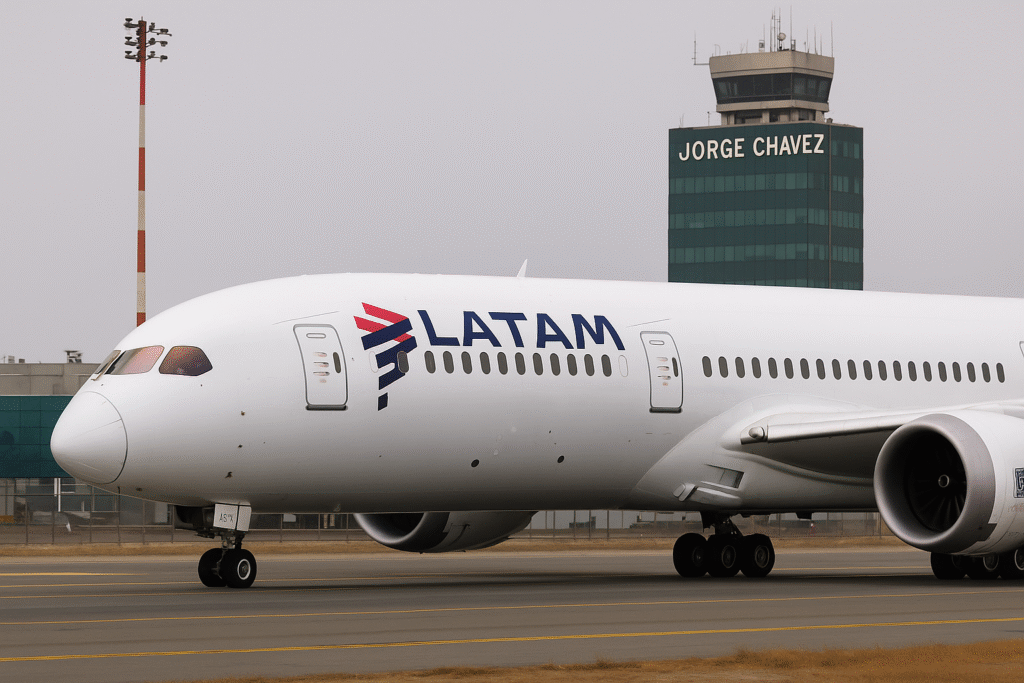
The move by Latin America’s leading airline arm, LATAM Airlines Peru, to halt its new Lima–Orlando route has sent shock waves through Peru’s travel industry. The route, set to launch October 26, 2025, has been cancelled in the wake of a newly introduced Unified Airport Usage Fee (TUUA) at the country’s principal international facility, the Jorge Chávez International Airport in Lima.
This decision signals deeper challenges for Peru’s role as a regional air-hub and places pressure on its tourism and hospitality sectors in one of their most important growth periods.
What’s Changed at Lima’s Airport?
The TUUA (Tarifa Unificada de Uso de Aeropuertos) is a fee that affects transit and connection passengers at Jorge Chávez airport. Sources suggest a roughly US $11–12 added cost per passenger connecting through Lima.
While Peru has long collected airport usage fees, the recent hike and its application to transit passengers have drawn criticism. Industry groups warn that these extra costs risk undermining Lima’s competitiveness compared to other Latin American hubs that do not impose such transit fees.
In essence, airlines say that when nearly half the route’s traffic is connecting passengers, as LATAM noted, the added fee damaged the business case for the Lima-Orlando service.
Implications for International Travel Connectivity
With this suspension, prospects for U.S. tourist arrivals via Lima dim. Tourists traveling to Peru often used Lima as an efficient gateway to explore the Andes, Amazon, or historic cities like Cusco. Pais newly added transit cost may prompt travellers to choose other hubs such as Bogotá or Panama City.
For Peru’s aviation network, reduced connections may shrink Lima’s role from being a pivot for South American connectivity. More airlines are reviewing or trimming routes linked to Lima to adapt to higher cost structures.
Ripple Effects Across Peru’s Hospitality Sector
The hotel, tour‐operator, and services ecosystem in Lima—and beyond—could feel immediate effects. High-end hotels in Lima, which depend on U.S. and international transit guests, may face declines. Guests may skip Lima altogether or tabulate transit costs and opt for direct routes to destinations like Cusco, Arequipa, or the Amazon.
Tour operators who built layover packages around Lima could lose footfall. Local restaurants, transport services, and ancillary tourism businesses may experience softer demand as fewer travellers choose to connect via Lima.
Changing Travel Patterns: Opportunities & Challenges
With fewer connections through Lima, other regional airports might gain traffic. Destinations such as Cusco (gateway to Machu Picchu) and Arequipa may capture more point-to-point travellers. This shift might foster growth in lesser-travelled hubs and support diversification of Peru’s tourism offer.
However, this opportunity comes with challenges: infrastructure and services at secondary airports must scale to handle increased flows. Meanwhile, Peru still needs to protect its international gateway status if it aims to maintain its role in broader tourism flows.
Travel Tips for Tourists Planning Peru Trips
If you are travelling to Peru, consider the following:
- Check your ticket details. Confirm whether the TUUA fee is included or will be collected at the airport.
- Review layover strategies. If planning a transit in Lima, calculate the extra cost and evaluate whether alternative connections via other Latin American hubs make sense.
- Direct entry routes. Travellers may find that flying directly into Cusco or Arequipa (if possible) avoids transit in Lima and potential added fees.
- Stay flexible. With route changes and airline network adjustments ongoing, remain ready for flight schedule shifts.
- Engage hotel & tour providers. Ask whether your stay or arrangements factor in fewer transit-passenger arrivals or if packages need re-working.
Tourism Landscape in Peru: What Lies Ahead?
While Peru remains rich in cultural heritage and natural splendour, the suspension of a high-profile international route highlights the fragility of connectivity. For key destinations such as Machu Picchu, the Amazon, and Lake Titicaca, ease of access is a major driver of visitor numbers.
Policymakers and industry leaders now face the task of ensuring that the gateway via Lima remains compelling and cost-effective. This may involve revisiting fee structures, improving infrastructure, and promoting alternative entry points.
For travellers, local businesses, and the tourism ecosystem, the current disruption signals the need to adapt. Peru’s appeal remains strong—but the pathways getting you there are evolving.
For more travel news like this, keep reading Global Travel Wire