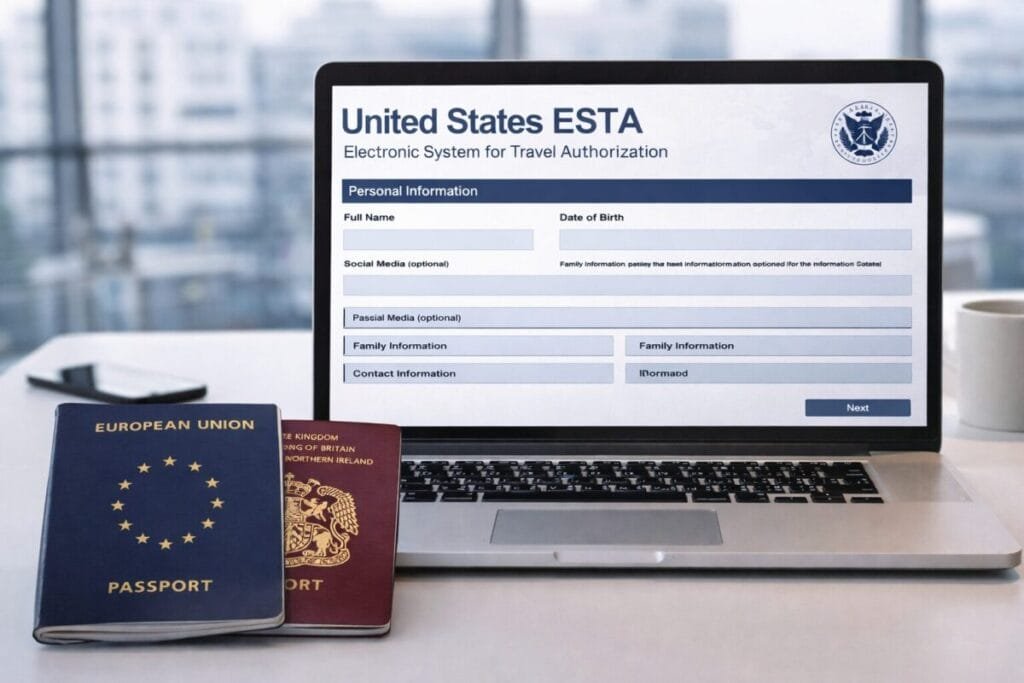
The global business travel industry is facing growing uncertainty following proposed reforms to the United States Electronic System for Travel Authorization (ESTA), a key entry requirement for travelers from visa waiver countries. Industry leaders warn that expanded data collection, procedural changes, and new application requirements could significantly reshape how companies manage international travel, potentially affecting meetings, investment decisions, and corporate mobility.
As one of the world’s largest destinations for international conferences and corporate events, the United States relies heavily on smooth entry processes to maintain its competitive edge. However, stakeholders in the business travel ecosystem fear that the planned changes may create new administrative hurdles that could discourage organizations from choosing the U.S. for global meetings and investment activities.
Expanded Data Requirements Raise Privacy and Compliance Concerns
Among the most controversial elements of the proposed reforms is the expansion of personal information required from travelers. Reports suggest that applicants may need to provide additional details, including social media accounts, contact information, and family-related data, with the possibility of integrating biometric elements into the application process.
Industry representatives argue that while enhanced security measures are important, the scope of data collection could create challenges for multinational companies operating under strict international privacy regulations. Organizations headquartered in regions with robust data protection laws may face compliance conflicts if employees are required to share information that falls outside corporate privacy guidelines.
The added complexity is expected to increase the workload for corporate travel managers responsible for ensuring that employees meet entry requirements before traveling. Larger companies with frequent international travel schedules could face significant administrative pressure as they navigate new processes and ensure accuracy across multiple applications.
Mobile-Only Application System Raises Operational Questions
Another proposed change drawing attention is the shift toward a mobile-only application process. While digital transformation is widely embraced in modern travel systems, business travel organizations warn that removing alternative submission channels may create unintended barriers.
Corporate travel programs often rely on centralized booking platforms, desktop-based compliance tools, and internal security protocols. A mobile-exclusive approach could disrupt established workflows and require companies to adapt existing systems, potentially increasing costs and slowing down travel planning.
Accessibility concerns have also been raised, as some travelers may encounter technical challenges or limitations that make mobile-only applications less practical, particularly for large-scale corporate deployments.
Risk of Delays and Increased Travel Costs
Industry experts caution that longer processing times and additional administrative requirements could lead to delays in travel authorization approvals. For companies managing tight schedules for meetings, conferences, or project deployments, any uncertainty around entry clearance can create logistical complications.
The potential for delays may lead organizations to reconsider their destination choices for major events. Global businesses often prioritize countries with efficient and predictable entry procedures to minimize risk. If the new ESTA system introduces added complexity, competing destinations with streamlined entry systems may gain an advantage in attracting international conferences and corporate gatherings.
Impact on International Meetings and Conferences
The United States has long been a leading host for international conventions, exhibitions, and corporate events, generating significant economic benefits for airlines, hotels, event venues, and local businesses. Industry associations emphasize that even small declines in business travel volumes could have substantial economic consequences.
Corporate travel decisions are frequently influenced by ease of entry, visa policies, and administrative simplicity. If companies perceive travel to the U.S. as more burdensome due to new ESTA requirements, they may shift events to alternative locations in Europe, Asia, or the Middle East, where entry processes are seen as more straightforward.
Such changes could gradually reshape global meeting patterns, affecting the flow of investment and collaboration opportunities tied to international travel.
Industry Response and Calls for Balance
Business travel organizations have urged policymakers to find a balanced approach that strengthens national security without discouraging legitimate travel. Stakeholders acknowledge the importance of secure borders but argue that systems must remain efficient, transparent, and user-friendly to support economic growth.
Industry leaders recommend maintaining multiple application channels, ensuring reasonable processing timelines, and aligning data requirements with international privacy standards. Collaboration between government authorities and private-sector stakeholders is seen as critical to designing a system that protects security while preserving the competitiveness of U.S. travel policies.
Shifting Landscape of Corporate Travel
The debate surrounding ESTA reforms reflects broader changes in the global business travel landscape. Companies are increasingly sensitive to travel policies, costs, and operational efficiency when planning international activities. The pandemic accelerated shifts toward hybrid meetings and digital collaboration, making travel decisions more strategic and selective.
As a result, regulatory changes that increase complexity or uncertainty can have a significant influence on travel patterns. Destinations that combine strong security measures with seamless entry processes are more likely to attract international business activity.
Looking Ahead
As discussions continue around the future of the ESTA system, the outcome will play a critical role in shaping the United States’ position within the global business travel market. While enhanced security remains a priority, industry stakeholders emphasize that maintaining accessibility and efficiency is equally important to sustain international engagement.
The coming months will determine whether proposed reforms evolve into a system that balances safety with practicality or whether they introduce new challenges that reshape corporate travel strategies worldwide. For now, businesses, travel planners, and industry observers are closely watching developments that could redefine the experience of entering one of the world’s most important business destinations.
For more travel news like this, keep reading Global Travel Wire