
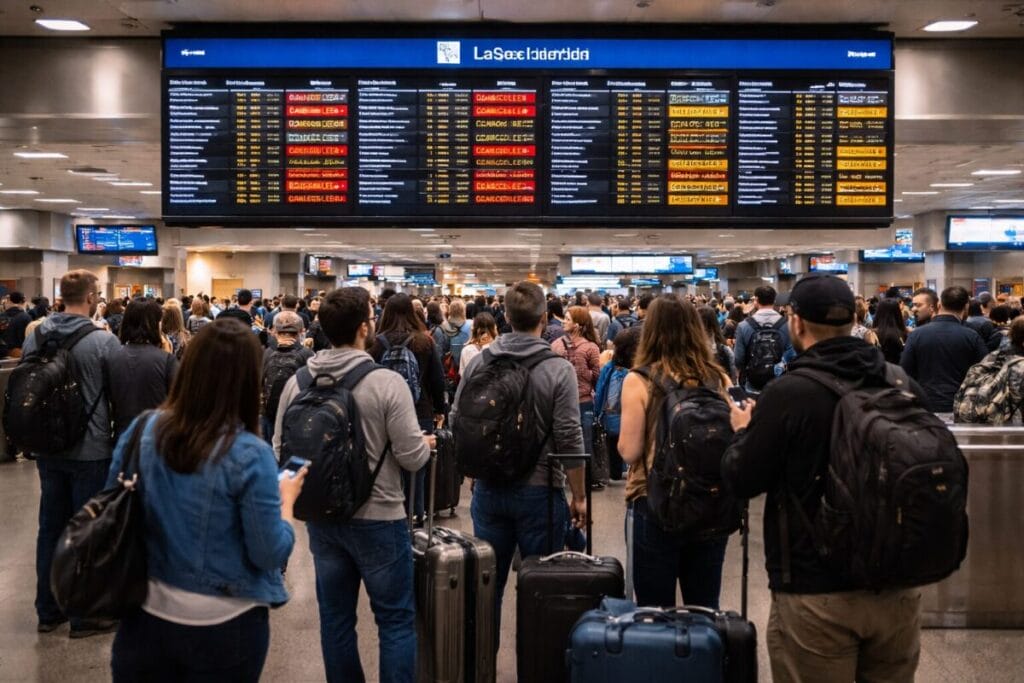
New York faced major travel turmoil as LaGuardia Airport recorded hundreds of flight cancellations and delays. The disruptions affected regional carriers and mainline airlines throughout the domestic network. Travelers across the country scrambled for rebooking options while airlines worked to manage cascading operational challenges.
LaGuardia became the epicenter of the situation. More than 250 flights were canceled and more than 340 flights were delayed within a single day. The effects stretched far beyond New York as airports in Boston, Dallas, Toronto and Cleveland reported delays triggered by the LaGuardia shutdown.
Regional Carriers Lead Cancellation Counts
Regional airlines handled the majority of canceled departures and arrivals. Republic Airways sustained the heaviest blow with more than one hundred canceled flights and dozens of delayed operations. Endeavor Air also struggled with dozens of cancellations and high delay counts across its Delta Connection network. The cancellations disrupted feeder routes and reduced onward connections for passengers heading to larger hub airports.
American Airlines also reported dozens of cancellations and delays across its LaGuardia schedule. Delta Air Lines, JetBlue and Spirit Airlines faced fewer cancellations yet continued to battle extensive delays. United Airlines and Southwest Airlines avoided major cancellations yet could not escape network delays.
LaGuardia Bottleneck Strains Airline Schedules
LaGuardia struggled as both departure and arrival operations clogged the terminal environment. Passengers waited for updates in crowded concourses and called their airlines to rebook itineraries. The airport lacked space to absorb the sudden influx of delayed aircraft, which forced airlines to halt boarding and adjust pushback times. Taxiways filled with parked aircraft waiting for clearance, forcing delayed flights into further delay cycles.
Flight boards displayed long strings of red and yellow notices as airline staff fielded frustrated questions from travelers. Families with young children searched for hotel rooms and transportation options as evening arrivals rolled into late-night delays.
Disruptions Hit Major U.S. and Canadian Cities
The operational strain radiated across the continental U.S. and parts of Canada. Boston Logan reported several cancellations and delays linked to LaGuardia feeder routes. Dallas–Fort Worth logged dozens of interruptions as American Airlines routed aircraft through alternative hubs. Toronto Pearson also experienced cancellations and delays due to LaGuardia’s suspended arrivals and departures.
Cities including Cleveland, Norfolk and Rochester endured high cancellation ratios even with small flight volumes. Norfolk lost most of its daily operations as flights to New York failed to depart. Rochester recorded cancellations on all scheduled departures headed for the New York region. Smaller airports often lack alternative routing options, creating immediate travel dead ends for passengers.
Mainline and Regional Operational Dynamics
Mainline carriers rely heavily on regional partners to supply short-haul connectivity. Republic Airways and Endeavor Air connect dozens of smaller markets to major cities through branded arrangements with American and Delta. When regional carriers cancel flights, passengers often lose onward connections that depend on timely transfers to long-haul and transcontinental departures.
Airline analysts note that regional operators face limited slack in their schedules. When weather, congestion or staffing issues hit high-density airports such as LaGuardia, regional networks collapse faster than mainline networks. The aftermath forces rebooking on later flights or overnight hotel stays at passenger expense under certain conditions.
Passenger Experience and On-Trip Decisions
Travelers trapped in the disruption sought real-time updates through airline apps and alert systems. Airport loudspeakers and status screens delivered fragmented information as airlines updated routes and departure windows. Experienced travelers monitored nearby airports for alternative departures. Some passengers pivoted to Newark or JFK to escape the gridlock. Ride-share services, buses and trains experienced increased demand as travelers switched modes.
Customer service lines stretched across terminal halls as travelers requested vouchers, rebookings or refunds. Airlines advised passengers not to leave the airport until confirmed itineraries were secured. Travelers who left the terminal without rebooking risked losing priority placement on later departures.
Operational Lessons for U.S. Aviation
Aviation analysts note that LaGuardia’s geographic footprint complicates rapid recovery during heavy disruption periods. The airport has short runways, limited ramp space and constrained taxiway layouts. These constraints make LaGuardia highly sensitive to weather swings, volume surges, ground staffing gaps and air traffic control restrictions.
When disruptions occur at LaGuardia, ripple effects spread across the national network due to the airport’s position within major business travel corridors. Airlines use New York as a key meeting point for corporate travelers and international connections. Tourism remains secondary to business traffic at LaGuardia, yet tourist itineraries still face sharp consequences during cancellations.
Airline Guidance for Passengers
Airlines advise passengers facing cancellations to rely on official digital channels for rebooking. Travelers can secure refunds for canceled flights, request travel credits or seek alternative connections through nearby airports. Airlines also encourage passengers to verify eligibility for hotel accommodations or meal vouchers during extended delays. Passengers who track seat availability early in the disruption face higher success rates when switching flights.
Conclusion
The LaGuardia disruption underscores how quickly U.S. aviation networks can stall under concentrated operational stress. Regional carriers faced the harshest impacts, while major carriers battled persistent delays across multiple cities. Travelers across the United States and Canada felt the consequences as cancellations rippled through hub connections and feeder routes. As airlines refine strategies for network resilience, passengers remain the most affected stakeholders during peak disruption periods.
For more travel news like this, keep reading Global Travel Wire