
Marine tourism remains one of the fastest-growing sectors in global travel. Wildlife cruises, scenic boat rides, and coastal adventures attract millions every year. However, a recent cruise accident in New Zealand has forced the tourism industry to reconsider safety protocols and environmental preparedness.
The grounding of a cruise vessel in Akaroa Harbour has turned a routine nature excursion into a serious maritime incident. While all passengers and crew survived, the aftermath highlights risks that travelers and operators must address in 2026.
A Scenic Cruise Turns Into an Emergency
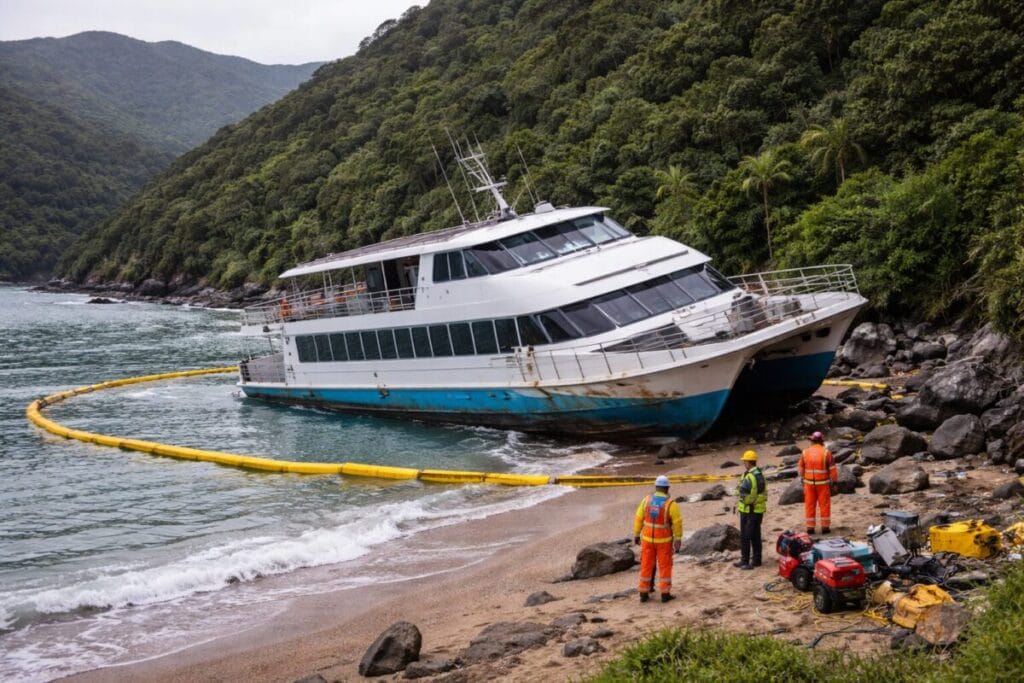
The incident occurred during a wildlife-focused nature cruise in Akaroa Harbour, a popular destination known for marine biodiversity and dramatic coastal landscapes. The vessel ran aground near a protected marine reserve, triggering an emergency response.
Rescue teams evacuated more than 40 passengers and crew safely. Authorities praised the crew’s quick actions and effective coordination with emergency responders. Early evacuation prevented injuries and ensured that the situation did not escalate into a loss of life.
However, the story did not end with the rescue. Strong ocean swells later dislodged the grounded vessel and pushed it higher onto the shoreline. This unexpected movement complicated recovery plans and increased environmental concerns.
Environmental Risks Become a Major Concern
After the rescue phase, attention shifted toward environmental protection. The stranded vessel carried significant quantities of marine diesel fuel and engine oils. Officials immediately assessed the risk of leakage into surrounding waters.
Protected marine reserves often contain sensitive ecosystems. Even small spills can disrupt wildlife habitats, damage coastal vegetation, and impact local tourism economies. Environmental teams monitored the area continuously, collecting debris and checking for signs of contamination.
Authorities also enforced a safety exclusion zone around the wreck site. This step aimed to protect both recovery teams and the fragile ecosystem.
Wildlife Protection Efforts Underway
One of the most emotional aspects of the incident involved local wildlife. Observers reported a distressed crested penguin near the wreck area. Conservation teams attempted to assess the animal’s condition, fearing exposure to pollutants.
Wildlife experts eventually decided to stop attempts to capture the penguin. The animal showed clear signs of stress and repeatedly fled into the water when approached. Specialists concluded that continued intervention could cause greater harm.
This moment highlighted the delicate balance between conservation and rescue operations. Marine tourism thrives on wildlife encounters, yet accidents can threaten the very species travelers come to see.
Salvage Operations Face Natural Challenges
Marine salvage operations rarely follow a predictable timeline. The movement of tides, wave conditions, and weather patterns can change recovery strategies overnight. In this case, strong swells shifted the vessel further onto the beach, forcing authorities to revise their salvage plan.
Interestingly, the new position of the vessel may reduce the risk of debris spreading into the water. Being higher on the shoreline could make containment and cleanup easier. Still, officials must carefully remove fuel and dismantle the wreck without causing additional environmental damage.
Regional authorities paused some recovery efforts earlier due to rough weather conditions. This delay underscores a key reality of maritime incidents: even advanced technology cannot overcome extreme natural forces.
Tourism Industry Under Scrutiny
Following the accident, the cruise operator resumed certain tourism activities and emphasized its long safety record. The company stated that the grounding represented a rare event after decades of operation without similar incidents.
Industry observers note that safety records matter, but they do not eliminate risk entirely. Modern tourism operates in environments shaped by changing weather patterns, increased visitor numbers, and rising expectations for sustainable practices.
For travelers, marketing statements about safety should never replace personal awareness. Passengers should evaluate operators based on certifications, crew training standards, and transparency about safety procedures.
Changing Ocean Conditions and New Risks
Experts increasingly link maritime challenges to evolving climate conditions. Shifting wind patterns, stronger swells, and unpredictable weather events can increase risks for small vessels and coastal excursions.
Tour operators now face pressure to adapt routes, improve forecasting methods, and strengthen emergency preparedness. Government agencies continue to review maritime regulations to ensure that safety standards keep pace with environmental changes.
The investigation into the Akaroa Harbour grounding may lead to updated guidelines for coastal tourism activities across New Zealand.
Essential Safety Tips for Travelers in 2026
Travelers planning marine excursions can reduce risks by taking simple precautions:
- Listen carefully to onboard safety briefings.
- Check local weather forecasts before departure.
- Observe safety equipment locations immediately after boarding.
- Choose operators with proven safety certifications.
- Respect environmental rules and restricted zones.
Being an informed passenger can make a significant difference during unexpected situations.
Lessons for the Future of Marine Tourism
The Akaroa Harbour wreck serves as a reminder that adventure tourism comes with inherent risks. Nature remains unpredictable, even with modern technology and experienced crews.
Yet the successful evacuation also demonstrates how preparation and training save lives. As salvage operations continue and investigations progress, the incident will likely shape future policies and traveler expectations.
For tourists in 2026, the lesson is clear. Enjoy the thrill of ocean adventures, but balance excitement with awareness. Responsible travel protects not only passengers but also the fragile ecosystems that make destinations like Akaroa Harbour truly special.
For more travel news like this, keep reading Global Travel Wire