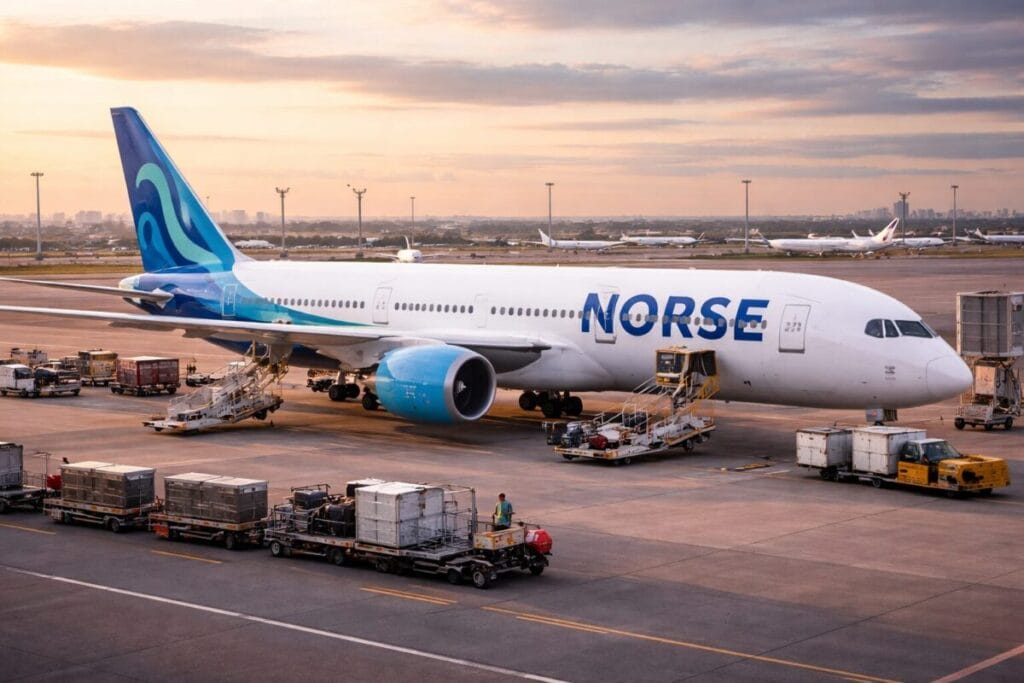
Norse Atlantic Airways has entered a new phase that could reshape how travelers experience long-haul flying. The airline recently completed a strategic transition away from large-scale scheduled operations toward a hybrid model focused on ACMI services combined with limited seasonal routes.
This shift follows the delivery of its sixth Boeing 787-9 aircraft to IndiGo under a long-term leasing arrangement. The move signals a clear change in direction. Norse now aims to prioritize aircraft leasing agreements instead of operating a broad network of scheduled flights.
The airline launched with ambitions to disrupt transatlantic travel through affordable long-haul services. However, evolving market conditions, rising operational costs, and fluctuating passenger demand have pushed the carrier to rethink its strategy.
Understanding the ACMI Model
ACMI stands for Aircraft, Crew, Maintenance, and Insurance. Under this model, an airline leases fully operational aircraft to another carrier. The receiving airline controls ticket sales and route planning, while the leasing airline provides technical and operational support.
This approach offers predictable revenue. Airlines avoid the risks associated with seasonal demand swings, volatile fuel prices, and competitive pricing pressures.
Many global carriers now use ACMI partnerships to expand capacity quickly without investing in additional aircraft. For Norse Atlantic Airways, the model provides financial stability and consistent fleet utilization.
Why Airlines Are Turning Toward Leasing Models
The aviation industry has faced rapid changes in recent years. Travel demand shifts quickly due to economic trends, global events, and evolving passenger preferences. Low-cost long-haul operations, once seen as a major growth opportunity, have proven difficult to sustain.
Operating widebody aircraft requires significant investment. Airlines must maintain high passenger loads year-round to remain profitable. When demand falls, losses can grow quickly.
ACMI contracts help reduce these risks. Long-term agreements guarantee revenue streams. Airlines can focus on operational efficiency rather than constantly adjusting routes or fares.
Norse’s decision reflects a broader industry trend. Several carriers increasingly rely on leasing partnerships to balance growth and financial stability.
Impact on Routes and Passenger Choices
Travelers may notice changes in Norse Atlantic Airways’ route network. The airline plans to maintain only selected seasonal or opportunistic routes under its own brand. Popular destinations such as major North American cities or European hubs may see fewer direct flights operated by Norse itself.
However, this does not necessarily mean fewer travel options overall. Aircraft leased through ACMI agreements will continue flying internationally under partner airlines. Passengers might still travel on Norse-operated aircraft, even if another airline sells the tickets.
This model can expand travel possibilities indirectly. Airlines that need extra capacity during peak travel seasons can deploy Norse aircraft on high-demand routes. Travelers may find additional flight availability or competitive fares through different carriers.
Potential Benefits for Travelers
While the airline’s brand presence may shrink on certain routes, passengers could still gain several advantages.
First, aircraft utilization becomes more consistent. Better scheduling and long-term planning can improve operational reliability. Fewer disruptions may occur compared to seasonal standalone operations.
Second, partnerships between airlines can create broader route networks. Travelers might access more connecting options across different regions.
Third, ACMI operations often support competitive pricing. Airlines leasing aircraft can adjust capacity quickly, which may help stabilize ticket prices during peak demand.
For travelers willing to explore multiple airlines during booking, the change may open new opportunities.
The Role of Boeing 787 Dreamliners
Norse Atlantic Airways continues to rely heavily on Boeing 787 Dreamliner aircraft. These widebody jets offer improved fuel efficiency compared to older models. Lower fuel consumption reduces operating costs and supports sustainability goals.
The Dreamliner’s modern cabin design also enhances passenger comfort. Features such as larger windows, improved air quality, and quieter engines remain attractive for long-haul travelers.
As Norse expands its ACMI portfolio, partner airlines will benefit from access to newer-generation aircraft without making direct fleet investments.
Sustainability and Operational Efficiency
Environmental considerations remain central to airline strategies worldwide. Governments and aviation regulators encourage carriers to adopt more fuel-efficient fleets and reduce emissions.
By focusing on modern aircraft and maximizing utilization through leasing agreements, Norse can maintain better operational efficiency. Continuous aircraft deployment helps reduce idle time and supports more efficient resource management.
Passengers may increasingly encounter newer aircraft on international routes as airlines prioritize efficiency and sustainability.
A New Identity for Norse Atlantic Airways
The airline’s transformation marks the end of its initial growth phase as a large-scale low-cost long-haul carrier. Instead, Norse positions itself as a key player in the global ACMI market.
This change shifts the company’s identity. Rather than competing directly with major airlines on multiple scheduled routes, Norse aims to become a strategic partner providing aircraft capacity worldwide.
Such positioning may strengthen long-term financial resilience. Stable leasing contracts offer predictable revenue even during uncertain travel demand cycles.
What Travelers Should Expect Next
Passengers should watch for evolving route announcements and seasonal schedules. Norse may introduce limited direct flights when market demand rises, especially during peak holiday seasons.
At the same time, travelers may increasingly encounter Norse aircraft operating under different airline brands. Booking flexibility and monitoring new partnerships could help travelers identify emerging travel options.
The airline industry continues to adapt rapidly. Norse Atlantic Airways’ pivot highlights how carriers are exploring innovative models to remain competitive.
For travelers, the future may bring fewer direct Norse-branded routes but potentially more travel opportunities through collaborative airline networks and expanded international capacity.
For more travel news like this, keep reading Global Travel Wire