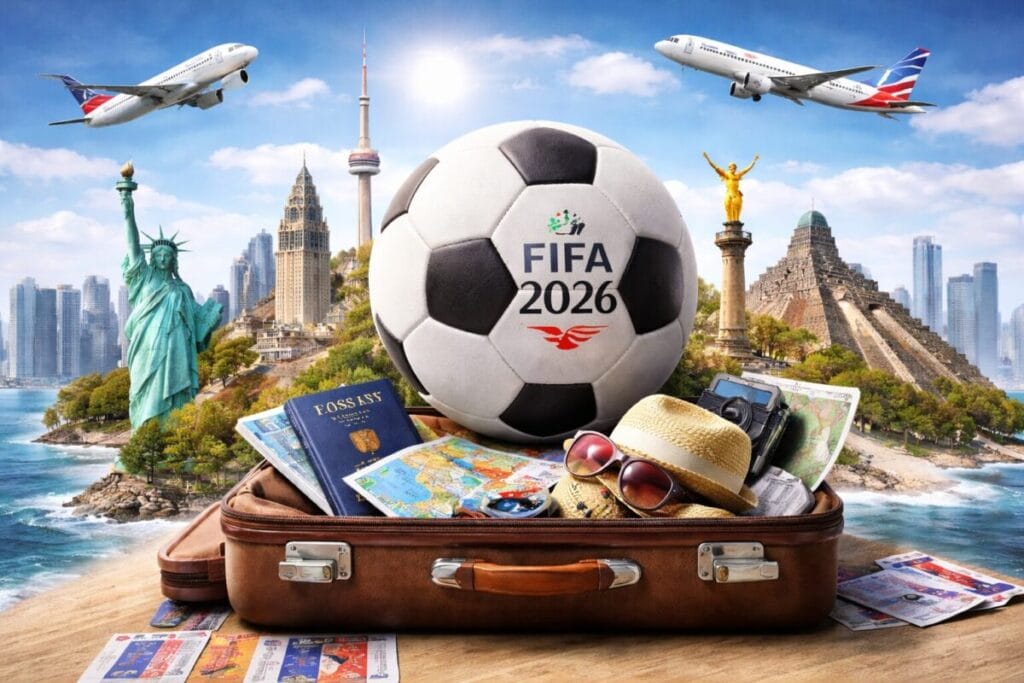
The FIFA World Cup 2026 is already reshaping global travel trends. With matches spread across the United States, Canada, and Mexico, the event is positioned to become the largest World Cup in history and a catalyst for extraordinary tourism growth across North America. Soccer fans, casual travelers, and curious explorers are beginning to map out travel plans for a once-in-a-lifetime spectacle that blends sport, culture, and adventure.
Airlines Prepare for Massive Demand
Leading U.S. carriers including Delta, United, and American Airlines are expanding flight options for the event period. The surge in demand began well ahead of time as international supporters secure travel routes into major host cities such as Los Angeles, New York, Toronto, Vancouver, and Mexico City. Airlines expect a spike in both international and domestic traffic as fans hop between matches and explore multiple destinations.
Flight schedules are being enhanced to increase connectivity from Europe, South America, and Asia. Carriers are expected to roll out route expansions, larger aircraft on popular corridors, and flexible booking options. Industry analysts project that the World Cup will deliver one of the strongest travel seasons the region has seen in decades, driven not only by tournament spectators but also by leisure tourists drawn to the festive atmosphere.
Hotel Brands Enter the Spotlight
Hospitality demand is also set to soar. Marriott Bonvoy’s role as the Official Hotel Supporter of the tournament brings unique perks and curated guest programs. The company’s portfolio across the three host nations allows for broad coverage near stadiums, fan zones, and cultural landmarks.
Hotels are expected to introduce themed experiences, fan lounges, dining activations, and curated local excursions. Luxury brands are preparing private viewings, rooftop celebrations, and exclusive access events, while mid-tier accommodations are focusing on convenience, comfort, and competitive pricing to support family and group travelers.
A Tourism Windfall for Host Cities
Hosting rights for 2026 stretch across an unprecedented 16 cities. Major urban centers like New York, Los Angeles, and Mexico City are preparing for international waves of visitors. Other host cities such as Seattle, Houston, and Kansas City anticipate a tourism moment that boosts local identity and long-term visibility.
Canada’s cities expect heightened cultural tourism as well. Toronto, Vancouver, and Montreal offer diverse food scenes, waterfront attractions, and outdoor adventures, making them ideal for extended stays beyond match days. In Mexico, tourism officials anticipate a spike in culinary travel, museum visits, and heritage tours, with Mexico City and Guadalajara projecting record visitor numbers.
Cultural Exploration Takes Center Stage
One of the defining features of the 2026 World Cup is the cultural diversity of its host nations. Travelers will encounter a range of landscapes and traditions, from U.S. national parks and Hollywood landmarks to Mexican archaeological sites and Canadian coastal trails.
In Los Angeles, visitors can pair match days with beach outings, celebrity tours, or art walks. Mexico City offers centuries of history, vibrant markets, and a celebrated culinary scene. Toronto blends multicultural neighborhoods with world-class museums and performance venues. Vancouver provides easy access to mountain adventures, whale watching, and Indigenous cultural experiences. This combination gives the tournament a dual identity as both a sporting event and a grand tourism showcase.
Smart Travel Planning Becomes Essential
Because traveler demand is accelerating early, experts advise securing airfare and accommodations months in advance. Travelers planning multi-city itineraries should consider regional flights, rail networks, and cross-border routes. Secondary airports may offer smoother arrivals than major hubs during peak weeks. Hotels near stadiums will book out fastest, prompting many visitors to explore stays in surrounding neighborhoods and satellite towns.
Marriott Bonvoy and other major brands are expected to introduce bundled travel packages that may include match access, local tours, and priority services. Such offers could appeal to travelers seeking streamlined logistics amid high demand.
Economic Boost Expected Across North America
Economists expect the World Cup to become a major tourism stimulus. Spending will flow through hospitality, food service, transportation, retail, and entertainment sectors. Beyond immediate revenue, tourism boards anticipate long-term visibility as global audiences become more familiar with host destinations and attractions.
Public officials in all three countries have highlighted infrastructure upgrades, airport improvements, and city beautification projects as part of the event preparations. These enhancements may support tourism long after the tournament concludes.
A Global Celebration of Sport and Travel
With 48 teams and millions of traveling supporters, the 2026 edition is expected to redefine the scale of international sporting events. Its tri-nation format brings fans into contact with three distinct cultures and travel environments, creating a richer tourism profile than any previous World Cup.
What began as a sporting event is evolving into a continental showcase of food, culture, landscapes, and innovation. For many travelers, the World Cup will become an entry point to deeper exploration across North America.
For more travel news like this, keep reading Global Travel Wire