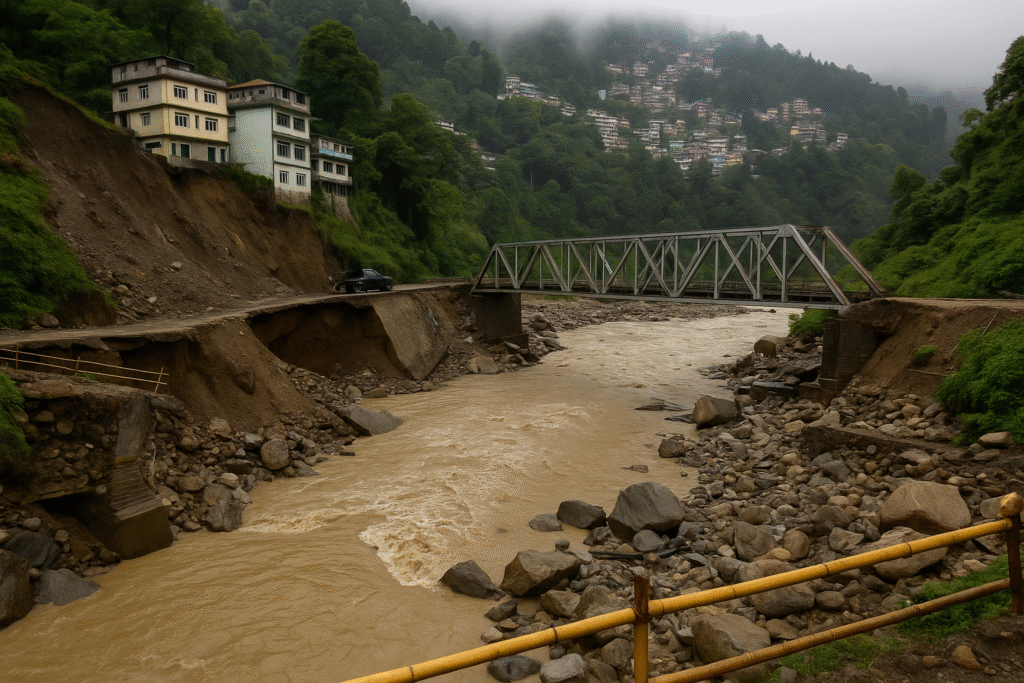
The recent floods that swept across North Bengal on October 4–5 have left the region’s tourism sector in turmoil. Popular travel destinations like Darjeeling, Mirik, and nearby hill towns have been hit hard. Known for their tea gardens, scenic lakes, and Himalayan views, these locations now face a steep decline in visitors. Tour cancellations, damaged infrastructure, and safety fears have shaken a region that depends heavily on tourism.
The Impact of Floods on Tourism
The floods caused widespread disruption. Heavy rainfall triggered landslides, blocked mountain roads, and damaged bridges. Tourists who had flocked to Darjeeling and Mirik for the autumn season found themselves stranded. Rescue teams managed to evacuate over 860 visitors in the first two days, but the damage was already done.
Bookings fell sharply, with nearly 15% of planned trips canceled within days. Tour operators reported losses, and many travelers avoided North Bengal altogether, fearing unstable roads and unsafe conditions. For a region that thrives on year-round tourism, the financial setback has been immense.
Roads and Access Blocked
Connectivity remains one of the greatest challenges. North Bengal relies on narrow mountain roads to connect its towns. Landslides and washed-out bridges cut off key routes, especially the Siliguri-Darjeeling road. Without smooth transport, tourists are reluctant to plan visits. Many canceled trips not because of direct flood damage but because they could not reach their destinations safely.
Misinformation Adds to the Crisis
Adding to the damage was misinformation. Rumors spread quickly through social media, suggesting that all tourist spots were closed. Many visitors canceled bookings even though several areas were still open and safe. Local tourism leaders urged travelers to rely on official updates. By spreading panic, misinformation created unnecessary losses for hotels, guides, and homestays.
Local Businesses Under Pressure
Tourism is the backbone of North Bengal’s economy. Thousands of families run small hotels, restaurants, and homestays. In Mirik, a town famous for its lake, eateries that usually saw dozens of customers each day now serve only a handful. Shopkeepers in Darjeeling’s Chowrasta market say sales have dropped to record lows.
The fall in visitor numbers has created a ripple effect. Drivers, porters, and local artisans who depend on tourism are struggling to make ends meet. The once-bustling streets are quieter than usual, threatening the livelihoods of many.
Government Response and Relief Efforts
Authorities have launched major efforts to restore normalcy. The state government announced rapid rebuilding of damaged roads, bridges, and homes. Chief Minister Mamata Banerjee assured that no family would be left without support. Emergency funds are being used to clear landslides and reopen highways.
Restoration is not only about repairing infrastructure but also about reviving confidence. Officials want to assure tourists that North Bengal remains safe and accessible. Tourism boards are preparing promotional campaigns to rebuild the region’s image once conditions stabilize.
Rebuilding with Sustainability in Mind
The disaster has sparked conversations about sustainable tourism in the Himalayas. Experts point out that fragile mountain ecosystems are vulnerable to extreme weather. Rapid construction, deforestation, and unregulated tourism make matters worse.
There is now a growing call for eco-friendly practices. Proposals include stricter rules for construction in landslide-prone zones, promoting sustainable homestays, and encouraging responsible waste management. Ecotourism is being highlighted as a safer and more resilient model for North Bengal’s future.
Darjeeling and Mirik at the Center of Recovery
Darjeeling, known as the “Queen of the Hills,” is central to North Bengal tourism. The floods have slowed down its usually vibrant tourist season, but recovery is already visible. Hotels that were empty a week ago are beginning to receive new bookings as roads gradually reopen.
Mirik, with its tranquil lake and pine forests, remains hopeful too. Local entrepreneurs are working to attract tourists back by emphasizing that the town is safe. The government has prioritized reopening access to Mirik, knowing its economic dependence on tourism.
Challenges Ahead
Recovery will not be immediate. Clearing debris, rebuilding bridges, and ensuring safety will take time. Until tourists regain confidence, small businesses will continue to suffer. The key lies in balancing recovery with sustainability. A focus on eco-tourism, better infrastructure planning, and stricter safety checks could reduce future risks.
Looking Forward: A Resilient Tourism Future
Despite the hardships, North Bengal remains resilient. The spirit of the local people and the natural beauty of the region continue to inspire hope. Tourists who return often find that destinations like Darjeeling and Mirik are still welcoming, with their charm intact.
Authorities are urging visitors to rely on official updates and travel advisories. With ongoing rebuilding and safety measures, the region is preparing to host travelers again. In the long term, a shift towards sustainable tourism will protect both visitors and the fragile Himalayan environment.
Conclusion
North Bengal’s tourism industry faces one of its toughest challenges in years. Floods have damaged roads, disrupted livelihoods, and discouraged travelers. Yet, with government action, community resilience, and sustainable planning, recovery is possible.
The mountains of North Bengal still hold their allure. As rebuilding continues, the region hopes to welcome back travelers with renewed strength, safety, and a vision of sustainable tourism that safeguards both people and nature.
For more travel news like this, keep reading Global Travel Wire