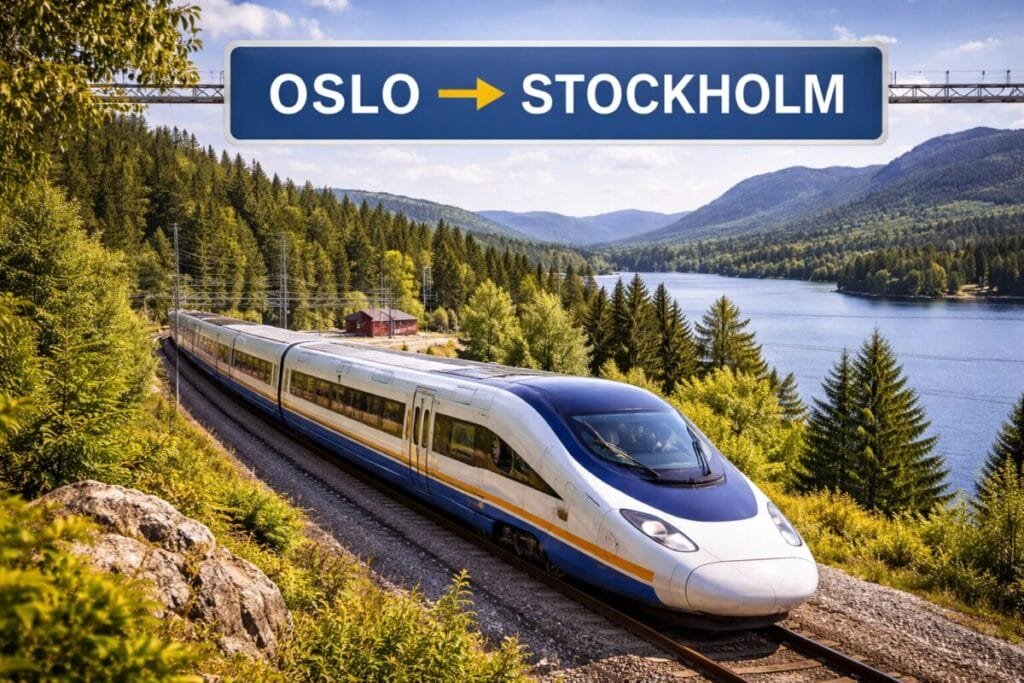
A new open access rail service between Oslo and Stockholm will reshape Nordic travel when it launches in 2026. The cross-border route marks a significant shift toward competitive rail services and sustainable transportation. Travelers can expect improved travel times, enhanced onboard experiences, and increased departure frequency.
Open access rail allows independent operators to run trains on existing national rail networks. Instead of relying solely on state-operated railways, private companies purchase track access and operate services. This approach introduces competition, which often leads to better prices and improved passenger amenities.
The Oslo to Stockholm corridor serves as one of Scandinavia’s busiest travel routes. Historically, flights dominated this market due to shorter travel times. However, upgraded rail infrastructure now aims to make trains a viable alternative.
Faster journey times make rail more competitive
The rail distance between Oslo and Stockholm covers approximately 400 kilometers. Earlier train journeys often exceeded five hours, which made flights more attractive for time-sensitive travelers. Infrastructure upgrades scheduled for completion by 2026 aim to reduce travel times closer to three hours.
Improvements include modernization of Norway’s Kongsvinger Line and Sweden’s Värmland Line. Track upgrades, signaling enhancements, and new rolling stock contribute to faster and more efficient travel. Reduced travel times strengthen rail’s appeal among business travelers and tourists alike.
Faster rail services also help eliminate airport-related stress. Travelers can avoid long security queues and check-in procedures. Instead, passengers board directly at city center stations, saving time and improving overall convenience.
Onboard experience focuses on comfort and lifestyle travel
Operators plan to offer a modern onboard experience designed for both leisure and professional travelers. Spacious seating, high-speed internet access, and dedicated dining areas aim to create a comfortable environment. Many open access operators prioritize lifestyle-oriented travel that encourages passengers to enjoy the journey.
Dining cars may feature local Nordic cuisine, allowing travelers to experience regional flavors during the trip. Comfortable seating arrangements support remote work, making trains attractive for digital professionals. Families also benefit from relaxed seating layouts and accessible facilities.
Seasonal schedules will likely expand during peak travel periods. Summer and winter tourism seasons often drive higher demand in Scandinavia. Increased frequency during these times helps manage passenger volumes and improve accessibility.
Seamless border crossings enhance travel efficiency
Cross-border rail travel often faces technical challenges, including different electrical systems and signaling standards. The new fleet planned for the Oslo to Stockholm route will use multi-system locomotives capable of operating on both Norwegian and Swedish networks.
These trains can switch between power systems without stopping, ensuring smooth border crossings. Passengers will not need to change trains or experience long delays at national boundaries. This seamless transition improves efficiency and enhances the overall travel experience.
Simplified cross-border travel also supports regional tourism growth. Travelers can easily include both Norway and Sweden in a single itinerary, encouraging longer stays and multi-destination trips.
Environmental goals drive shift from air to rail
Climate policies play a major role in the development of new rail services across Europe. Both Norway and Sweden have introduced ambitious environmental targets aimed at reducing emissions by 2030. Transportation accounts for a significant portion of regional carbon output, making rail expansion a strategic priority.
Each year, more than one million passengers travel between Oslo and Stockholm by air. Rail operators hope to attract a large share of these travelers by offering competitive travel times and improved comfort. Even a partial shift from air to rail could significantly reduce emissions.
Government incentives and environmental campaigns encourage travelers to choose lower-carbon transport options. Sustainable tourism continues to influence travel decisions, especially among environmentally conscious visitors.
Strengthening regional connections and economic activity
The new rail link connects communities along the Arvika, Karlstad, and Kongsvinger corridor. Many residents travel between these regions for work, education, and family visits. Improved rail services create stronger social and economic connections across the border.
Students gain easier access to universities in larger cities, while business travelers benefit from efficient transport between economic hubs. The train also serves as a mobile workspace, allowing passengers to remain productive during journeys.
Tourism industries along the route expect increased visitor numbers. Scenic landscapes, forests, and lakes attract travelers seeking authentic Nordic experiences. Rail travel encourages slower exploration and helps distribute tourism beyond major cities.
Challenges remain despite strong optimism
Although excitement around the project remains high, operators must address several challenges. Scandinavian winters bring extreme weather conditions, including heavy snow and icy tracks. Testing programs aim to ensure trains perform reliably under harsh climates.
Capacity management also requires careful planning. Freight trains, regional services, and high-speed passenger trains must share limited track space. National infrastructure agencies coordinate schedules to maintain efficiency and prevent congestion.
Despite these challenges, industry experts believe the benefits outweigh the risks. Continuous investment in rail technology and infrastructure will help improve long-term reliability.
A new chapter for Nordic rail tourism
The Norway-Sweden open access rail service represents a major step toward greener and more connected travel across Scandinavia. Faster journey times, competitive pricing, and enhanced onboard experiences position rail as a strong alternative to short-haul flights.
Travelers can look forward to scenic journeys through Nordic landscapes while enjoying modern amenities. The service highlights a broader European trend toward sustainable mobility and cross-border cooperation.
As the 2026 launch approaches, expectations continue to grow. The Oslo to Stockholm route may become a flagship example of how rail innovation supports tourism, environmental goals, and regional connectivity in the modern travel era.
For more travel news like this, keep reading Global Travel Wire