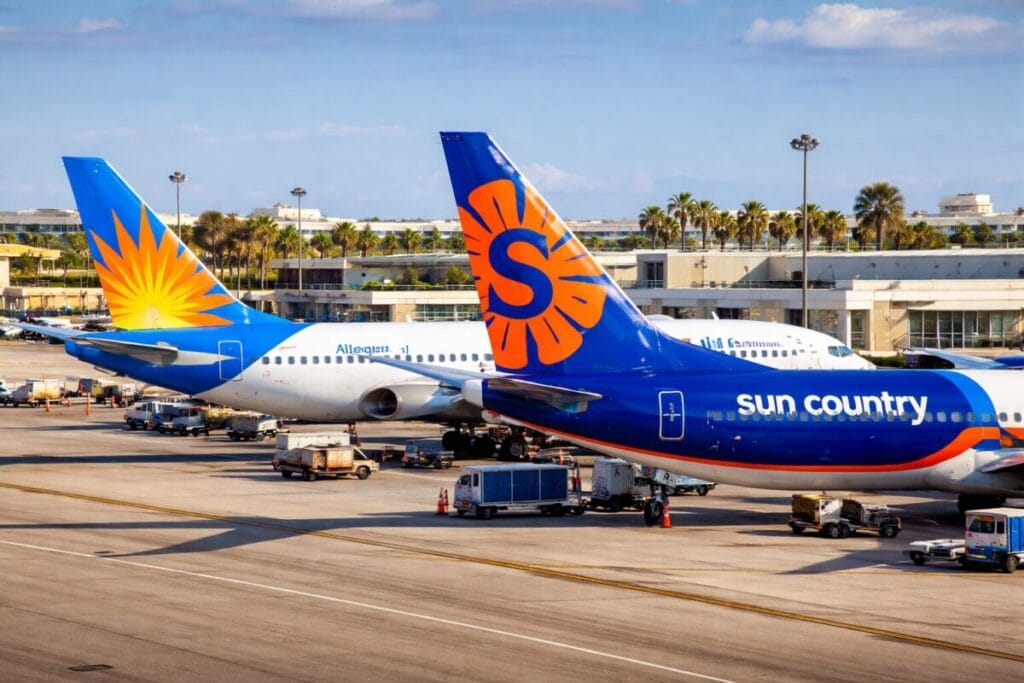
The United States leisure travel market is entering a pivotal new phase as Allegiant Air moves to acquire Sun Country Airlines in a $1.5 billion deal. The proposed merger stands to reshape domestic tourism by expanding capacity, strengthening regional connectivity, and stabilizing year-round service to popular vacation destinations. The timing reflects major shifts in traveler demand as Americans continue to favor affordable leisure trips amid rising overall travel costs.
A Strategic Travel Market Realignment
Both airlines share deep roots in the U.S. leisure segment. They built their brands around serving travelers heading to sunny vacation spots, theme parks, and seasonal tourist cities rather than corporate hubs. Allegiant has long targeted budget-conscious families traveling to destinations such as Florida, Nevada, and Southern California. Sun Country has built strength in the Midwest, linking regional airports to warm-weather destinations and beach markets.
The merger aims to fuse these strengths into a unified leisure carrier with broader national reach. This repositioning could help reshape domestic tourism flows by making nonstop holiday travel more accessible from secondary and mid-sized airports that often lack affordable seasonal flight options.
Tourism Benefits for Secondary Cities
One of the most notable impacts of the merger relates to connectivity for smaller U.S. cities. Many regional airports have struggled to preserve nonstop leisure routes as operating costs have risen since the pandemic. Larger network carriers have increased their focus on primary hubs and international markets, leaving smaller cities dependent on niche carriers for vacation travel.
A combined Allegiant–Sun Country airline would have greater operational scale, allowing it to maintain or expand service in underserved markets. More nonstop options can stimulate tourism by reducing travel friction. This effect is especially pronounced in regions where driving alternatives involve long distances or limited road infrastructure.
The merger could also drive visitor growth for communities that rely heavily on seasonal tourism. Cities with beach resorts, desert activities, lakeside recreation, and theme parks may stand to gain from more stable flight capacity throughout the year.
Strengthening U.S. Tourism Competitiveness
U.S. domestic tourism demand has remained strong even amid higher lodging and travel costs. Households have continued to prioritize vacations and family trips, especially to warmer destinations. Airlines that cater to this demand have played a central role in supporting the broader tourism economy, from hotel occupancy to car rentals to theme park visitation.
By combining networks, fleet resources, and customer bases, Allegiant and Sun Country are positioning themselves as a more competitive force in the national tourism supply chain. A stronger leisure carrier could help the U.S. tourism sector remain resilient during periods of economic uncertainty by ensuring stable flight access to major vacation markets.
Cargo and Charter Operations Add Stability
A distinctive advantage of this merger lies in Sun Country’s cargo and charter operations. The airline has built a sizable cargo business that generates steady revenue outside of peak vacation seasons. This reduces reliance on holiday travel spikes and allows for more balanced flight scheduling throughout the year.
For tourism markets, this stability can translate into more consistent air service during slower months. Destinations that depend on winter or summer peaks often struggle to maintain air connectivity in shoulder seasons. A diversified revenue model may help alleviate those fluctuations.
Travelers May See More Competitive Pricing
Although pricing outcomes will depend on market conditions and regulatory review, many analysts expect the merger to support more competitive fares within the leisure segment. Both airlines operate ultra-low-cost business models centered on unbundled pricing, allowing travelers to customize spending on baggage, seats, and services.
Budget-focused pricing has been a key driver of domestic tourism growth. It has enabled wider segments of U.S. households, including younger families and retirees, to travel multiple times per year. A more efficient combined airline could help preserve accessible fare structures during a period when many travel companies face inflationary pressures.
Regulatory Review Focused on Consumer Impact
The merger will undergo regulatory scrutiny before approval. Authorities are expected to examine the extent of route overlap and the implications for traveler choice. Industry observers believe approval may be likely due to the limited overlap between the airlines and the continued presence of other low-cost competitors in the leisure market.
From a tourism standpoint, regulators may weigh how the merger could influence regional access to popular destinations. Industry groups that represent airports and tourism boards will closely monitor outcomes to ensure the deal supports visitor flows rather than restricts them.
Implications for U.S. Destination Markets
If approved, the merger may strengthen tourism performance in key domestic leisure regions, including:
- Florida coastal markets
- Nevada recreation and entertainment hubs
- California theme park and beach areas
- Hawaii and other island destinations
- Seasonal mountain and lake resorts
- Gulf Coast cities with cruise tourism and beach attractions
The combined carrier could also foster new point-to-point routes that bypass major hubs, making vacation travel faster and more convenient for families and groups.
Bottom Line
The proposed Allegiant–Sun Country merger marks a defining moment for U.S. leisure travel. By joining forces, the airlines aim to create a stronger, more resilient leisure carrier with broader geographic reach and better year-round operational stability. If approved, the deal could reshape how Americans take vacations by expanding nonstop access from regional airports, enhancing price competition, and strengthening the tourism economy across the United States.
For more travel news like this, keep reading Global Travel Wire