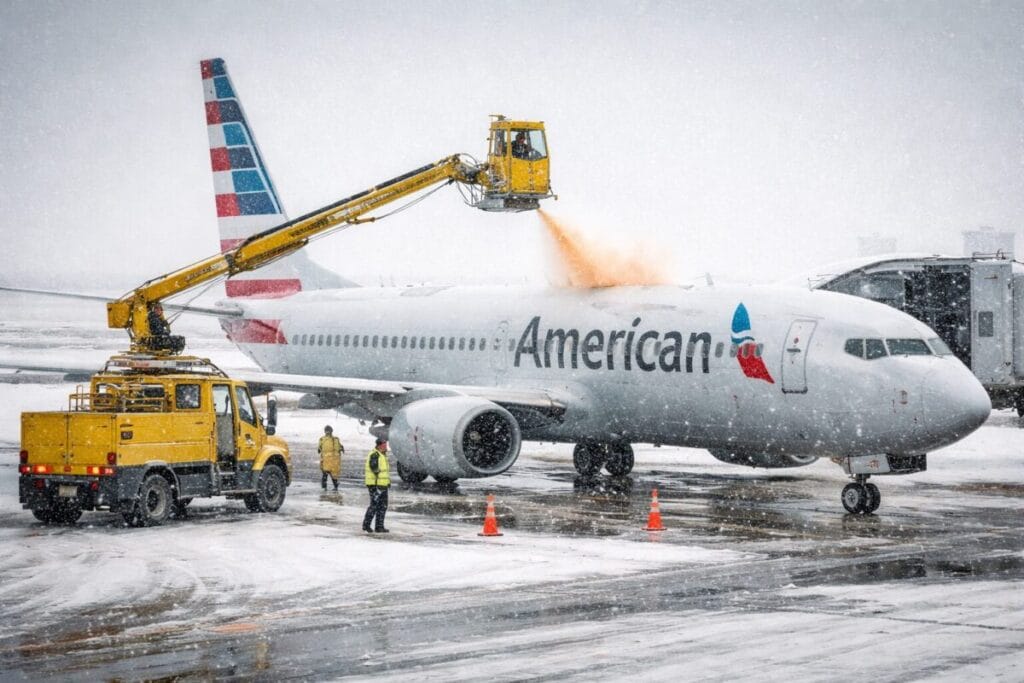
American Airlines is reinforcing its winter operations as Winter Storm Fern moves toward major U.S. travel corridors. The storm threatens to disrupt regional tourism flows, domestic business travel, and cross-country connectivity. In response, the airline has activated its winter readiness strategy to safeguard passengers, reduce disruptions, and protect overall travel demand during a peak travel period.
Proactive Travel Alerts Issued
The airline has issued travel alerts for cities likely to experience snow, freezing rain, and high winds. This step gives travelers time to adjust itineraries before the storm arrives. Alerts cover popular tourism hubs and high-traffic airports linked to key winter destinations. The messaging also emphasizes flexibility for passengers who may need to shift to alternate travel days.
Fee Waivers Add Flexibility
American Airlines has waived ticket change fees for impacted customers. This move removes the financial penalty that often discourages travelers from adjusting their plans during severe weather. Passengers can rebook for alternate dates without extra charges. This reflects a broader trend in U.S. aviation toward more flexible consumer policies during disruptive weather conditions.
Aircraft and Crew Repositioning
The company has begun repositioning aircraft to airports outside the projected storm path. Crews are also being reassigned to ensure operational continuity. These measures help preserve flight schedules once the storm clears. Strategic repositioning is a standard tool used by major U.S. carriers during winter weather events. It prevents aircraft from becoming stranded and shortens recovery time after the disruption passes.
Reinforced Airport Staffing
Major airports in the storm zone are receiving additional staffing. This includes ramp crews, customer support roles, and aircraft maintenance teams. Extra personnel enable faster turnaround times and smoother operations during difficult weather. Airports with major tourist flows are being prioritized, as storm delays often cause ripple effects across national airline networks.
Digital Tools Improve Passenger Experience
Travelers can modify bookings digitally through the airline’s mobile app or website. These platforms allow itinerary changes, flight status checks, and mobile boarding access. Digital engagement helps reduce wait times at airport counters and reservation centers. The airline reports continued investment in digital support tools as part of a multi-year modernization strategy aimed at improving traveler satisfaction.
Real-Time Communication for Travelers
Clear communication is a central pillar of the airline’s storm response. Passengers receive flight notifications as conditions evolve. The airline advises checking flight status before traveling to airports impacted by the storm. Updated information aims to reduce last-minute rushes, airport congestion, and unnecessary travel in hazardous winter conditions.
Winter Storm Fern’s Travel Impact
Winter Storm Fern is expected to affect tourism-heavy U.S. regions that attract seasonal travelers for winter recreation, family visits, and holiday events. Snow and freezing precipitation can disrupt highway travel, airport ground operations, and regional tourism flows. Such storms also cause short-term fluctuations in hotel bookings and transportation services.
Federal weather agencies encourage airlines and public transportation systems to activate severe weather plans during major winter events. These plans typically cover snow removal, runway treatments, de-icing protocols, and adjustments to air traffic routing. Airlines and airports across the U.S. Midwest and Northeast conduct annual winter preparedness training to ensure safety and operational reliability.
Focus on Passenger Safety
Safety remains the top priority for American Airlines throughout the weather response. Aircraft de-icing will be used as needed to maintain safe operating conditions. Runways may experience temporary closures during peak snowfall. The airline has prepared for possible cancellations if conditions prevent safe flight operations. By planning ahead, the company aims to reduce the volume of stranded travelers that often accompanies winter storms.
Tourism Industry Preparedness
Tourism operators are also preparing for schedule shifts tied to the storm. Hotels near airports often see an increase in bookings when delays extend into overnight hours. Rental car companies experience higher demand as travelers search for alternate transportation methods during flight cancellations. Winter resilience has become a key theme across the U.S. travel sector as severe weather events increase in frequency.
Recovery and Post-Storm travel Demand
Once Winter Storm Fern passes, the airline plans to ramp operations quickly. Repositioned aircraft and ready crews enable faster recovery. The goal is to restore domestic tourism flows and reduce backlog for leisure and business travelers. The airline expects strong demand once clear skies return, particularly to winter destinations and major metropolitan hubs.
A Reassuring Signal to Travelers
By taking these pre-storm actions, American Airlines sends a reassuring message to travelers navigating winter uncertainty. Flexibility, clear communication, and proactive planning help reduce stress and preserve travel confidence. These steps align with broader industry efforts to improve the winter travel experience for passengers throughout the United States.
For more travel news like this, keep reading Global Travel Wire