A routine winter departure at Chicago O’Hare International Airport turned into a major disruption for hundreds of travelers. An American Airlines flight bound for Boston faced long delays after a ground collision during de-icing operations. The incident once again highlights how vulnerable winter air travel can be, even before a plane leaves the ground.
The event unfolded on Friday, January 30, when passengers were already seated and preparing for takeoff. While no one was injured, the delay stretched for hours and left travelers frustrated and uncertain.
What Happened on the Tarmac
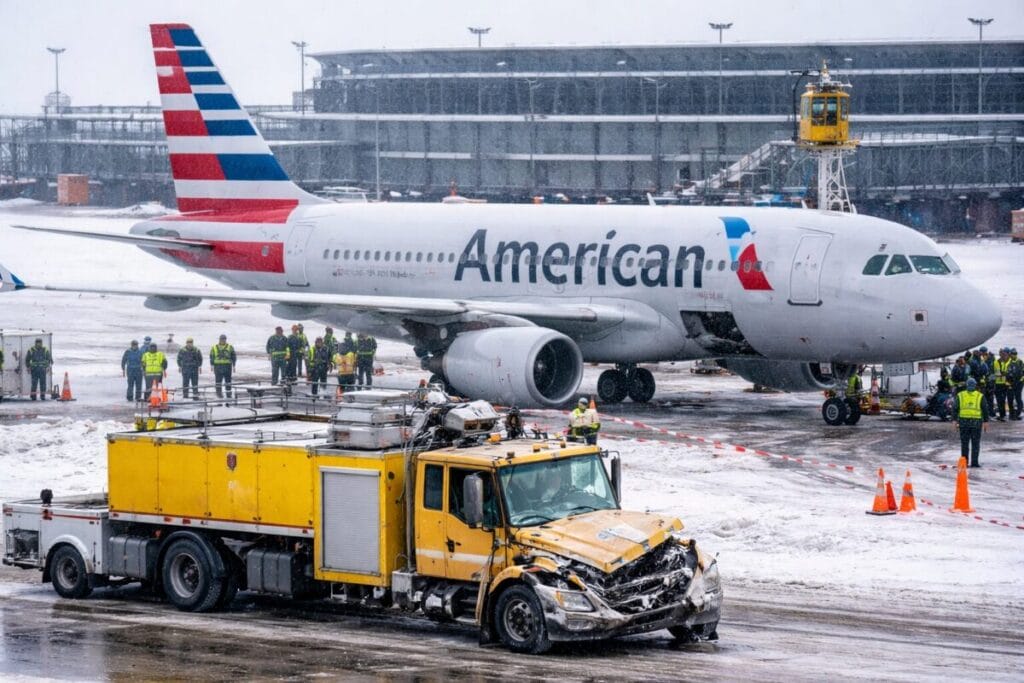
American Airlines Flight 2121 was scheduled to fly from Chicago to Boston using an Airbus A319 aircraft. As the plane prepared to depart, it entered the final stage of de-icing, a standard winter safety procedure. During pushback from the gate, the aircraft struck a de-icing truck positioned nearby on the tarmac.
The collision happened at Gate K8, a busy area of the airport during peak winter operations. Once contact occurred, ground crews immediately stopped the departure process. Initial checks showed that the aircraft could not continue the journey safely.
Passengers Left Waiting Onboard
Passengers were already onboard when the incident occurred, which made the delay more difficult. The crew asked travelers to remain seated while engineers and ground staff assessed the damage. Minutes turned into an extended wait, with passengers spending nearly two hours inside the aircraft.
Cabin crews worked to keep travelers informed, but options remained limited. Because the plane was no longer fit to fly, the airline had to source a replacement aircraft. Only after securing another plane did staff allow passengers to deplane and move to a different gate.
Aircraft Damage and Operational Impact
The aircraft involved was a 12-year-old Airbus A319, commonly used for short and medium domestic routes. This model usually carries between 140 and 160 passengers, making it a workhorse for busy routes like Chicago to Boston.
Although officials did not release specific details about the damage, it was serious enough to ground the plane. Maintenance teams removed the aircraft from service for further inspection and repairs. Such inspections are mandatory after any ground collision to ensure structural and mechanical safety.
The airline confirmed that safety protocols guided every decision made that day.
Why De-Icing Operations Are High Risk
De-icing is essential during winter, especially at airports in the Midwest. Snow, ice, and freezing rain can affect aircraft wings, engines, and sensors. Specialized trucks spray heated de-icing fluids to remove ice and prevent refreezing before takeoff.
These operations require tight coordination. Pilots, ground crew, and vehicle operators must communicate clearly in crowded spaces. Large airports like Chicago O’Hare manage dozens of aircraft movements at once, which increases complexity.
While collisions between aircraft and de-icing trucks are rare, winter conditions raise the risk due to limited visibility, slippery surfaces, and tight schedules.
Broader Impact on Winter Air Travel
This incident adds to growing pressure on U.S. airlines during winter months. Weather-related delays already strain schedules, crews, and passengers. Ground incidents make the situation worse, especially at major hubs.
Chicago O’Hare is one of the busiest airports in the country. Even a single grounded aircraft can disrupt gate availability, crew rotations, and connecting flights. For passengers, this often means missed connections, late arrivals, and added stress.
Airlines continue to review ground handling procedures to reduce such disruptions. Improved training, better visibility tools, and stricter coordination protocols remain a focus across the industry.
What Travelers Should Know Before Flying in Winter
Winter travelers should expect delays and plan ahead. Choosing early flights can reduce the risk of cascading disruptions. Allowing extra connection time also helps when unexpected ground issues arise.
Passengers should stay alert for airline notifications and be prepared for gate changes or aircraft swaps. Carrying essentials in hand luggage can make long onboard waits more manageable.
Most importantly, travelers should remember that safety decisions, even frustrating ones, protect everyone onboard.
A Disruption Without Injuries, but With Lessons
The American Airlines Flight 2121 incident ended without injuries, which remains the most important outcome. Still, the long delay left a clear mark on passengers’ travel plans.
The event underscores how ground operations play a critical role in aviation safety and efficiency. As winter continues, airlines and airports face the ongoing challenge of balancing speed, safety, and passenger comfort.
For travelers, the message is clear. Winter flying brings added risks, even before takeoff. Staying informed and flexible remains the best way to navigate the season’s challenges.
For more travel news like this, keep reading Global Travel Wire