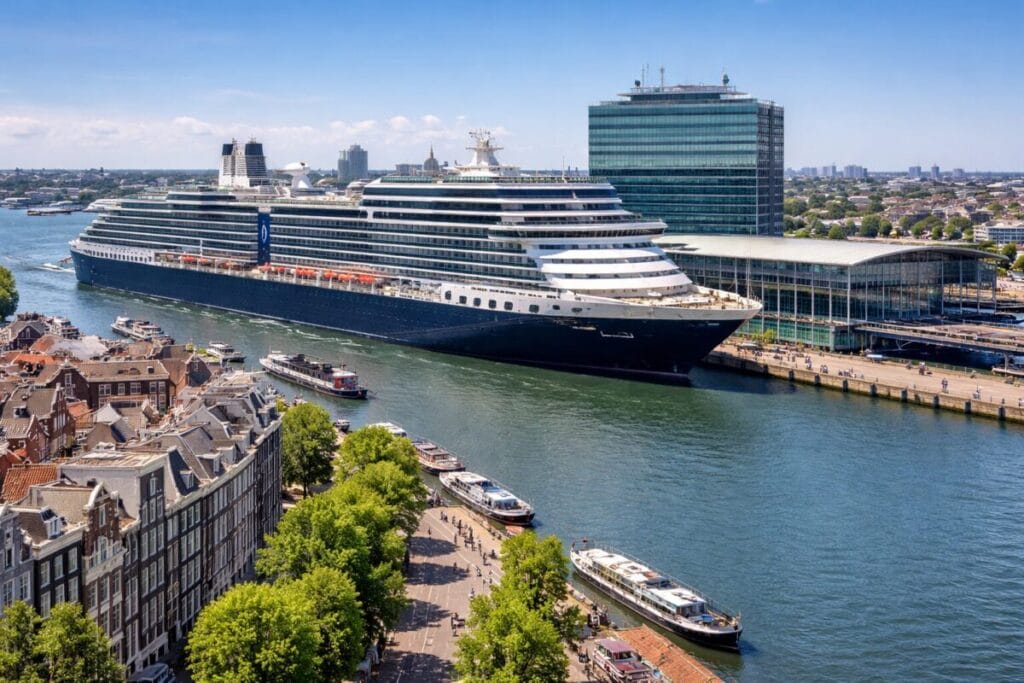
Amsterdam’s long-standing relationship with cruise tourism is entering a period of uncertainty. A proposal issued by the municipal executive recommends the permanent closure of the city’s historic sea cruise terminal by 2035, marking a major strategic shift in how Amsterdam manages its tourism industry. The recommendation departs from earlier plans to relocate the terminal to Coenhaven and has ignited a broader debate over the future role of large cruise vessels in the Dutch capital.
While the proposal is not yet binding, it introduces a new layer of uncertainty for the sector. A final decision is scheduled after the next municipal elections in March 2026, leaving cruise operators, port authorities, and tourism businesses preparing for a range of possible outcomes. For now, the terminal remains operational, and Cruise Port Amsterdam (CPA) has reassured partners that scheduled cruises will continue without disruption.
From Relocation Strategy to Potential Closure
For years, the relocation of the terminal to Coenhaven was viewed as an efficient way to accommodate cruise growth while reducing congestion and environmental pressures in the historical city center. Coenhaven offered more modern infrastructure, greater expansion capacity, and improved transportation links. Technical studies confirmed that relocation was both feasible and legally permissible, with planners envisioning a purpose-built terminal that could meet future maritime standards.
The shift toward closure rather than relocation caught many industry observers off guard. The pivot stems largely from financial concerns, as relocating the terminal is projected to require an investment amounting to tens of millions of euros. While the feasibility of the move was never questioned, the municipal executive has expressed doubts over whether the long-term returns would justify the initial expenditure, particularly during a period where Amsterdam is reassessing its tourism strategy to prioritize sustainability and resident wellbeing.
Financial Implications and Tourism Impact
At the heart of the debate lies a pressing question: can Amsterdam balance its tourism economy with long-term sustainability goals without jeopardizing its appeal as an international travel destination?
The closure of the cruise terminal would eliminate the financial cost of relocation, yet it could also lead to broader economic losses. Cruise tourism plays a significant role in Amsterdam’s visitor economy, stimulating spending not only within the terminal but across the city’s hotels, museums, restaurants, and retail districts. Cruise passengers frequently book overnight stays before or after their voyages, supporting the city’s accommodation sector during both peak and shoulder seasons.
Local businesses fear that losing cruise traffic could push a portion of visitor spending to competing ports in neighboring cities. Rotterdam, located less than an hour away, boasts Europe’s largest port and is already equipped to host major cruise vessels. The port city has been expanding its tourism infrastructure and could emerge as the primary alternative for cruise companies seeking to retain the Netherlands on their itineraries.
Operational Continuity Amid Uncertainty
Despite the proposal, CPA maintains that operations will continue as normal while consultations proceed. Keeping the terminal open remains essential, especially given Amsterdam’s status as a top cruise destination in northern Europe. Thousands of passengers embark or disembark in Amsterdam each year as part of North Sea, Baltic, and transatlantic itineraries. The city’s cultural heritage, museums, canals, and accessibility have consistently made it a favored starting or ending point for major cruise lines.
CPA has expressed optimism that the incoming municipal administration may revisit the relocation plan and is continuing to engage stakeholders to advocate for solutions that protect Amsterdam’s cruise presence while addressing municipal concerns.
A Broader Debate on Tourism Management
Amsterdam’s cruise terminal proposal reflects a broader shift across Europe’s tourism map. Cities such as Venice, Barcelona, and Santorini have implemented new controls on cruise arrivals due to concerns over overtourism, air quality, and historic preservation. Amsterdam’s proposal aligns with similar priorities, emphasizing environmental performance, public space management, and the quality of life of residents.
In recent years, Amsterdam has introduced measures aimed at reducing pressure on the historic core, including visitor taxes, crowd management strategies, and campaigns to promote responsible tourism. Cruise vessels, particularly larger ocean-going ships, are under greater scrutiny due to emissions, noise, and localized congestion at peak times.
Next Steps for Amsterdam’s Cruise Sector
As the 2026 elections approach, the cruise terminal has become a key topic of debate. The incoming municipal leadership will ultimately decide whether to close the terminal outright, pursue relocation, or reconsider the financial model to support modernization efforts. Whatever the outcome, the decision will influence Amsterdam’s tourism positioning for decades to come.
If closure moves forward, Amsterdam could see fewer cruise departures and arrivals, while neighboring ports gain market share. If relocation is revived, Amsterdam could preserve its cruise influence while adopting infrastructure better suited to modern sustainability standards.
A Critical Turning Point for Amsterdam Tourism
Amsterdam’s sea cruise terminal has served as a gateway for millions of visitors. Its future now hinges on how the city balances tourism revenue with environmental stewardship and community priorities. While the debate continues, Amsterdam remains a globally recognized cultural destination with enduring appeal, ensuring that travelers will continue to visit—whether by ship, air, or rail—well into the future.
For more travel news like this, keep reading Global Travel Wire