
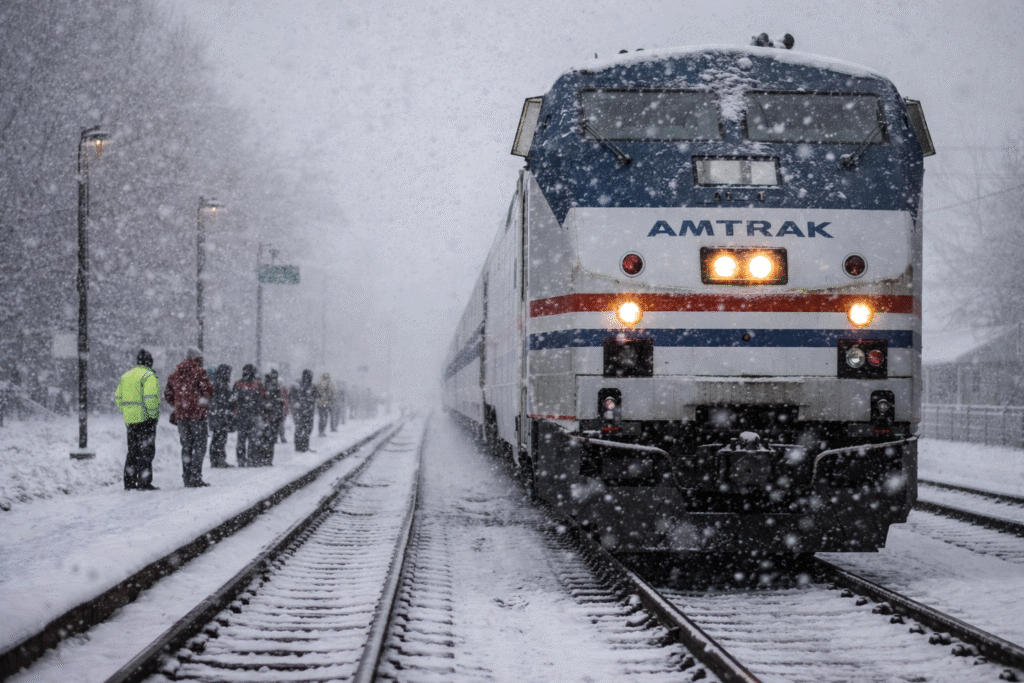
The recent holiday travel period placed unprecedented pressure on Amtrak, as a combination of extreme weather events and persistent mechanical challenges disrupted rail services across the United States. The high-demand travel window, which concluded in early January, underscored the vulnerabilities of the national passenger rail network during peak seasons, leaving thousands of travelers facing extended delays, cancellations and rerouted journeys.
While Amtrak succeeded in transporting the majority of passengers to their destinations, the operational strain was evident on several key routes. Severe winter storms, flooding, landslides and track damage intersected with equipment inspections, crew shortages and technical failures, creating compounding challenges that affected both long-distance and high-speed services.
Weather-Driven Challenges on Long-Distance Routes
Long-distance Amtrak routes often benefit from reduced freight interference during major holidays, and this trend largely held true. Some services that had struggled with congestion earlier in the year experienced comparatively smoother operations. However, weather-related disruptions emerged as the dominant challenge, particularly in regions prone to storms and flooding.
The Coast Starlight, which connects the Pacific Northwest to Southern California, faced some of the most severe impacts. Heavy storms along the West Coast caused flooding, landslides and track instability, prompting inspections and service suspensions. Sections of the route between Northern California and Oregon experienced prolonged delays as crews assessed storm-related damage.
On key travel days around New Year’s Eve and New Year’s Day, track issues south of San Jose led to cascading delays in both northbound and southbound services. In some instances, trains were forced to hold for hours while inspections were conducted. Coastal storm surges near central California further compounded the situation, ultimately resulting in partial route cancellations and the reversal of trains that could not safely proceed.
Empire Builder Encounters Multiple Setbacks
The Empire Builder, one of Amtrak’s most heavily used long-distance routes, also faced a series of operational hurdles. Serving major Midwestern and Northwestern cities, the route was affected by a combination of extreme cold, communication disruptions and mechanical failures.
Late December saw delays triggered by technical outages that disrupted freight coordination and crew scheduling. Crew availability became a recurring issue, forcing trains to remain idle for hours at intermediate stations while replacement staff were arranged. Mechanical inspections added further delays, pushing arrival times well beyond scheduled windows.
The situation escalated when part of the train struck an obstruction near Spokane, resulting in damage to passenger coaches and necessitating additional inspections. By early January, accumulated delays exceeded several hours, leading Amtrak to terminate the service short of its final destination. Passengers were transported onward by bus, highlighting the logistical complexity of managing long-distance rail disruptions during peak travel periods.
Borealis and Regional Service Interruptions
Regional services were not immune to holiday disruptions. The Borealis route experienced an electrical failure in one of its coaches, causing damage to onboard power systems. As a precaution, the train was withdrawn from service and returned without passengers, while replacement bus transportation was arranged for subsequent departures.
Such incidents, while localized, contributed to broader passenger frustration, particularly for travelers relying on regional rail as an alternative to congested highways and airports during the holidays.
Northeast Corridor and Acela Challenges
Even the heavily traveled Northeast Corridor faced operational strain. Mechanical issues affected both legacy and newer Acela trainsets, leading to delays, unscheduled stops and last-minute cancellations. Pantograph and overhead power system interactions caused prolonged service interruptions, particularly in the Boston–New York segment.
These disruptions highlighted the complexity of maintaining high-speed rail infrastructure under winter conditions. While newer Acela trainsets are designed to improve reliability, their phased deployment during a busy travel season added scheduling challenges.
In response, Amtrak adjusted its Acela assignments, increasing the use of newer trainsets on select departures while reducing overall frequencies. The goal was to provide more consistent service patterns, even if it meant fewer total departures during the immediate post-holiday period.
Managing Demand Amid Systemic Constraints
Despite the difficulties, Amtrak implemented a range of mitigation measures, including schedule adjustments, alternate transportation arrangements and proactive inspections aimed at ensuring passenger safety. The company emphasized that weather-related inspections and mechanical assessments, while disruptive, are critical to maintaining long-term system reliability.
The holiday period illustrated the growing demand for rail travel in the United States, particularly as travelers seek alternatives to air travel during peak seasons. However, it also exposed structural challenges, including aging infrastructure, weather vulnerability and the complexity of coordinating with freight railroads across shared corridors.
A Critical Moment for US Passenger Rail
The disruptions experienced during the holiday travel season serve as a reminder of Amtrak’s vital role in the national transportation network—and the pressures it faces. Long-distance trains connect rural and urban communities across vast distances, while corridor services support some of the country’s busiest travel markets.
As climate-related weather events become more frequent and travel demand continues to rise, the need for resilient infrastructure, modern rolling stock and expanded capacity becomes increasingly urgent. Amtrak’s experience during the holidays underscores the importance of continued investment and operational planning to ensure reliable service during future peak travel periods.
While the 2023 holiday season proved challenging, Amtrak remains a cornerstone of US passenger transport. The lessons learned from this period are likely to shape future strategies aimed at improving reliability, enhancing passenger experience and strengthening the nation’s rail system against both environmental and operational pressures.
For more travel news like this, keep reading Global Travel Wire