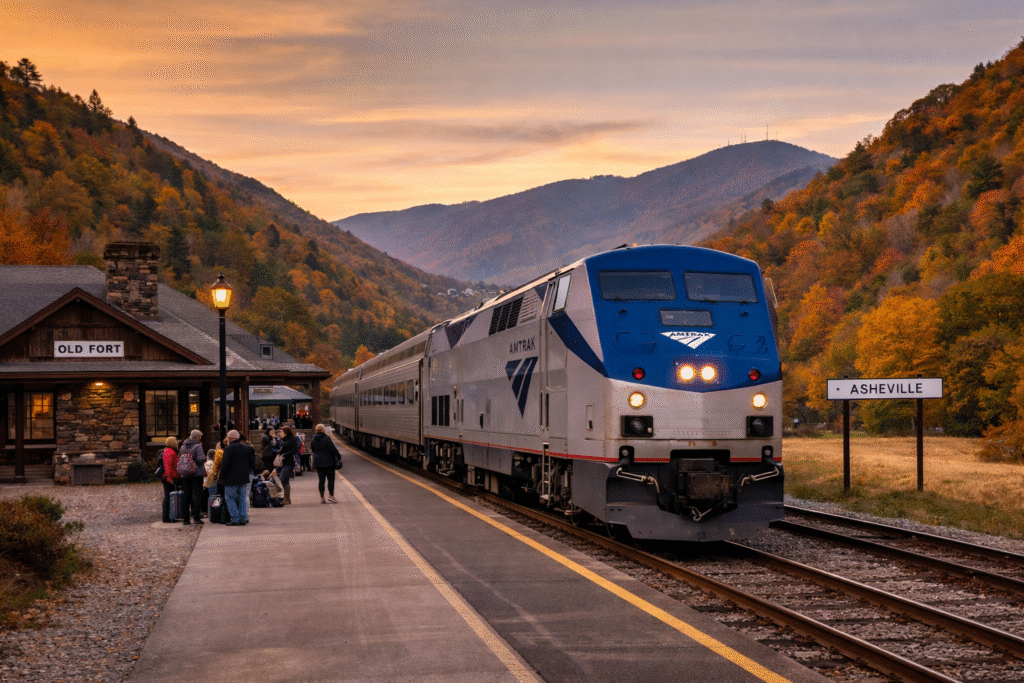
Western North Carolina may soon be on the brink of a major tourism and economic transformation as plans advance for a new Amtrak passenger rail route through the region. The proposed service, part of a long-term statewide rail strategy, aims to restore passenger rail connectivity to historic mountain towns while unlocking new opportunities for tourism, workforce growth, and community development.
For decades, the Appalachian region of North Carolina has been celebrated for its dramatic landscapes, outdoor recreation, and distinctive cultural heritage. However, access to many mountain communities has largely depended on road travel. The introduction of a modern passenger rail connection could significantly reshape how visitors experience the region, turning the journey itself into a key part of the destination.
Reconnecting Mountain Towns with Their Railroad Roots
Railroads once played a vital role in shaping Western North Carolina, linking remote mountain communities to larger cities and supporting industries such as timber, textiles, and tourism. The proposed route would revive that legacy, reconnecting towns like Old Fort and Asheville to the wider rail network and restoring a sense of place rooted in transportation history.
For visitors, rail travel offers a slower, more immersive way to experience the Appalachian landscape. Scenic mountain views, winding river valleys, and historic downtowns would become part of the travel narrative, appealing to tourists seeking meaningful, experience-driven journeys rather than rushed road trips.
Local tourism leaders note that interest in Western North Carolina continues to grow, particularly from travelers in the eastern United States who are looking for accessible mountain getaways. A new rail option could attract visitors who prefer not to drive long distances or navigate mountainous roads, broadening the region’s appeal to families, seniors, and international tourists.
Economic Growth and Job Creation Potential
Beyond tourism, the proposed rail investment carries significant economic promise. The project is expected to require substantial infrastructure development, generating construction jobs and long-term employment linked to rail operations, maintenance, and station services. In addition, increased visitor numbers would support jobs in hospitality, retail, dining, and outdoor recreation.
Economic forecasts suggest the rail route could deliver tens of millions of dollars in regional economic impact over time. Small businesses in towns along the route would likely benefit from higher foot traffic, while new opportunities could emerge for hotels, tour operators, and cultural attractions.
Importantly, the rail line could help diversify local economies that have traditionally relied on seasonal tourism or declining industries. By providing a steady, year-round transportation link, communities may see more consistent visitor flows and greater resilience against economic fluctuations.
Placemaking and Revitalizing Rural Communities
One of the most promising aspects of the proposed rail service is its potential to support placemaking across Western North Carolina. Placemaking focuses on creating vibrant, welcoming spaces that encourage people to spend time, connect with local culture, and support community life.
Rail stations often become hubs of activity, attracting cafes, markets, galleries, and public spaces. For smaller towns such as Old Fort, a passenger rail stop could act as a catalyst for downtown revitalization, encouraging visitors to explore beyond well-known destinations and discover lesser-known gems.
The rail service could also encourage multi-stop itineraries, allowing travelers to hop on and off along the route. This type of slow tourism aligns with growing trends toward sustainable travel, longer stays, and deeper engagement with local communities.
Strengthening Asheville’s Role as a Regional Gateway
Asheville already stands as one of North Carolina’s most popular tourism destinations, known for its arts scene, historic architecture, food culture, and proximity to the Blue Ridge Mountains. A new rail connection would further strengthen its role as a gateway to the region.
Visitors arriving by train could seamlessly access downtown attractions, festivals, breweries, and outdoor adventures without relying on cars. From Asheville, travelers could then continue onward to nearby towns, spreading tourism benefits more evenly across the region.
This improved connectivity could also help manage visitor pressure by encouraging exploration beyond Asheville’s city center, supporting sustainable tourism growth across Western North Carolina.
Public Engagement and Long-Term Vision
The proposed rail route is currently part of a broader planning process that emphasizes public input and community collaboration. Local residents, businesses, and tourism stakeholders are being encouraged to share feedback, ensuring the project reflects regional needs and priorities.
Supporters view the rail expansion as a forward-looking investment that balances heritage preservation with modern transportation needs. By integrating rail travel into the region’s tourism infrastructure, Western North Carolina could position itself as a national leader in scenic, experience-based travel.
A Transformational Opportunity for Tourism
If realized, the Amtrak rail route could usher in a new era for Western North Carolina tourism. By blending historic rail travel with modern comfort, the project offers a compelling alternative to car-dependent travel while celebrating the region’s natural beauty and cultural depth.
For travelers, the route promises a memorable journey through one of America’s most picturesque landscapes. For communities, it represents an opportunity to create jobs, attract sustainable investment, and reconnect with a proud railroad heritage.
As planning continues, the proposed rail line stands as a powerful symbol of how transportation can shape tourism, strengthen communities, and redefine how visitors experience the Appalachian mountains.
For more travel news like this, keep reading Global Travel Wire