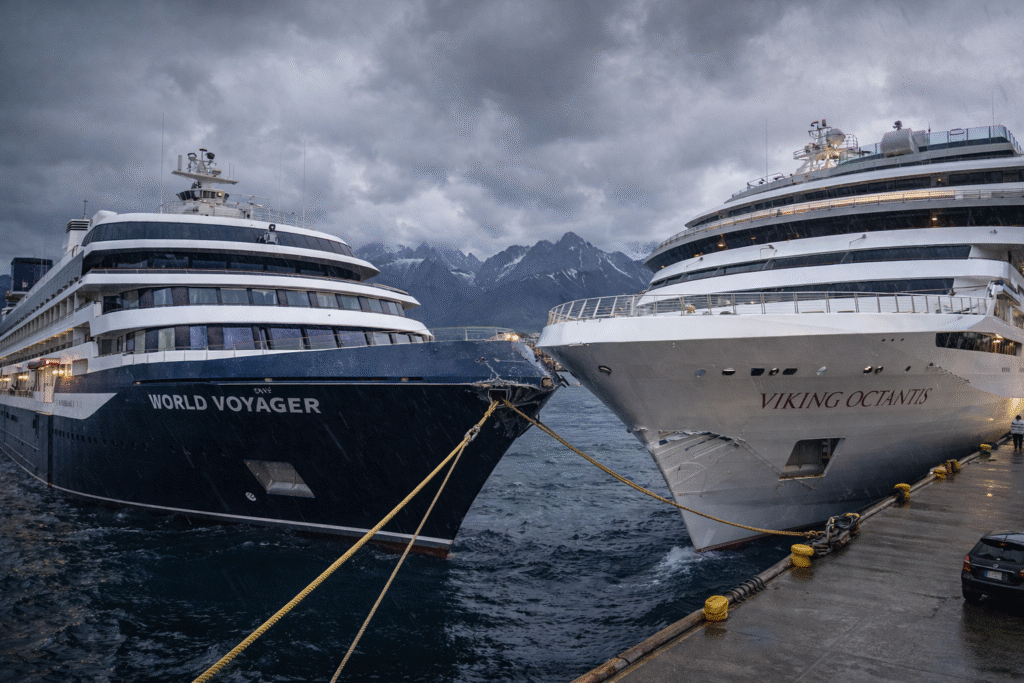
Ushuaia, the southernmost city in Argentina and gateway to Antarctica, is known for its raw beauty, icy winds, and the thrill of expedition cruising. On January 6, 2025, that thrill briefly turned to tension as two Antarctic-bound vessels faced a dangerous storm event that disrupted operations at the busy port. Against the dramatic backdrop of Patagonia, the incident highlighted both the resilience of modern expedition ships and the increasing volatility of weather influencing tourism at the edge of the world.
Storm Winds Disrupt the Gateway to Antarctica
The morning began with powerful wind systems sweeping across the port, creating hazardous conditions for smaller expedition vessels moored along the channel. Sustained wind speeds hovered around operational limits, while gusts surged high enough to challenge maritime infrastructure. This combination placed significant strain on mooring lines designed to keep vessels secure during changing tides and shifting pressure.
At the height of the storm, the stern line of the World Voyager — a 10,000-gross-ton expedition vessel designed for polar operations — snapped under extreme tension. Within moments, the ship broke free and began drifting toward the dockside structure. The event unfolded rapidly, drawing attention from passengers and crew preparing for departures to Antarctica’s ice-covered coastlines and sub-Antarctic islands.
Quick Action Prevents a Maritime Emergency
As the ship gained momentum under the force of the wind, its crew of over 100 acted quickly to slow the drift and adjust positioning. Their maneuvers reduced the impact when the vessel first contacted the harbor infrastructure and then collided with the Viking Octantis, a larger 30,150-gross-ton expedition vessel operated by Viking Expeditions.
The bow of the World Voyager struck the Viking Octantis above the waterline — a detail of significant importance. A sub-waterline impact could have risked flooding, hull damage, or delays to expedition schedules. Instead, the collision produced only external scarring, leaving internal systems untouched and watertight. Local maritime officials later credited the crews for their swift response and adherence to safety protocols.
Damage Assessed, Voyages Continue
Technical experts already present in the region were able to inspect the damage soon after operations stabilized. The Viking Octantis sustained minor damage in the form of a bent exterior railing, while the World Voyager showed a visible crack at the bow. Authorities confirmed the crack was not structural in nature and did not affect seaworthiness.
Most critically, no passengers or crew members were injured, and neither vessel took on water. After regulatory clearance and further operational checks, both expedition ships were authorized to resume their Antarctic itineraries. By evening, the Viking Octantis departed for an 11-night voyage across the notoriously rough Drake Passage toward the Antarctic Peninsula and Cape Horn. The World Voyager followed shortly afterward, bound for the South Shetland Islands on a 10-night expedition.
Meanwhile, Ushuaia’s port continued receiving ships such as Silver Whisper and Celebrity Equinox, demonstrating the port’s ability to rebound quickly even at peak Antarctic cruise season.
Tourism at the Edge of the World Faces New Weather Realities
The incident has sparked renewed industry discussion around extreme weather events affecting tourism at high latitudes. In recent years, global cruise operators have reported an uptick in so-called breakaway incidents in various regions due to intense storms. While maritime engineering and modern safety standards remain robust, climate variability is challenging traditional expectations for wind, wave, and temperature patterns in ports from South America to the Mediterranean.
Ports serving remote tourism hubs — particularly those supporting expedition cruising — are now reviewing infrastructure, fender systems, and climate resilience planning. Government agencies and maritime authorities across multiple countries have echoed this focus on adaptation, emphasizing that sustainable tourism must include operational readiness in addition to environmental stewardship.
Ushuaia’s Role in Antarctic Tourism Remains Firm
Despite the disruption, the spirit of Antarctic travel prevailed. Expedition voyages are defined not only by their destinations but by their resilience. Travelers aboard both vessels soon traded the drama of the harbor for the thrill of spotting penguin colonies, tabular icebergs, and snow-covered mountain ranges rising from the Southern Ocean. For many passengers, the storm became part of the story — a reminder that Antarctica rewards those willing to respect nature’s power.
Ushuaia’s identity as the “End of the World” is part romantic marketing and part geographic truth. Nearly every year, thousands of tourists, scientists, and adventure travelers pass through the port on their way to the 7th continent. While climate and tourism continue to interact in complex ways, demand for polar exploration remains strong.
A Story of Resilience at Sea
In the end, the January 6 storm became more than a collision event. It became a testament to modern maritime engineering, crew training, and the enduring human fascination with remote frontiers. Expedition tourism has always existed at the intersection of risk and wonder, and the events in Ushuaia reaffirmed both. As the ships sailed south into the icy wilderness, the harbor returned to its routine — a gateway preparing once again for those seeking the edge of the earth.
For more travel news like this, keep reading Global Travel Wire