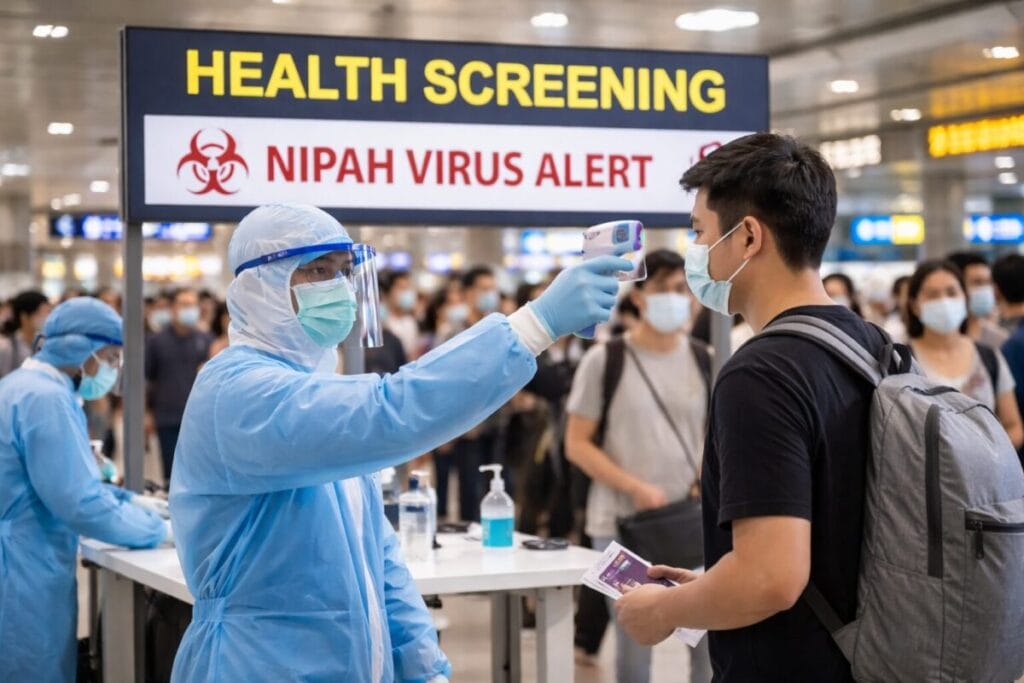
Asian governments are introducing stricter health screening at airports and land borders as Nipah virus cases in India raise concerns over regional travel safety. Tourism authorities emphasize that travel remains open, but health vigilance has intensified to prevent disruptions during peak international mobility.
The recent cluster of infections in West Bengal prompted rapid action. Over a hundred individuals were placed under observation after several confirmed cases, including infections among medical staff. The event highlighted how quickly zoonotic diseases can move through communities and healthcare environments if detection is delayed.
Airports Activate Expanded Traveler Screening
Major tourism gateways are applying disease control strategies refined during previous outbreaks of COVID-19, SARS and MERS. Officials say the goal is early detection rather than restricting travel.
Thailand implemented thermal scanning, symptom checks and detailed health questionnaires at major international airports. Passengers arriving from higher-risk zones are flagged for medical assessment if they show fever, respiratory symptoms or neurological indicators associated with Nipah infection. Travelers who require further evaluation may be guided to isolation areas for observation and testing. Tourism authorities in Thailand stress that these measures are precautionary and designed to maintain confidence in international travel.
Border Measures Extend Beyond Airports
Nepal expanded screening at its main international airport and along key land border points that connect with India. Health workers evaluate recent travel history, identify potential exposure, and isolate suspected cases quickly. Contact tracing has been integrated into border health protocols in order to limit community transmission should a confirmed case occur.
Taiwan added Nipah virus infections to its list of high-risk notifiable diseases. This step ensures rapid reporting from hospitals and clinics, improving national surveillance and enabling faster response. The classification allows public health teams to trigger mandatory containment measures without bureaucratic delay.
Understanding the Nipah Virus
Nipah virus is a zoonotic pathogen carried primarily by fruit bats. In some outbreaks, pigs have acted as intermediate hosts. Human infection can occur through contact with animals, contaminated food sources, or through close person-to-person contact. Healthcare workers face elevated exposure risk without strict infection control.
Symptoms can include fever, respiratory distress, headaches, confusion and, in severe cases, encephalitis. Mortality rates have been high in past outbreaks. There is currently no approved vaccine or antiviral drug specific to Nipah, making prevention and early detection central to health strategy.
Travel Remains Open with Heightened Precautions
Despite confirmed cases in India, no country in the region has implemented travel bans. Tourism boards emphasize that the outbreak remains localized and manageable. Instead of restricting movement, governments are investing in systematic surveillance and rapid case identification. These strategies help keep borders open while preventing transmission during active travel seasons.
Airlines are coordinating with health authorities to inform passengers about symptoms and reporting procedures. Some airports have integrated digital health forms to expedite monitoring and reduce congestion at screening points. Real-time notification systems allow health officials to track inbound travelers from affected locations.
Technology Supports Disease Monitoring
Digital data tools are emerging as critical infrastructure for tourism health security. Electronic declarations, travel data integration and automated alerts help authorities respond swiftly if a suspected case is detected at a border checkpoint.
These methods also support isolation protocols, timely testing and follow-up with fellow passengers if tracing becomes necessary. The use of modern systems reflects lessons learned from previous pandemics and strengthens resilience in the tourism sector.
Public Awareness Campaigns Reinforce Vigilance
Travelers are advised to remain aware of symptoms and to seek medical support promptly if they believe they have been exposed. Health agencies are encouraging early reporting, while hotels and tourism operators are updating staff on precautionary hygiene measures.
Hospitals and clinics are reinforcing infection prevention protocols, ensuring protective equipment use and strengthening triage systems to avoid hospital-based transmission.
Tourism Sector Focuses on Stability and Confidence
Regional tourism organizations view preparedness as crucial to maintaining traveler confidence. Effective screening, transparent communication and rapid containment minimize both public health risk and economic disruption. Governments in South and Southeast Asia are prioritizing cross-border information sharing to ensure consistent responses throughout the region.
A Reminder of Ongoing Zoonotic Threats
The Nipah situation illustrates the need for continued investment in global disease readiness. Proactive surveillance and coordinated public health infrastructure help prevent localized outbreaks from escalating into international emergencies. As international travel continues to grow, these protective frameworks support safer tourism and reduce potential economic loss.
For more travel news like this, keep reading Global Travel Wire