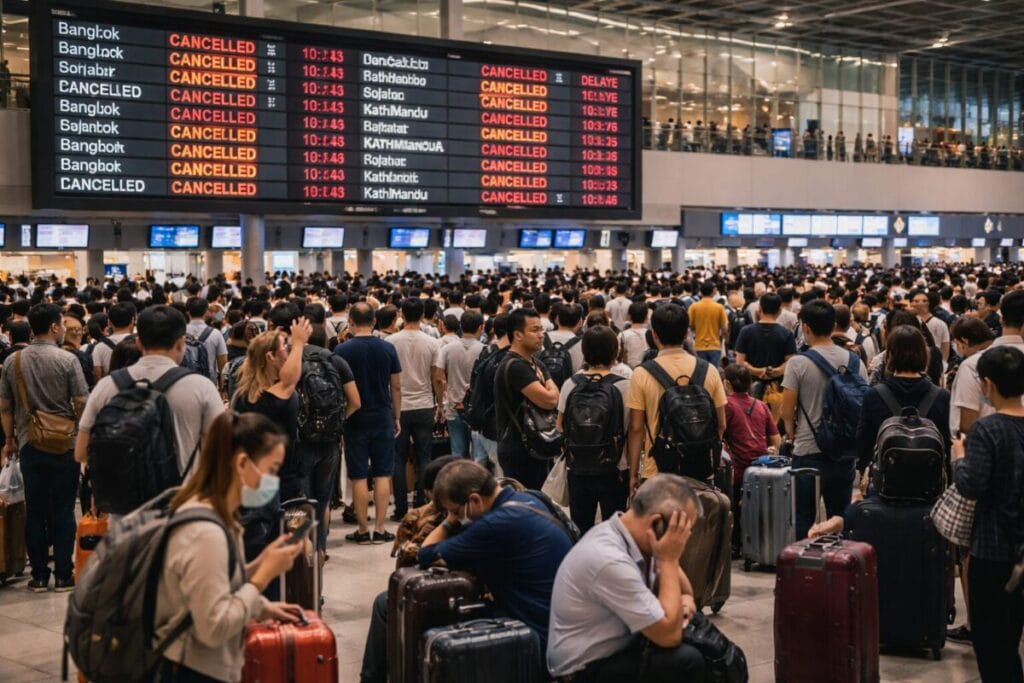
Asia is in the midst of its largest air travel disruption of the year. Thousands of travelers are stranded or delayed as airports across China, Indonesia, Thailand, and Nepal struggle to manage widespread flight cancellations and rescheduling chaos. Carriers such as Hainan Airlines, Tianjin Airlines, Korean Air, Asiana Airlines, and Garuda Indonesia have canceled around 250 flights and delayed more than 2,500 others, affecting both domestic and international tourism routes.
Major Travel Hubs Face the Biggest Impact
The situation has been most severe in China. Shanghai Pudong International Airport recorded heavy delays, stretching waiting hours for global travelers bound for Europe, the Americas, and Southeast Asia. Beijing Capital International Airport also faced cancellations and long delays that disrupted travel itineraries for business and leisure passengers.
In western China, Urumqi Diwopu International Airport became a bottleneck for tourists heading toward Central Asia and Middle Eastern destinations, adding yet another layer of complication during the busy travel period. Other hubs such as Guangzhou Baiyun, Shenzhen Bao’an, and Chengdu Tianfu also reported extensive delays throughout the day and evening.
These airports serve as vital gateways for inbound and outbound tourism. Even short delays can ripple into destination markets, while cancellations can derail holiday packages, guided tours, and multi-country itineraries that travelers often book months in advance.
Southeast Asian Airports Join the Growing Disruption
Southeast Asia has not been spared from the turmoil. Jakarta Soekarno-Hatta International Airport, one of the region’s busiest hubs, saw cancellations and delays for flights traveling to regional capitals such as Singapore and Kuala Lumpur. Tourists attempting to island-hop or connect to Indonesian holiday hotspots faced long queues at airline counters as carriers tried to rebook missed connections.
Bangkok’s Suvarnabhumi Airport also confronted hours-long delays. Travelers flying to Europe and the Middle East experienced last-minute schedule changes and rerouting as airports worked to reorganize flight paths and crew assignments. The disruptions affected international tourism traffic at a time when Thailand is seeing strong tourism recovery, driven by demand for cultural and coastal destinations.
Nepal Sees Light Disruption but Still Feels Tourist Strain
Kathmandu’s Tribhuvan International Airport experienced fewer delays compared to its regional counterparts. However, even moderate disruptions had consequences for international trekking tourism and Middle Eastern connection routes. As Nepal prepares for peak travel periods in the coming months, delays have prompted operators to adjust schedules for mountain expeditions and guided tour itineraries.
Why the Disruption Happened
Airlines and aviation authorities across the region have cited three primary causes:
1. Technical and Maintenance Issues
Several carriers faced mechanical failures and fleet availability challenges. Aircraft awaiting parts or inspections remained grounded, forcing airlines to cancel or merge flights. Carriers with tight aircraft rotation schedules could not redeploy planes fast enough to manage demand.
2. Staffing Shortages
Crew scheduling shortages affected both cockpit and cabin staff. Airlines across Asia continue to rebuild their workforce after pandemic-era reductions. Sudden spikes in passenger volume have outpaced staffing recovery, especially on long-haul routes requiring multi-crew operations.
3. Weather-Related Challenges
Weather systems added even more strain. Northern China experienced snowfall and low visibility conditions, while Southeast Asia saw heavy rainfall and tropical storm activity. Weather delays on their own are manageable, but when combined with technical and staffing issues, they created cascading flight disruptions.
Tourism Takes a Direct Financial Hit
The tourism sector is feeling the shock as cancellations prevent travelers from reaching their intended destinations. Countries such as China, Thailand, and Indonesia rely heavily on tourism for regional economic growth. Hotels, tour operators, guides, theme parks, and restaurants are now facing no-show bookings and last-minute cancellations.
Travelers stuck in airports have been forced to rebook hotels, extend stays, or modify vacation plans. Airlines now face increased operational costs due to compensation, accommodation, meal vouchers, and customer care services. Beyond financial losses, the disruption threatens traveler confidence at a time when Asia has been aggressively promoting international tourism recovery.
What Travelers Can Do Right Now
Passengers currently affected by the delays are advised to:
- monitor airline apps for real-time updates
- confirm eligibility for rebooking or travel credits
- use airport service counters for urgent itinerary changes
- consult travel insurance providers for delay and cancellation benefits
Flexible ticket policies are now more common in the region. Many airlines are offering one-time free changes for those willing to travel at a later date.
Outlook for the Coming Days
Clearing the backlog may take several days depending on weather conditions and aircraft availability. Airlines are prioritizing high-traffic business routes and international tourism corridors to restore normal flight schedules as soon as possible. Industry analysts note that the disruption highlights the need for improved contingency planning as the Asia-Pacific travel market continues to rebound at a rapid pace.
For more travel news like this, keep reading Global Travel Wire