





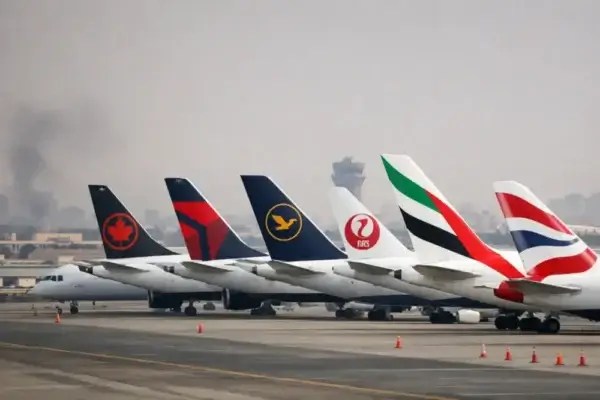

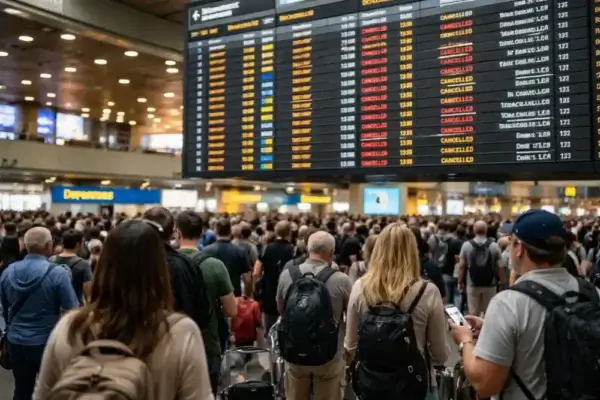
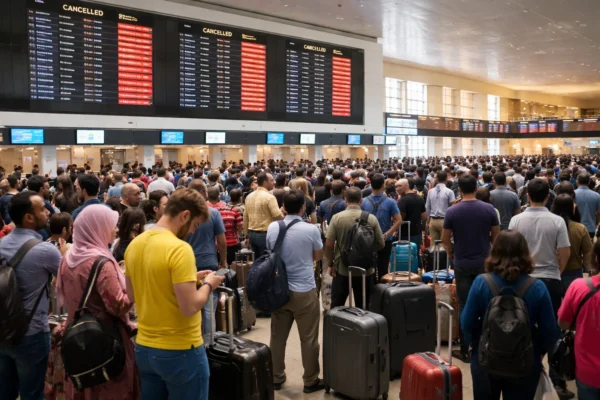

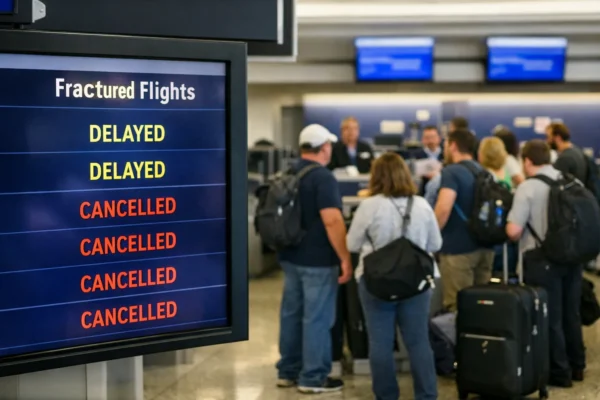


A wave of flight cancellations at Bahrain International Airport has caused significant disruption to regional and international travel, leaving hundreds of passengers stranded and forcing airlines to rapidly adjust schedules. Over 80 flights have been cancelled in recent days, impacting major routes connecting the Gulf region with key destinations across the Middle East and South Asia.
The sudden operational changes have affected travel between Manama and major cities such as Dubai, Riyadh, Delhi, Jeddah, Medina, Bengaluru, Chennai, Cochin, Abu Dhabi, Kuwait, and Doha. The disruption has created a ripple effect across connecting routes, intensifying travel challenges across one of the world’s busiest aviation corridors.
Major Airlines and Routes Impacted
Several leading airlines operating out of Bahrain have been affected by the cancellations, including national and regional carriers as well as low-cost operators. Flights scheduled to key aviation hubs across the Gulf and beyond were either delayed or cancelled, disrupting both business and leisure travel.
Short-haul routes to nearby Gulf destinations, including Dubai, Abu Dhabi, and Doha, saw frequent cancellations, while long-haul services to India and other parts of Asia were also impacted. Routes connecting to cities such as Delhi, Mumbai, Bengaluru, Chennai, and Kochi experienced delays or suspensions, affecting thousands of passengers relying on these critical connections.
Flights to Saudi Arabian cities, including Riyadh, Jeddah, and Medina, were also disrupted, adding pressure on religious and business travel during a peak movement period.
Reasons Behind the Disruptions
Authorities have confirmed that the cancellations are part of a series of operational adjustments aimed at maintaining safety and efficiency at Bahrain International Airport. These measures were introduced in response to multiple logistical and operational challenges that emerged in recent days.
Key factors include aircraft rotation issues, crew scheduling adjustments, and air traffic management constraints. Coordination with international airports and regional aviation authorities has also played a role in reshaping flight schedules.
In addition, aviation regulators have emphasized that safety remains the top priority. Temporary reductions in flight operations are being used to manage congestion, maintain compliance with global aviation standards, and ensure smoother long-term operations.
While these steps are necessary, they have caused short-term inconvenience for passengers and airlines alike.
Passenger Disruptions and Airport Chaos
The cancellations have led to crowded terminals and long queues at Bahrain International Airport, as travelers attempt to rebook flights or seek assistance from airline representatives. Many passengers reported uncertainty regarding alternative travel options, especially those with tight connections or urgent travel plans.
Families, business travelers, and transit passengers have been particularly affected, with some experiencing extended delays or overnight stays. The situation has been further complicated by the interconnected nature of Gulf travel, where delays in one hub can quickly impact multiple destinations.
Airlines have been working to accommodate affected passengers by offering rebooking options, alternative routes, or refunds. However, the high volume of disruptions has made it challenging to respond quickly to every traveler.
Regional Ripple Effects Across the Gulf
The impact of Bahrain’s flight cancellations extends far beyond its borders. As a key transit point in the Gulf, disruptions in Manama have affected flight schedules across neighboring countries.
Airports in the United Arab Emirates, Saudi Arabia, Qatar, and Kuwait have experienced knock-on effects, with delayed arrivals and missed connections. Travelers heading to Asia and Europe via Bahrain have also faced difficulties, highlighting the interconnected nature of global aviation networks.
The disruption has also influenced cargo operations, potentially affecting supply chains and time-sensitive shipments moving through the region.
Official Guidance for Travelers
Authorities have urged passengers to stay informed and exercise caution when planning travel during this period. Travelers are advised to check flight statuses regularly and maintain direct communication with their airlines for the latest updates.
Passengers are encouraged to arrive early at the airport, allow extra time for check-in and security procedures, and be prepared for last-minute changes. Keeping travel documents and booking confirmations easily accessible can help speed up rebooking processes if needed.
Airlines are required to provide support in line with aviation regulations, including options for rescheduling, rerouting, or refunds. Travelers are also advised to remain flexible with their plans as schedules continue to evolve.
Managing Travel During Uncertainty
For those planning to travel in the coming days, flexibility will be key. Experts recommend monitoring departure schedules closely and considering alternative travel routes where possible.
Passengers with connecting flights should allow additional transit time and confirm onward bookings before departure. Travel insurance may also help cover unexpected expenses caused by delays or cancellations.
Business travelers and frequent flyers are particularly encouraged to stay updated through airline apps and official notifications to avoid unnecessary disruptions.
Outlook for Recovery
While the current situation has caused widespread inconvenience, authorities are working to stabilize operations and restore normal flight schedules. The temporary adjustments are expected to ease congestion and improve overall efficiency once implemented fully.
Bahrain’s aviation sector remains committed to maintaining high safety standards while minimizing disruption to passengers. As operations gradually return to normal, airlines and airport authorities are expected to clear backlogs and resume regular services.
For now, travelers are advised to remain patient and proactive as the region navigates this period of disruption. The situation serves as a reminder of how quickly aviation networks can be affected and the importance of coordinated responses to ensure safe and efficient travel.
For more travel news like this, keep reading Global Travel Wire