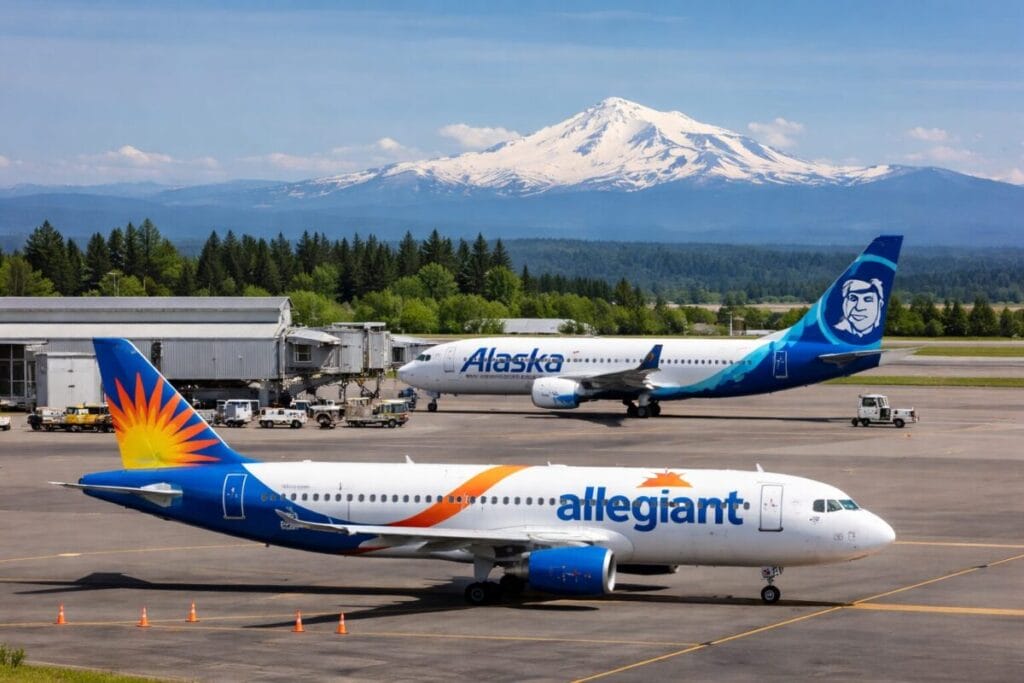
Bellingham International Airport is entering a new phase in its air travel evolution. Allegiant Air will suspend its nonstop service to Oakland after May 25. At the same time, Alaska Airlines is expanding at the airport with a daily nonstop route to Portland. These moves reveal how airline strategy directly shapes tourism flows, passenger options, and regional economic activity across the Pacific Northwest.
Allegiant Ends Link to Northern California
For years, Allegiant operated twice-weekly flights between Bellingham and Oakland. The route served leisure travelers, visiting relatives, and budget-focused passengers who valued direct access to the San Francisco Bay Area without the higher fares found at larger airports. The service also supported outbound tourism as Bellingham residents used the route for short breaks and family visits in Northern California.
The decision to end the route removes Allegiant’s final service connected to Oakland. It marks a strategic retreat as the airline focuses on markets with stronger seasonal performance and higher profitability. In recent years, ultra-low-cost carriers across the United States have prioritized network flexibility, seasonal scheduling, and rapid aircraft reallocation. These adjustments allow airlines to optimize capacity during peak travel periods and reduce exposure during weaker seasons.
Impact on Regional Travel and Tourism
The loss of the Oakland service reduces nonstop options for travel between Northwest Washington and Northern California. Many travelers will now rely on connecting flights through larger hubs. Some may choose Seattle-Tacoma International Airport for broader route availability. However, that requires ground travel of over 90 minutes from Bellingham on a typical day, which may influence trip planning and total travel costs.
Local tourism stakeholders note that nonstop flights often encourage spontaneous travel and weekend breaks. When routes disappear, visitor numbers can shift and itineraries become more complex. For smaller airports, the presence or absence of a single leisure route can influence seasonal tourism trends, including hotel bookings, restaurant activity, and event attendance.
Despite this adjustment, Allegiant remains a notable presence at Bellingham. The airline continues to serve popular leisure destinations such as Las Vegas, Palm Springs, Phoenix-Mesa, San Diego, and Burbank. Some operate seasonally, reflecting Allegiant’s focus on peak demand. The upcoming Burbank route replaces Allegiant’s former Los Angeles service, a sign that the carrier continues tailoring its West Coast network to shifting traveler patterns rather than abandoning the region entirely.
Alaska Airlines Expands with Portland Service
While Allegiant trims its footprint, Alaska Airlines is expanding. Starting March 18, the carrier will introduce a daily nonstop flight between Bellingham and Portland. This development strengthens regional connectivity, enhances business travel options, and supports the tourism economy. It also fulfills a long-standing request from frequent travelers and local officials who viewed Portland as a vital link for both intra-regional mobility and global connections.
Daily flights offer consistent, year-round service. Portland International Airport is a major West Coast hub where travelers can connect across the United States, Canada, Mexico, and beyond. The route provides access to Alaska Airlines’ broader network without traveling to Seattle-Tacoma. This reduces travel time, increases itinerary flexibility, and encourages multi-destination trip planning.
Tourism and Economic Benefits
For tourism officials in Northwest Washington, the new route opens opportunities. Portland is one of the region’s most visited cultural destinations, known for its food scene, outdoor recreation, festivals, and creative industries. The new flight introduces more opportunities for weekend travel in both directions.
In addition, improved connectivity supports business tourism and event-driven travel. Conference delegates, corporate visitors, and institutional partners can reach Bellingham with greater ease. This is important for Whatcom County’s visitor economy, which blends outdoor tourism, higher education, and cross-border travel.
Under state tourism research, improved aviation access often correlates with longer stays and higher visitor spending. Travelers arriving on connecting itineraries tend to spend more on lodging, activities, and dining. Increased visitor spending strengthens local employment in hospitality, food services, transportation, and retail.
Aviation Strategy Shapes Passenger Choices
The contrasting approach of the two airlines reflects a broader trend across the U.S. aviation sector. Ultra-low-cost carriers like Allegiant are adapting to seasonal tourism patterns and cost structures. Meanwhile, network carriers such as Alaska Airlines are reinforcing hub-and-spoke models that prioritize frequency and connectivity.
For smaller airports, this mix can create a balance between low-fare leisure access and reliable business travel. Bellingham continues to pursue this balance as it strengthens its position in the Pacific Northwest aviation landscape, particularly as cross-border travel with Canada continues to grow and as travelers seek alternatives to congested metropolitan airports.
What Passengers Should Expect
Travelers using Allegiant’s Oakland service should plan ahead, as the route ends after May 25. Meanwhile, residents and visitors will gain more options through Portland starting in March. As airlines adjust their networks, passengers may see more seasonal flights, more hub connections, and more demand-based scheduling at regional airports.
The aviation shifts in Bellingham underscore a key reality: airline decisions carry ripple effects across tourism, business mobility, and regional growth. For Bellingham’s travel market, the story is not about loss or gain alone, but about transformation driven by strategy, demand, and evolving passenger behavior.
For more travel news like this, keep reading Global Travel Wire