
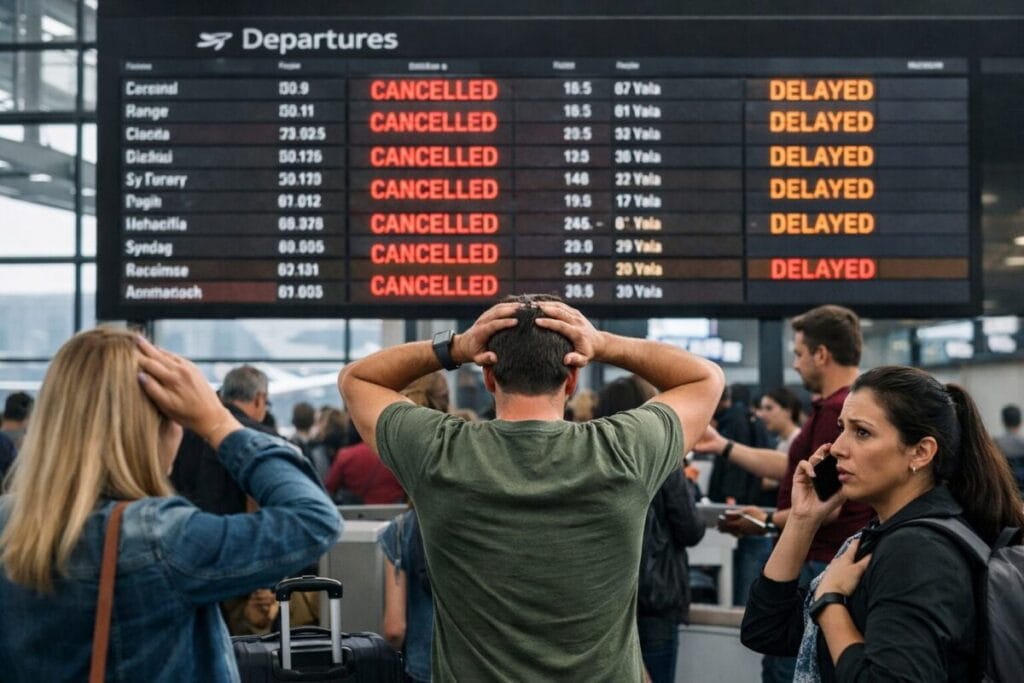
Canada is experiencing a sharp wave of travel disruptions as major airlines cancel and delay flights across major urban hubs. Airlines such as Air Canada, WestJet, Porter, Jazz, Air Canada Rouge, Pacific Coastal, and Air Inuit faced heavy operational strain. The disruptions led to over 91 flight cancellations and 126 delays in a single period, affecting both domestic and international movement. Travelers departing from or arriving in Vancouver, Toronto, Montreal, Quebec City, Ottawa, Regina, and Calgary encountered widespread schedule shifts.
The surge in disruptions has impacted the tourism sector, business travel, family travel, and international mobility. Airports served as holding zones for anxious passengers who scrambled to adjust plans. Tourism operators, hotels, and transport services also began feeling ripple effects as travelers altered itineraries or postponed visits.
Airlines Respond to Operational Pressure
The disruptions varied among carriers. Over the observed data, Air Canada recorded the highest cancellations, followed closely by Jazz and WestJet. Delays surged among Air Inuit, WestJet, and Air Canada. Although each airline cited different operational reasons, many pointed to staffing challenges, aircraft rotations, crew schedules, and rising travel demand.
Canada’s aviation sector has been rebuilding from past disruptions and winter travel congestion. Higher passenger traffic pushed airlines to adjust capacity. Industry analysts have highlighted that passenger volume in Canada has been nearing pre-pandemic levels, increasing pressure on operating systems while airports continue efficiency upgrades.
Major Airports Hit by Cancellations and Delays
Air mobility disruptions concentrated in several major Canadian airports. Toronto Pearson International Airport carried the bulk of cancellations, followed by Vancouver International Airport and Montreal-Trudeau International Airport. These hubs also saw heavy delays on inbound flights. Airports in Quebec City, Ottawa, Regina, Calgary, Edmonton, and Sudbury experienced moderate disruptions, affecting both regional and national routes.
Travelers arriving at Toronto Pearson faced inbound cancellations that exceeded outbound interruptions, highlighting the chain effect of flight sequencing. Montreal-Trudeau saw more delays than cancellations, while Vancouver recorded a mixed pattern on both sides. The imbalance between arrivals and departures showed how a single delay could trigger a wider network disturbance.
Impact on Tourism and the Visitor Economy
Tourism in Canada has been rebounding steadily, with visitor numbers rising due to interest in national parks, winter sports, Indigenous cultural tourism, and urban attractions. When flight disruptions surge, the visitor economy becomes vulnerable. Hotels reported changes in check-in times and booking alterations. Some travelers opted for flexible nights in airport-adjacent hotels or changed destinations within the country.
Tour operators also noted that flight uncertainty influenced domestic multi-city itineraries. Travelers who planned to visit multiple provinces condensed schedules or canceled inter-provincial segments. Cruise passengers stationed in Vancouver and Quebec City expressed concern about timing for embarkation windows. Business tourism, including conferences and trade events, faced schedule adjustments and late attendance.
Factors Driving the Disruptions
Several contributing elements influenced the wave of cancellations:
1. Seasonal Travel Demand
Canada experiences seasonal travel peaks associated with holidays, winter sports, and event tourism. Increased passenger volume puts strain on aircraft utilization and slot management.
2. Crew and Aircraft Scheduling
Crew rotation rules and aircraft timing requirements remain sensitive. Any delay in one sector quickly affects subsequent flights on the schedule.
3. Weather-Related Variability
Canada’s climate introduces unpredictable airport conditions. Even minor snow, crosswinds, or visibility changes can affect routing and taxiing.
4. Operational and Staffing Challenges
Aviation labor shortages continue to affect ground services, maintenance teams, and customer support agents.
Advice for Affected Travelers
Passengers caught in airline disruptions can manage their situation by acting quickly and staying informed. Key actions include:
- Rebook Early: Contact the airline through its app, service desk, or hotline for alternative flights.
- Ask for Compensation: When delays stem from internal airline causes, passengers may qualify for meal vouchers, hotel stays, refunds, or rebooking at no cost.
- Track Expenses: Travelers should keep receipts for any hotel or food purchases tied to disruptions.
- Verify Travel Insurance: Many travel insurance policies now include interruption and delay benefits.
- Remain Updated: Flight status updates change rapidly, and airports may offer digital updates onsite.
Government and Industry Coordination Efforts
Canada’s air transport sector operates within safety and consumer protection frameworks. Aviation authorities work with airlines and airports to manage slot allocation, ground services, and passenger rights. Industry organizations continue advocating for capacity improvements, modernization of airport infrastructure, and enhanced traveler support systems. The return of high passenger demand has accelerated conversations regarding long-term sector resilience.
Outlook for Canadian Tourism and Air Travel
Despite the chaos, tourism analysts remain optimistic about the year ahead. International arrivals continue to climb, hotel occupancy has improved, and tourism regions are preparing for upcoming seasonal surges. As airlines stabilize their schedules and airports expand operational tools, travel confidence is expected to rise. However, travelers are encouraged to build flexibility into their itineraries and anticipate occasional delays during peak periods.
For more travel news like this, keep reading Global Travel Wire