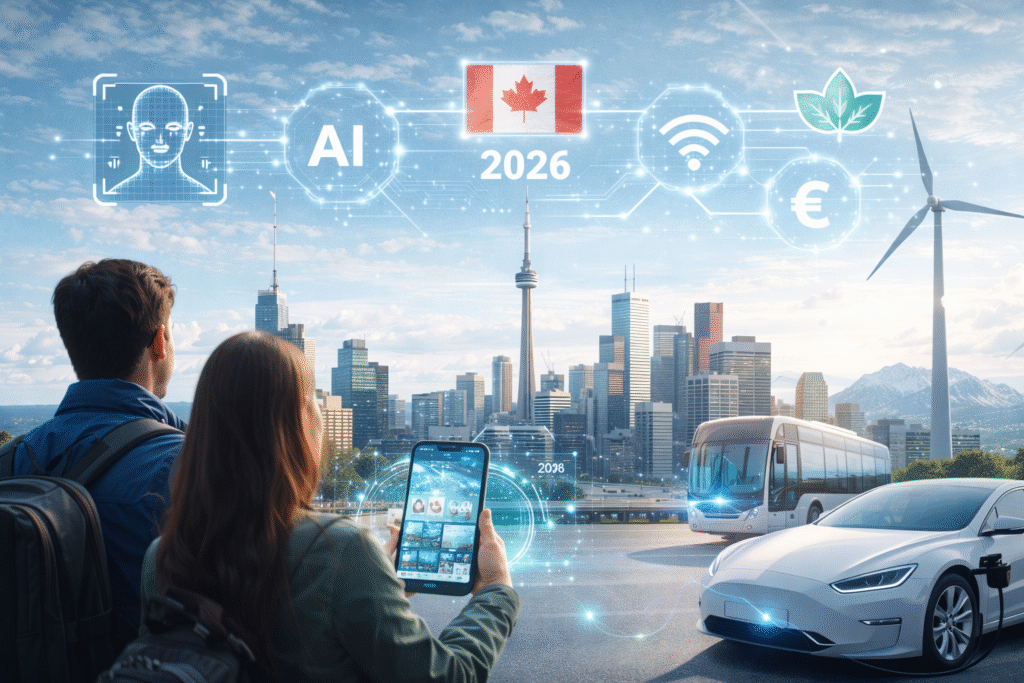
As 2026 approaches, Canada is emerging as one of the world’s most forward-looking travel destinations, driven by a powerful wave of technological innovation. With strategic investments in artificial intelligence, biometric border systems, sustainable transport, and smart tourism platforms, the country is preparing to redefine how travelers experience global tourism. These advancements are designed not only to improve efficiency and security but also to enhance sustainability and personalization across the entire travel journey.
Canada’s travel technology evolution reflects a coordinated effort between public institutions and private innovators. Together, they are modernizing tourism infrastructure to meet the expectations of a digitally connected and environmentally conscious global audience.
Biometric Border Systems Transform Entry Experience
One of the most significant developments reshaping travel to Canada is the expansion of biometric systems at airports and ports of entry. By 2026, facial recognition and digital identity verification will become central to the border clearance process. These systems are designed to dramatically reduce wait times while enhancing security standards.
Travelers arriving at major international gateways will move through immigration and customs using facial scans rather than traditional documents. This automated process simplifies entry, minimizes congestion, and delivers a smoother first impression of Canada. The adoption of biometrics positions the country among the most advanced destinations for secure and efficient border management, benefiting both tourists and business travelers.
Artificial Intelligence Elevates the Visitor Experience
Artificial intelligence is set to play a transformative role in Canada’s tourism ecosystem. AI-driven tools will allow destinations, hotels, and tourism platforms to offer highly personalized experiences tailored to individual traveler preferences. By analyzing travel behavior and interests, intelligent systems can recommend attractions, dining options, accommodations, and cultural events with remarkable accuracy.
By 2026, AI-powered travel assistants will help visitors plan trips in real time, adjust itineraries based on weather or crowd levels, and receive instant support during their journey. Smart tourism platforms will also help manage bookings, reduce congestion at popular attractions, and improve service quality across destinations. This data-driven approach ensures travelers enjoy a seamless, responsive, and enriched experience throughout their stay.
Advancing Sustainable and Green Mobility
Sustainability is a cornerstone of Canada’s tourism strategy, and green travel technologies are at the heart of this commitment. As part of its climate-focused initiatives, the country is rapidly expanding electric vehicle infrastructure and promoting low-emission transport options across urban and rural regions.
By 2026, travelers will have greater access to electric buses, trains, ferries, and car-sharing services in major tourism corridors. These eco-friendly options allow visitors to explore Canada’s landscapes while minimizing their environmental footprint. The focus on green mobility supports national climate goals while reinforcing Canada’s image as a responsible and sustainable travel destination.
Smart Mobility and Contactless Transport Systems
Complementing green transport initiatives, Canada is rolling out smart mobility solutions that simplify how travelers move within cities and regions. Contactless payment systems for public transportation are becoming standard, allowing visitors to pay using mobile devices or digital wallets without purchasing physical tickets.
These systems are particularly valuable for international travelers unfamiliar with local transit networks. Real-time data, route optimization, and integrated ticketing make navigation intuitive and stress-free. In addition to improving convenience, contactless systems reduce paper waste and operational costs, aligning with sustainability objectives.
Digital Itineraries and Integrated Travel Planning
By 2026, digital itineraries will become a core feature of Canada’s tourism experience. Advanced travel platforms will enable visitors to manage transportation, accommodation, attractions, and dining within a single digital interface. These tools offer real-time updates, flexible booking options, and instant notifications about weather changes, events, or travel disruptions.
This level of integration empowers travelers to adapt plans effortlessly while remaining informed at every stage of their journey. The result is a more resilient, efficient, and enjoyable travel experience that meets the expectations of modern tourists.
Global Collaboration and Tourism Tech Leadership
Canada’s travel technology ambitions extend beyond national borders. Through collaboration with global technology providers, the country is strengthening its position as a leader in smart tourism innovation. Partnerships in cloud computing, cybersecurity, and AI ensure that Canada’s tourism infrastructure remains secure, scalable, and globally competitive.
By aligning digital innovation with local culture and authentic experiences, Canada’s Smart Tourism Strategy balances technological advancement with the human elements of travel. This collaborative approach supports long-term growth while preserving the unique character of Canadian destinations.
Conclusion: A New Era for Tourism in Canada
As Canada prepares for 2026, its embrace of advanced travel technologies signals a new era for global tourism. From biometric borders and AI-powered personalization to sustainable mobility and smart planning tools, the country is building a future-ready tourism ecosystem. These innovations promise greater efficiency, enhanced security, and environmentally responsible travel experiences.
By investing in technology that benefits travelers, communities, and the environment, Canada is setting a benchmark for the future of tourism. Visitors can expect a journey that is not only seamless and intelligent but also aligned with the values of sustainability and innovation that define modern global travel.
For more travel news like this, keep reading Global Travel Wire