







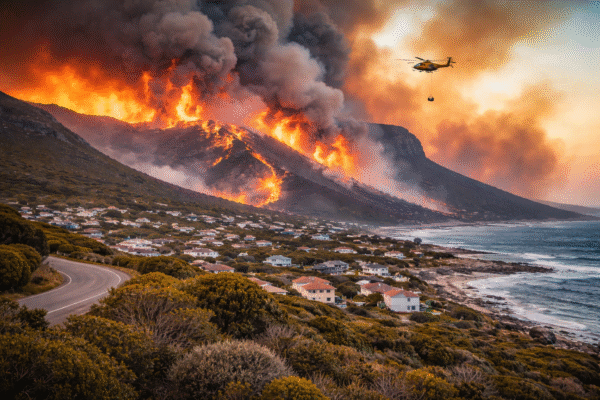
Wildfires continue to burn across South Africa’s Eastern and Western Cape, placing local communities and key tourism destinations under heavy pressure. The fires have led to evacuations, road closures, infrastructure damage, and severe smoke conditions. As the fire season extends beyond its usual peak, the tourism industry faces growing uncertainty.
Emergency crews battle flames fueled by hot and windy conditions. Fire season in the Cape typically tapers off in March, yet officials warn that higher temperatures and prolonged drought may extend seasonal risks well into winter. This shift in climate poses major threats not just to residents, but also to the tourism economy that the region depends on.
Evacuations and Road Closures Disrupt Coastal Communities
In the Eastern Cape, evacuation orders affected communities within the Kouga Municipality. Dense smoke forced temporary closure of part of the N2 highway between Jeffreys Bay and Humansdorp. Drivers and tourists experienced delays as visibility dropped and emergency vehicles moved through the area.
In the Western Cape, wildfires swept across the Overberg, Garden Route, and Cape Town metropolitan outskirts. Pearly Beach and parts of Stanford suffered damage to wine farms and private properties as winds pushed flames beyond containment lines.
Mossel Bay saw significant destruction as homes burned and large tracts of vegetation were consumed before responders contained the fire. The N2 between Dana Bay and Langeberg Mall closed briefly due to hazardous conditions. Such disruptions showcase how unpredictable the fire season has become, impacting both residents and travelers navigating the popular coastal corridor.
These regions attract thousands of domestic and international visitors each year. Sudden closures force tourists to adjust itineraries, cancel bookings, or avoid high-risk areas altogether.
Tourism Sector Faces New Challenges Amid Fire Activity
The Garden Route, Overberg, Winelands, and Cape Town remain among South Africa’s most iconic tourism zones. Their beaches, vineyards, nature reserves, and outdoor adventure offerings draw visitors from across the world. However, wildfires threaten these strengths.
Tourism operators warn that fire-related disruptions may discourage visitors. Road closures, smoke, and evacuations create uncertainty for travelers planning scenic drives, wine tours, and hiking excursions. Damage to accommodation facilities, farms, and natural areas could influence tourism choices for future seasons as well.
Nature-based tourism forms a core part of the regional economy. The Garden Route National Park, coastal viewpoints, and wildlife attractions are key selling points. If fires continue to burn near these areas, tour companies, hotels, guesthouses, and restaurants may experience a decline in bookings.
Longer-Term Implications for Tourism Recovery
South Africa’s tourism sector showed impressive recovery in recent years after pandemic lows, with both domestic and international travel rebounding. Yet extended fire seasons pose a risk to that momentum. Altered travel patterns are likely as tourists monitor regional safety conditions.
Should fires persist into mid-year, markets reliant on international visitors may see slower recovery. Travelers seeking eco-experiences might shift preferences to areas perceived as safer or less affected by climate-driven disasters.
This shift would pressure small tourism businesses that depend on seasonal demand. Wine farms, rural B&Bs, adventure tour companies, and community-based tourism projects could face financial strain if arrivals decline across 2025 and 2026.
Environmental experts caution that fires also affect biodiversity, scenic forest routes, and marine-adjacent ecosystems. These assets form a major part of South Africa’s tourism identity. Rebuilding damaged environments requires time, investment, and coordinated conservation efforts.
Government and Industry Response Signals Adaptation
Local and national authorities have begun increasing fire response capacity. Emergency agencies are expanding aerial firefighting capabilities, community evacuation planning, and early-warning systems. The forestry and environmental departments continue to promote controlled burns and vegetation management to reduce fuel load in high-risk zones.
Tourism boards are expected to pivot toward crisis-resilient models that protect communities and travelers. These may include diversified tourism routes, new safety messaging, and seasonal travel campaigns aimed at stabilizing visitor confidence.
Tourism operators are also adapting. Many businesses are incorporating sustainability measures, from water-wise operations to conservation partnerships. As eco-tourism trends rise, programs that allow visitors to support land restoration, wildlife monitoring, and volunteer tourism are gaining traction. Such initiatives strengthen both community resilience and tourism appeal.
Sustainable Tourism as a Path Forward
Despite current challenges, the fires have prompted discussions about the future of tourism in South Africa. The industry sees an opportunity to align growth with environmental resilience. Sustainable tourism strategies could reduce environmental stress while boosting local economies.
Balancing wildlife protection, economic growth, and community safety will define the next chapter of tourism in the Cape. With proper planning, the region can emerge stronger, offering visitors meaningful experiences while safeguarding natural assets.
Outlook: A Region Tested but Still Resilient
The Cape remains one of South Africa’s most captivating destinations. Its coastline, forests, and cultural landscapes continue to attract visitors. However, the fires illustrate the need for a new tourism approach that prepares for climate risks.
If recovery strategies succeed, South Africa can strengthen its tourism sector, support its communities, and preserve its landscapes for future generations. In the face of fire and climate uncertainty, resilience will be the key to sustaining tourism as a major economic driver in the region.
For more travel news like this, keep reading Global Travel Wire